
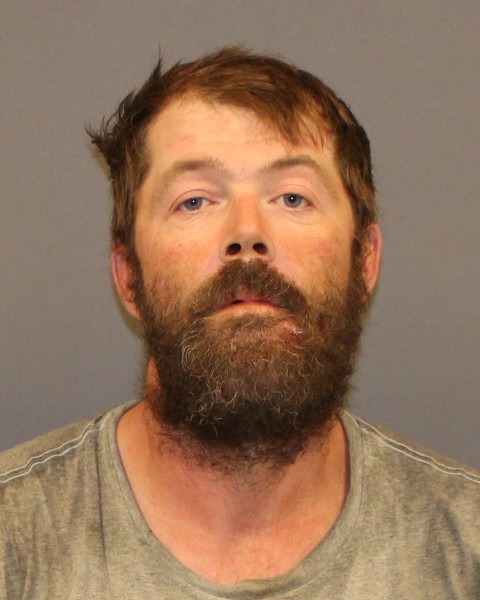
You may have seen him flipping off drivers at Colony Place, Market Basket, or other Plymouth shopping destinations.
Jeremy Smith has become well-known in town — but not in a good way.
When a driver earlier this month posted on the All Things Plymouth Facebook page that a man, believed to be Smith, shouted at him as he was leaving Colony Place: “I hope you and your family dies [sic] in a car crash,” more than 300 people responded, many of them reporting similar interactions.
One poster, who said he is Black, wrote that his unpleasant encounter was especially disturbing.
“Me and my wife left Market Basket …he pointed right at me and yelled one word. And one word only,” the man wrote.
“My wife had never been in a situation like that and I’ve never talked about it since it happened. We can all guess the word. But damn, I truly was put in such a position where it stuck with me for days and as a humble Black man I just kept it moving. Looking back, I’m happy I did nothing and explained to my wife why doing nothing was the right thing. Could have drove back and ruined my life.”
Just making eye contact with Smith would often set him off, witnesses said, and reasoning with him only worked occasionally.
But Smith, 39, who is described in police reports as homeless, won’t be harassing anyone anytime soon — at least not before Nov. 10.
Though Smith has been criminally charged many times by police in Plymouth and Wareham since 2021, until now he has always been freed on personal recognizance. His harshest punishment has been probation.
Plymouth County prosecutors repeatedly asked that his bail be revoked but judges turned them down.
Finally, on Oct. 14, when he was charged with making harassing calls to police for the second time in a few weeks, a Plymouth District Court judge ordered him held without bail until the next court hearing.
Smith has a short but voluminous history with the Plymouth Police Dept.
He has called it more than 50 times since 2024, according to reports. The calls are answered by dispatchers at the Plymouth County Correctional Facility, whose communications center handles the town’s 911 system and other police calls.
Smith frequently reported that people were bothering, following or harassing him. Plymouth Police dutifully responded to his complaints but rarely found any alleged culprits and except in a single case, no charges were apparently brought. (A Plymouth man is accused of assault and battery with a dangerous weapon after he allegedly threw a water-filled plastic bottle at Smith on Aug. 18).
But there were also many reports of Smith harassing or bothering other people.
On Memorial Day 2025, for example, Plymouth officer Kelsey Carney was patrolling Commerce Way and Colony Place when she saw Smith arguing with another man.
The man was “extremely upset” and told the officer that Smith was yelling and swearing at people. It was only after the man, whose distraught family was with him, got out of his car and told him police were on their way that Smith backed off, according to police.
Carney questioned Smith, who told her he was “being held at gunpoint in Wareham and having issues with people staring at him. Everyone was working together against him and lying,” he reported.
Since 2024, Smith has been ordered to stay away from several businesses on Samoset Street. He was allegedly involved in disturbances at McDonalds, Dunkin’ and Convenient MD, according to Carney’s report.
On Sept. 19, Captain Kate Moriarty of the Plymouth County Sheriff’s Communication Center, told Plymouth police that Smith called there six times between Sept. 9 and 18 “for the sole purpose of harassment or annoyance,” according to a report by patrol officer Patrick Brady.
The gist of the calls, which are too obscene to detail verbatim, was that Smith hoped the dispatcher would “rot in hell” and get into a automobile crash with her family.
Brady located Smith on Carver Road and asked him why he called the police so many times. “Jeremy said he was having a bad day… and then walked away,” Brady wrote.
Within minutes, Smith called the dispatch center again. This time the message was short and to the point: “F— you.”
In mid-October when Smith allegedly again made obscene calls to Plymouth police urging the dispatcher to “rot in hell,” Judge John Canavan finally revoked his bail on five open cases — all from this year. He is being held without bail at the Plymouth County Correctional Facility.
Smith was charged with making false or silent 911 calls. Those charges are in addition to ones filed against him in the four cases earlier this year — for disturbing the peace, making threats and assault and battery.
He is supposed to undergo a mental health evaluation before his hearing next month.
It’s clear from police and court records that authorities have tried to help Smith, or at least not punish him for his alleged bad behavior. But he hasn’t been especially cooperative, according to police and court records.
He hasn’t even always helped his own court-appointed lawyers. One withdrew from representing him in March, citing “a material breakdown in the attorney-client relationship.”
His current lawyer, Peter Dansereau, who has represented him in several cases, did not respond to a request for comment.
The charges against Smith are misdemeanors, so it is unlikely that even if he were convicted, he would not remain in jail for long.
On Facebook, many people suggested he needs help more than incarceration.
“Cue the ignorance around mental illness,” posted one of the more than people who responded to the Oct. 11 Facebook post. “Remember we are all one illness or accident away from our brain never being right again.”
Kellie Wallace, an associate professor at Lasell College and an expert on criminal justice and mental health, said Smith seems like a “perfect example of someone who falls through the cracks of the current systems and institutions…”
“His behavior could be the result of myriad possibilities such as intoxication, mental illness, or being unhoused,” she wrote in an email.
She said the criminal justice system “is not set up to service individuals under those circumstances; it is set up to maintain law and order and punish offenders.”
Courts that specialize in drug, mental health, or homelessness issues could help because they are “designed to work collaboratively across systems to address people’s needs to reduce their risks,” Wallace said, referring to it as “therapeutic jurisprudence.”
But lack of funding has meant specialty courts are not available in every state or every community, she said.
“As a result, judges’ hands are often tied, as they cannot hold someone for very long for something that is not a serious crime, regardless of how persistent the behavior may be,” Wallace wrote.
“What we are left with, then, are individuals such as this who are in need of resources but cannot access them for one reason or another, and a society that is understandably upset and frustrated by the lack of resolution. The best we can do is hope that these behaviors do not escalate to anything more alarming,” she said.
Andrea Estes can be reached at andrea@plymouthindependent.org.