

As 2025 nears the finish line, the Plymouth Independent prepares to mark its second full year of publishing. And it truly was full. The town was not lacking for news – good, bad, ugly, and sometimes puzzling. We covered a wide range of stories over the past 12 months, from government to business to crime to culture to the environment to education and more. We were busy, and you probably were, too. A look back is an easy way to catch up on stories you might have missed or didn’t have the time to read when they were first published (we’re looking at you, social media headline skimmers). By reviewing the past, we might even discern lessons that can help shape the future.
The coming year promises to be another busy and complicated one in Plymouth, with many crucial issues on the table. We’ll be here to chronicle what happens, day by day. But first, here’s that promised look in the rear-view mirror.
JANUARY
At more than 17 years old, Mayflower Brewing is the town’s oldest and largest beer maker. But in 2025, with the craft beer market slumping, it was on the cusp of closing. After saying he might have to stop operations by the end of January, owner Drew Brosseau kept it afloat by outsourcing distribution (and cutting jobs in the process). By April, Mayflower had a new owner.
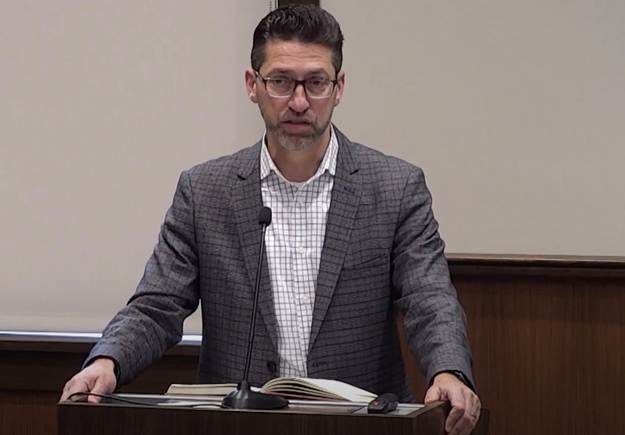
Town Manager Derek Brindisi’s displeasure with the Independent’s coverage of Town Hall resulted in him ordering “all appointed town officials to cease all communication with the PI.” In a letter to the Independent, Brindisi explained his reasoning and said he wanted to “figure out a way to work with the PI in a productive professional relationship going forward.” Following a series of meetings between town officials and the Independent, the gag order was eventually lifted, but not before the ban had attracted widespread attention, including NPR coverage and a front-page Boston Globe story.

After a suspected avian flu outbreakwas confirmed, health officials scrambled to contain it. In the weeks that followed, the disease’s presence was marked by a rising number of dead birds on ice, in the water, and along shorelines. Dead animals were collected for testing, and residents were urged to keep a close watch on their pets to avoid infection. By the end of the month, the Plymouth outbreak was said to be the state’s largest ever.
A Plymouth fan of country singer Vince Gill lost her life savings— almost $450,000 — when she sent money to scammers posing as Gill. The victim never really accepted that the person she was messaging was not the country music star. It was only after her bank detected suspicious activity in her bank account that the woman’s daughter took control of her mother’s finances.
FEBRUARY

Hedges Pond Road in Cedarville was in the news all year long because of two controversial developments planned there. It started in February when one was rejected in relatively short order. But the business park project that was approved continues to draw criticism of neighbors and environmental activists. It also put the Plymouth Foundation in the spotlight, defending its role in the town’s economic development. The controversy prompted us to do a deep-dive into the foundation’s origin story and track record.
Police Chief Dana Flynn asked the Select Board to support his call to have the town opt out of a state law that bans guns in public administrative buildings (like Town Hall) and other properties, including parks. The board, by a 3-2 vote, agreed to recommend the measure to Town Meeting, but it faced a backlash and eventually rescinded its backing for the measure, which was then rejected at Town Meeting. (See May’s summary.)
What will become of the 1,600 acres owned by Holtec International, the company charged with decommissioning the former Pilgrim nuclear power plant? It was the subject of much discussion during the year. In February, Fred Thys reported that a survey showed support for recreational and educational uses of the land, if Holtec agrees to sell and the town can come up with the tens of millions of dollars needed to purchase it. There was even talk about using land near the plant to site a small nuclear reactor.
It took more time and money than expected, but body-worn cameras were finally approved for use by Plymouth police officers. “These cameras will enhance public safety, strengthen trust and provide an extra layer of accountability for both officers and the community,” the department said in a Facebook post.

Plymouth’s population keeps rising, and so too are the number of people without a permanent home. “We have a public health crisis,” John Yazwinski, CEO and president of Father Bill’s & Mainspring, told the Independent in February. “We have a lot of people struggling with mental health and substance use disorders. They’re not getting access to treatment, and they end up on our streets.”
Columnist Bill Fornaciari told the stories of the four Plymouth officers who have died in the line of duty since the town’s modern-day police department was formed in 1861.
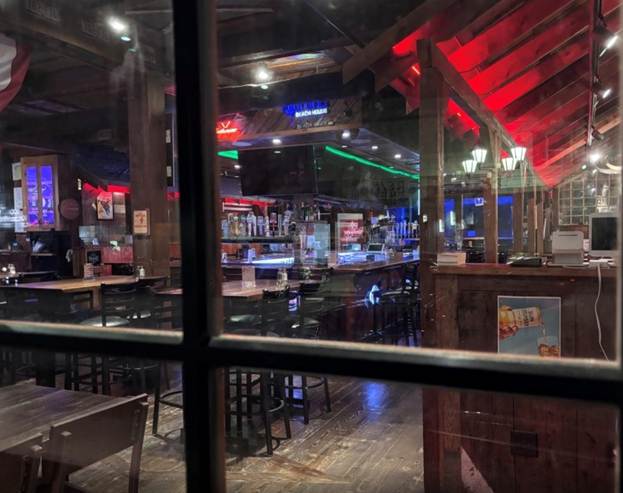
Twenty-year-old Benjamin Ruley, who had been served many drinks at Plymouth’s Proof 22, drove his car off of Route 3 and died, leaving behind a devastated family. In May, his family filed a $1 million lawsuit against Proof 22, which has since closed, and Tavern on the Wharf, where he had also been drinking. The lawsuit is still pending.
As the town continues to grow as the region’s medical mecca with Beth Israel Lahey Health’s launch of three major projects, including the much needed expansion of the emergency department at Beth Israel Deaconess Hospital-Plymouth.
The Independent reported in February that Carmen’s Café Nicole on the waterfront had been seized by the state Department of Revenue for failing to pay more than $228,000 in taxes.
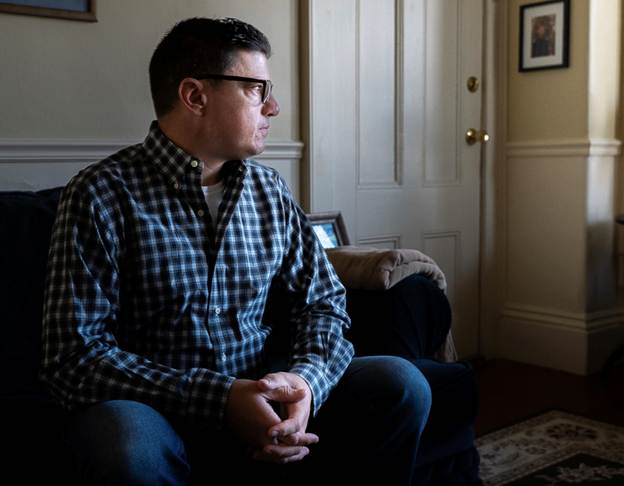
Anthony Boccalini, suffering from a rare inherited condition that caused his mother Judy’s death, spoke to the Independent about his need for a kidney transplant that could save his life. Boccalini, 41, is the youngest of six siblings in the well-known Plymouth family. Four of them have the dominant gene that causes the deadly condition, a form of Autosomal Dominant Tubulointerstitial Kidney Disease.
MARCH
A town employee discovered nearly 600 affordable housing units that had not been counted as part of the town’s stock. Correcting the undercount, which no one was held accountable for, helped Plymouth move closer to being able to exert more control over 40B housing complexes.
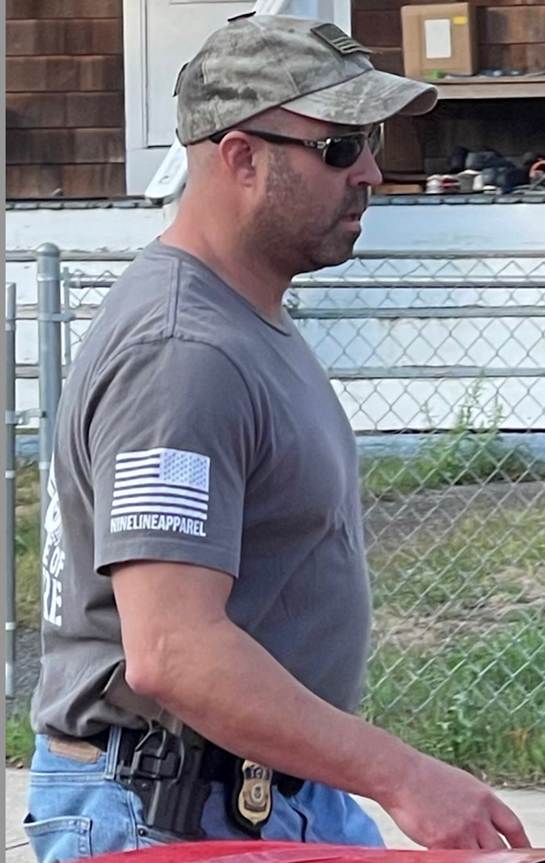
Starting in March, the Independent reported several stories about the presence of ICE agents in town, and how residents and officials were reacting to them. Police Chief Dana Flynn said his department would “not take people into custody based solely on their immigration status, nor will we hold people in custody or delay the bail process for individuals arrested for an unrelated crime whose immigration status is in question.” The Independent’s coverage included this story about an ICE visit in North Plymouth, the fears of immigrant families at Hedge elementary school, an arrest of a Brazilian man witnessed by middle school students, a follow-up story on what happened to him, and how the town’s large Brazilian community is coping with the uncertainty.
Plymouth Rock may draw tourists in droves (yes, we know you think it’s small and dull) but hopes of making Plymouth a destination for regional conventions sank like a stone. After a consultant’s study said a modest convention center could work in Plymouth, no one responded to the town’s call for interest from developers.
For the first time since outdoor dining in the downtown area was started during the pandemic, the Select Board decided against subsidizing the cost of “parklets” in front of restaurants that offer outdoor dining. (The move effectively killed al fresco dining.)
APRIL
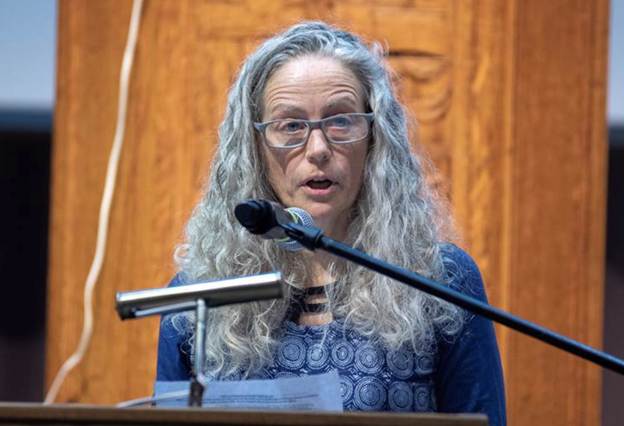
Town Meeting voted against having the town opt out of a state law that bans guns in public buildings – including Town Hall – and other public spaces such as parks. The spring gathering of Plymouth’s legislative body also appropriated funds that could be used to buy land around the former nuclear power plant and approved money to repair the Jenney Pond dam, as well as rezoning of a gravel pit to possibly make way for a big-box retailer. In what turned out to be the most contentious part of the meeting, the assembly also retained a provision in the town charter that makes maintenance of school buildings exclusively the responsibility of the school department and voted to allow public comment at Town Meeting precinct caucuses.
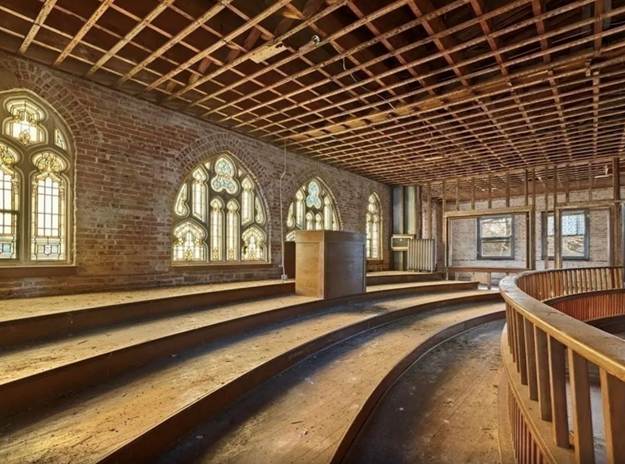
It’s hard to imagine a more desirable location in downtown Plymouth than the old Salvation Army building atop Coles Hill, with its panoramic views, stone façade, and even precious parking. In April, we learned why it’s been vacant for nearly a decade.
The Trump administration revoked a $200,000 grant to Pilgrim Hall Museum that would have supported modernization and preservation of four centuries of documents in its archives that are now housed in deteriorating boxes. In an email, Keith Sonderling, acting director of the federal Institute of Museum and Library Services, told museum director Donna Curtin and president Peter Brown that the grant “no longer serves the interest of the United States.”

It’s been more than 100 years since Plymouth police joined the state civil service system. At the urging of Police Chief Dana Flynn, officials said they were looking to opt out of the program, a move they say will make it easier and quicker to recruit and hire new officers for the understaffed local force. Under civil service, it can take months or years to hire officers.
Prestige Way, the North Plymouth road – connecting Cherry Street to Wiliam C. Gould Jr. Way – is one of the town’s most notorious dumping grounds for appliances, furniture, tires, and more. The Independent took a look at the mess, and asked what it will take to clean it up.
MAY
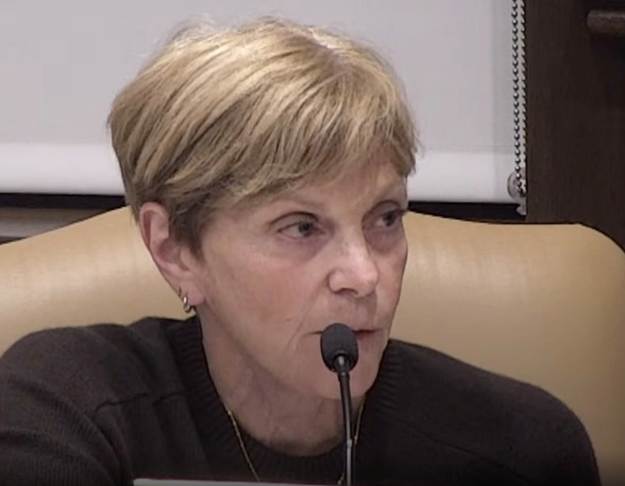
Voters in the annual town election – only a small percentage of residents bothered to cast a ballot – sent a message by ousting two incumbents on the Select Board. But if they thought that would ease long-simmering tensions among the five members, well, that didn’t happen. Later in the month, Kevin Canty was named chair, replacing Dick Quintal, who was not happy about the change. A week later, Quintal accused Canty of “ruling with a steel fist.” There were more fireworks to come – see September’s summary.
Plymouth’s first dog park opened in Cedarville. It’s an acre of joy for dogs and their companions, set a few hundred yards down a driveway at 2199 State Road, behind the town’s animal shelter.
JUNE

Why doesn’t Plymouth have any “nice” full-service hotels in the downtown and waterfront area? The answer: One may be on the way. In June, the 80-room John Carver Inn on Summer Street was bought for $14 million by the Boston-based Mount Vernon Company. Mount Vernon founder Bruce Percelay told the Independent that he planned a major overhaul of the dated hotel. At year’s end, that work was underway.
The dangers of electric bikes – especially electric dirt bikes – came to the forefront after two young teenagers crashed their $4,500 Surron e-bike headlong into a car traveling on the opposite side of Water Street. Since then, the topic of e-bikes and how they should be regulated has been hotly debated among political leaders and avid cyclists.

Patrick Van Cott was the Plymouth Public Schools’ food services director for more than 20 years. Police say he may have been stealing from the town for almost as long. Van Cott, 62, was arrested after Plymouth police discovered he could have been pilfering school equipment and food – including lobster – for decades. After his arrest, a big question loomed: How could this have happened?
Nurses at Beth Israel Deaconess Hospital-Plymouth reached a contract agreement with administrators — two months after taking a strike authorization vote in the face of sputtering talks.

For many years, the Tavares family (father Ken and later, son Matt) has been instrumental in organizing the town’s Fourth of July parade and fireworks celebration. But in a sit-down with columnist Bill Fornaciari, Ken and Matt talked about why they decided to step away from the events after this year.
JULY
Memorial Hall is 100 years old and showing its age. In July, we toured the downtown venue and saw some of its many issues, including water damage, uncomfortable seating, and a stage and backstage area that is woefully inadequate. Later in the month, Community Preservation Committee members weighed in on a request from town officials for $15 million to go toward renovating the hall – they were divided. Town Manager Derek Brindisi told the nine-member committee that Memorial Hall is in a dire state. “If no improvements are made, this building would have to be shut in the next two years,” he said. (Town Meeting in October authorized a $90,000 study to determine whether to renovate the hall or tear it down and build a modern facility.)
Downtown and waterfront businesses unveiled the outline of a plan aimed at getting residents and visitors to spend more time and money in the district. Their pitch came as the town readied to launch a major transformation of Court and Main streets to make downtown more resilient to climate change.
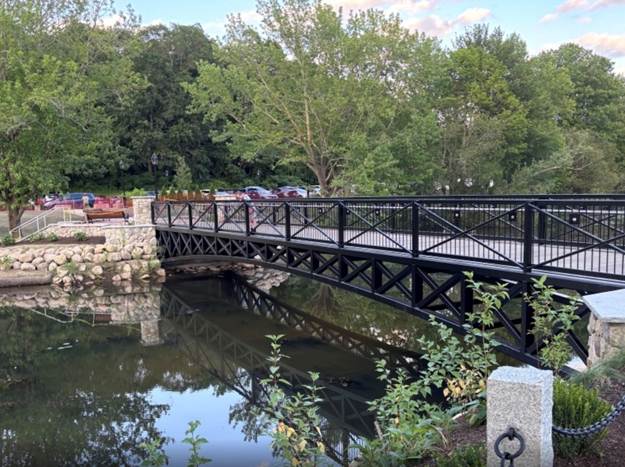
The opening of an elegant new footbridge over Jenney Pond marked a milestone in an ambitious project to remake the park. The work will eventually extend to Brewster Gardens.
The town told the owners of the decrepit Bert’s site that they had 60 days to tear down Plymouth’s most prominent blighted property. (It didn’t happen within that timeframe.)
Sunny McDonough was a hair and makeup artist with a lucrative side gig — stealing packages from mailrooms across eastern Massachusetts, and selling the contents on Facebook or at yard sales. Her larceny spree continued even after the East Bridgewater woman got caught. Eventually, after she was identified on video surveillance stealing from the Redbook mailhouse in Plymouth in July — she was sent to jail. In August, she was sentenced to nearly two years but got out early for good behavior.
For 145 years, a disembodied head stared at visitors to Pilgrim Hall Museum. No, it wasn’t a spectral visage or a floating face from another dimension. It was Mayflower passenger and eventual Plymouth Colony governor Edward Winslow popping up in a painting he wasn’t supposed to be in. Renovations at the 201-year-old downtown museum revealed that one of the large murals in the main hall was touched up sometime after it was painted in 1847 by English artist Charles Lucy.
AUGUST
Proof 22, a downtown bar and restaurant popular with motorcyclists, went dark in August. Its owner had allegedly not paid rent since March, and the state said it owed more than $45,000 in taxes, interest, and penalties. At year’s end, the space remained vacant.
Later in August, we learned New World Tavern, a 14-year-old downtown fixture known for its robust roster of live music, had serious money problems, including an unpaid state tax bill of $131,000. Owner Karl Heine said he hoped to rebound, but in September the doors closed for good.
Full disclosure on this one: The reporter who penned the story of the end of Cherry’s Bait and Tackle in August used to go to the shop with his grandfather back in the day to get worms and chubs when they fished Eel River.
With questions about whether it makes sense to spend $15 million to partially renovate Memorial Hall mounting, the Community Preservation Committee decided to pull its request that Town Meeting allocate the money, at least until a study is conducted. It’s unclear when those findings will be ready.
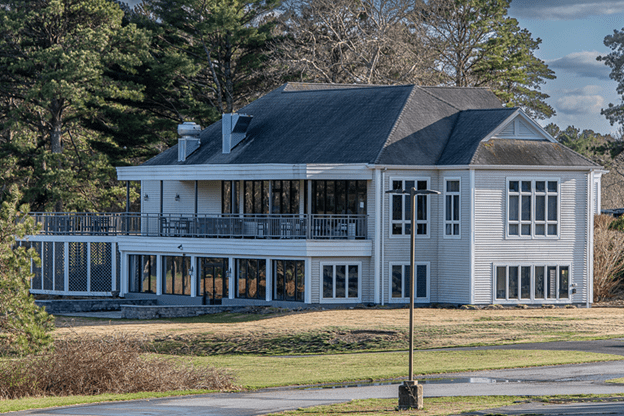
The town succeeded, at least temporarily, in blocking a large residential development on the site of the Atlantic Country Club in South Plymouth. Select Board chair Kevin Canty said he was told by the town’s lawyer that the club’s prospective buyer had withdrawn his offer to purchase the property. For months, the town delayed acting on a request from the club’s owners, the McSharry family, to either match the $19 million offer made by Duxbury developer Ben Virga or decline to exercise its legal right of first refusal. The tactic seemed to work.
Local chef Mike Wisdom used a hammer to fend off a man who invaded his North Plymouth home. Wisdom eventually broke free of the attacker and raced to the fire station across the street. The alleged assailant, Jose Juarez, told the Independent that he hadn’t slept for three days and was wandering the streets, hearing voices.
Kingston and Plymouth appeared to be battling over which town might land a Costco store. While no one has officially said Costco is considering opening in the area, the Kingston Water Commission lifted a moratorium on new connections to the town’s drinking water system and officials hinted that the move was intended to pave the way for Costco to open at the “distressed” Kingston Collection mall. That potential site is half a mile down the road, at the 54-acre T.L. Edwards Inc. gravel processing plant off Cherry Street and Commerce Way. At year’s end, a winner had yet to be declared.
Bad feelings over tariffs, inflated prices, and the implementation of tougher immigration rules hurt the town’s all-important tourism business, with a noticeable decline in activity downtown and along the waterfront. “Stricter immigration and visa policies have led to a noticeable decline in international visitors,” said Lea Filson, president of the tourism organization See Plymouth, during testimony before the Massachusetts House Committee on Federal Funding, Policy and Accountability. “In our area, this has impacted key heritage attractions like Plimoth Patuxet [Museums], Mayflower II, and other historic locations.”
Columnist Peter Zheutlin, who spent the year as a “newcomer” exploring Plymouth, took readers to its most far-flung neighborhood – Oliver Neck, and discovered that folks who live there feel disconnected from the rest of the town.
SEPTEMBER
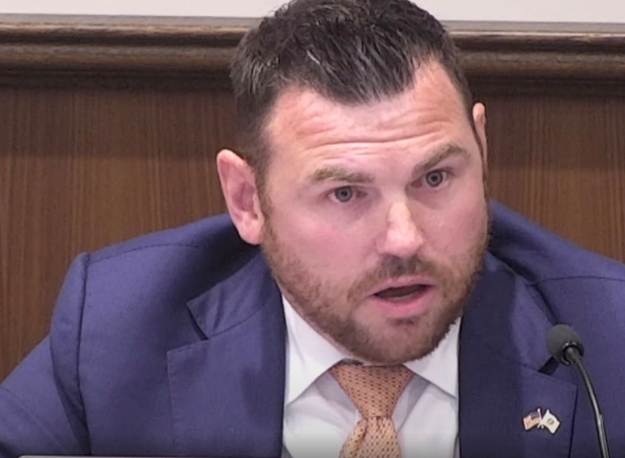
In an unusual move, Select Board member David Golden enlisted the support of Bill Keohan and Dick Quintal to remove Kevin Canty as chair after just three months. Quintal’s vote was not surprising – he was still hurting over losing the chair position to Canty in May – but Keohan’s alliance with Golden caught some Town Hall observers off guard. There was still more in-fighting to come – See November’s summary – and the tensions between board members were on display most every week as the year progressed.
The 2025 menu was full of problems for the owners of a group of four local restaurants – the defunct Proof 22, along with Tavern on Wharf, Plymouth Public House, and The Shanty. An investment firm filed a $734,000 lawsuit, claiming Paul Tupa and Peter Lucido defaulted on a contract to turn over 30 percent of revenue from their restaurants to cover a $1.2 million advance.
Officials revealed that dozens of people appointed by the Select Board to serve on various boards and committees over the last two years were never sworn in, creating a logistical and legal mess. No one was held accountable.
Driven by a 70 mile-per-hour gale, a massive blaze known as the Great Fire roared out of control across the southern half of Plymouth 125 years ago, consuming just about everything in its path – natural and manmade.
Have you ever heard of the Black and White Club? We hadn’t, either. Columnist Bill Fornaciari told the story of one of the oldest art clubs in the nation, founded in Plymouth in March 1885.
OCTOBER
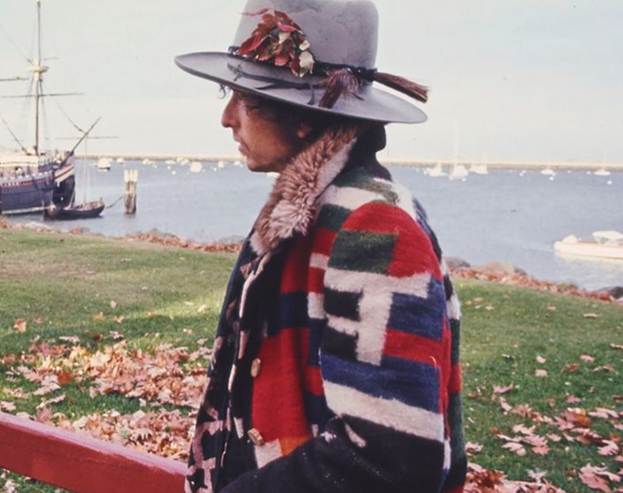
It was a big deal at the time. It’s become an even bigger deal in the 50 years since – the opening nights of Bob Dylan’s Rolling Thunder Revue tour. The shows took place at Plymouth’s Memorial Hall in late October 1975. The cover photo for Dylan’s 1976 album “Desire” was short during the entourage’s stay here. Read the story of how it all came to be, including an interview with tour manager and bass player Rob Stoner. We also solicited memories from readers who saw the performances.
David Berkeley lost two sons – Brent died in a senseless 2024 shooting, while Matthew took his life 15 years earlier. His effort to place two benches in their memory was stymied by misinformation and government bureaucracy. Less than two months after this story was published in October, the Select Board finally approved the benches without a public discussion or apology.
A plan to make major upgrades to the downtown and waterfront area was shelved – temporarily, officials said – after state and federal funding for the work fell through.

The early stages of major repairs to the Jenney Pond dam, the construction of a nature-like fishway around the Plimoth Grist Mill, and the remaking the pathway through Brewster Gardens got underway. The work is part of an ambitious project to revitalize the popular park area all the way through to the waterfront.
The Select Board agreed to spend more than $750,000 to make urgent repairs at Memorial Hall to stop water from leaking into the building and keep it from being closed.
Town Clerk Kelly McElreath appeared before the Select Board to explain how a systemic failure led to dozens of residents appointed or elected to town positions not being sworn in within the required 30-day period. Through some administrative maneuvering, the problem was resolved late in the month.
Officials unveiled a proposal to regulate the use of electric bikes on town roadways that includes age restrictions, mandatory helmets and registration with the town.

An 18-year-old Plymouth man was killed and two others injured in a head-on crash on State Road. The narrow, winding road has long been considered dangerous. Traffic volume on it has increased dramatically as the town’s population has swelled.
Drivers for the Greater Attleboro-Taunton Regional Transit Authority staged a two-day strike. The action ended with a contract deal that the union said handed drivers and other GATRA employees the pay they were looking for. Many Plymouth residents rely on the buses for low-cost transportation.
Third time’s the charm? Officials said that part of Water Street needed to be dug up for the third time since 2023, with traffic detoured through early spring. That because a contractor needs to repair a relatively new sewer line that has settled, which could cause waste to back up. “We know this will be an inconvenience and we are sorry about that. But we have to do it,” William Coyle, director of the Department of Public Works, told the Select Board.
The second “No Kings” rally on Water Street attracted a large and vocal crowd, with many people holding signs, and some wearing costumes, to protest what they say is President Trump’s attempt to undermine the democratic process by assuming power not granted to him under the Constitution. Plymouth police estimated the size of the gathering at 2,000 to 3,000.
NOVEMBER
Residents’ complaints about missed or late pickups by private trash haulers continued to mount. One company, Star Waste Systems, was singled out for the most criticism.
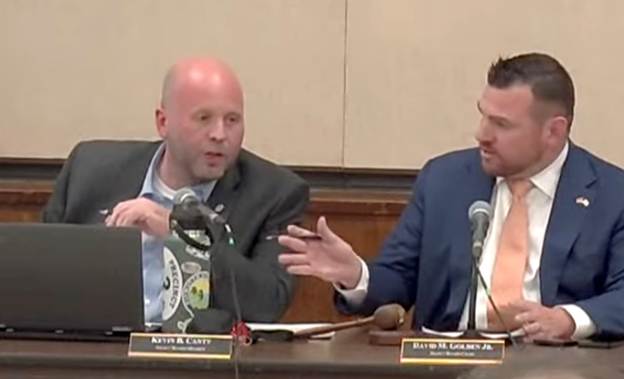
Less than two months after Select Board chair David Golden promised “a restoration of collegiality,” animosity between him and former chair Kevin Canty was on display again during a tense exchange over what issues get placed on the board’s meeting agendas.
For almost 25 years the Plymouth Foundation has remained a mystery to most residents. But this year it ran into a public buzzsaw on Hedges Pond Road in Cedarville over a controversial business park development. Correspondent Michael Cohen wrote about the issue, and penned a primer on the organization, which was formed to bring more businesses – and jobs – to town.

The Plymouth Agricultural Commission objected to proposed regulations from the Plymouth Public Health Division that would apply to non-commercial agricultural operations such as raising chickens and keeping goats. The proposed regulations would limit the size of chicken flocks and establish minimum land areas for raising farm animals such as goats and cows. The rules were proposed because the Health Division says its small staff is burdened by time-consuming resolutions of complaints from neighbors of people raising animals.
Town leaders urged the sellers of land in North Plymouth where a controversial 40b condominium project is planned to back out of the deal and work with them to come up with an alternate plan. Developer Pulte Homes’ proposed 163-unit project threatens “the character and stability” of the quiet neighborhood, according to a letter sent to Gerald and Maureen Sheehan, whose family trust, Eight Mates LLC, owns the land. The Independent chronicled the efforts of neighbors and community leaders to kill the proposal, which is still facing votes by the town’s Zoning Board of Appeals and the Conservation Commission. Dozens of residents showed up at a November ZBA meeting. No one spoke in favor.
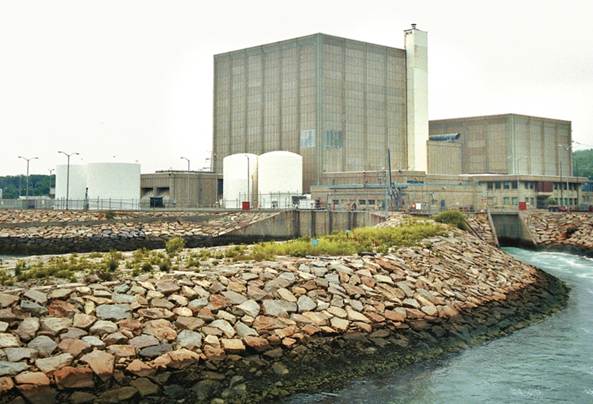
An appeals officer for the state Department of Environmental Protection recommended that the state uphold its decision to deny Holtec Decommissioning International’s request to dump more than 800,000 gallons of treated radioactive water from the former Pilgrim nuclear power station into Cape Cod Bay.
Dave Kindy previewed the game between the Plymouth North and South high school football teams at Fenway Park. (South won in overtime, 27-21.)
Remember that 60-day order for the owners of the Bert’s building to tear it down? November came and it was still standing. But officials said the razing was really, really close to becoming reality. Finally. Maybe.
The town was forced to back off on imposing new restrictions on the National Day of Mourning, which since 1970 has taken place on Thanksgiving to recognize Native Americans and the suffering they endured through colonization. The United American Indians of New England and its co-leader, Mahtowin Munro, sued the town, alleging that conditions recently set by the town violated a 1998 agreement. When it appeared that a judge was going to side with them, the town agreed to not tamper with the agreement.

A week after a blade from a 300-foot-tall wind turbine fell into a cranberry bog off Head of the Bay Road, RWE, the company that owns the project, said it had started an “exhaustive” analysis of the incident with Spanish company Siemens Gamesa, which built and maintains the equipment.
Some parents objected to a new sex education curriculum for eighth graders that Superintendent Chris Campbell says has widespread support. The curriculum was supposed to take effect in late October, but it was postponed after a parent and a priest raised concerns at a School Committee meeting. They argued that the program was being implemented before parents had a chance to review the particulars.
DECEMBER

As Plymouth’s harbormaster, Chad Hunter’s domain is larger than you might think. It extends well beyond what’s visible from atop Coles Hill. Three miles out to sea from any land point in Plymouth and all its many ponds are within his jurisdiction.
A proposal to implement regulations governing the use of e-bikes met with a slew of criticism during a public hearing. Some of those objecting to the rules were older riders who said they depend on the bikes for exercise and local transportation.
Six years after Second Wind Brewing said it would open a new location on Main Street, many people assumed it would never happen. But it has – after a series of setbacks and a tangle of bureaucratic red tape. The beer is finally flowing at the new Second Wind taproom, and a kitchen is expected to be up and running soon.
At a Zoning Board of Appeals meeting, attorney and environmental activist Meg Sheehan voiced her opposition to the town granting a permit for a controversial 163-unit 40b condominium project proposed for North Plymouth planned by Pulte Homes. What made her opposition unusual is that Sheehan and an unspecified number of her family members own the land and stand to profit from the deal.
Opinions on encounters between North Plymouth residents and U.S. Immigration and Customs Enforcement agents dominated an emotionally charged Select Board session at Cold Spring Elementary School. In all, 18 residents spoke about whether the board should take a formal position in response to ICE detentions of immigrants, with most of them criticizing the federal agents’ aggressive actions. The board said it would take up the matter in January.
Independent columnist – and local architect – Bill Fornaciari weighed on the state of Memorial Hall. He wrote that the performance venue part of the building should be replaced with something more comfortable and modern while saving the front hall portion, which was built to honor veterans.
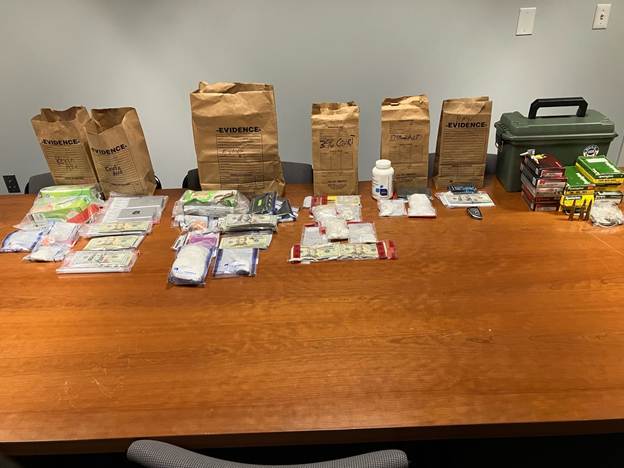
Plymouth police seized hundreds of grams of crack cocaine and a kilogram of fentanyl potentially worth more than $1 million in a series of drug busts last week. Four men are being held without bail, including a former bouncer at the Main Street Sports Bar & Grill, until hearings to decide whether they should remain behind bars until their cases go to trial.

The razing of the Bert’s building finally got underway after months of delays. For real.
The Select Board voted 3-2 against submitting an e-bike bylaw to spring Town Meeting — even after proponents offered a watered-down version of the original measure. That means rules governing their use will not be considered before the October Town Meeting, if at all.
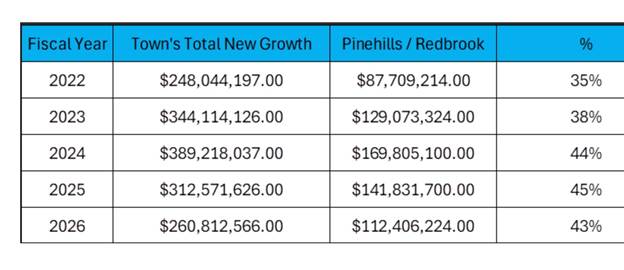
During a fiscal year 2027 budget presentation at a Select Board meeting, members and Town Manager Derek Brindisi raised the specter of a Proposition 2 1/2 override and layoffs within one or two years unless the town can better control its spending, especially the cost of health insurance for employees. “I feel like we’re running headlong into an override discussion,” said board chair David Golden.
Independent staffers Andrea Estes and Fred Thys, along with correspondents Michael Cohen, Bill Fornaciari, Dave Kindy, and Peter Zheutlin contributed to this report.