
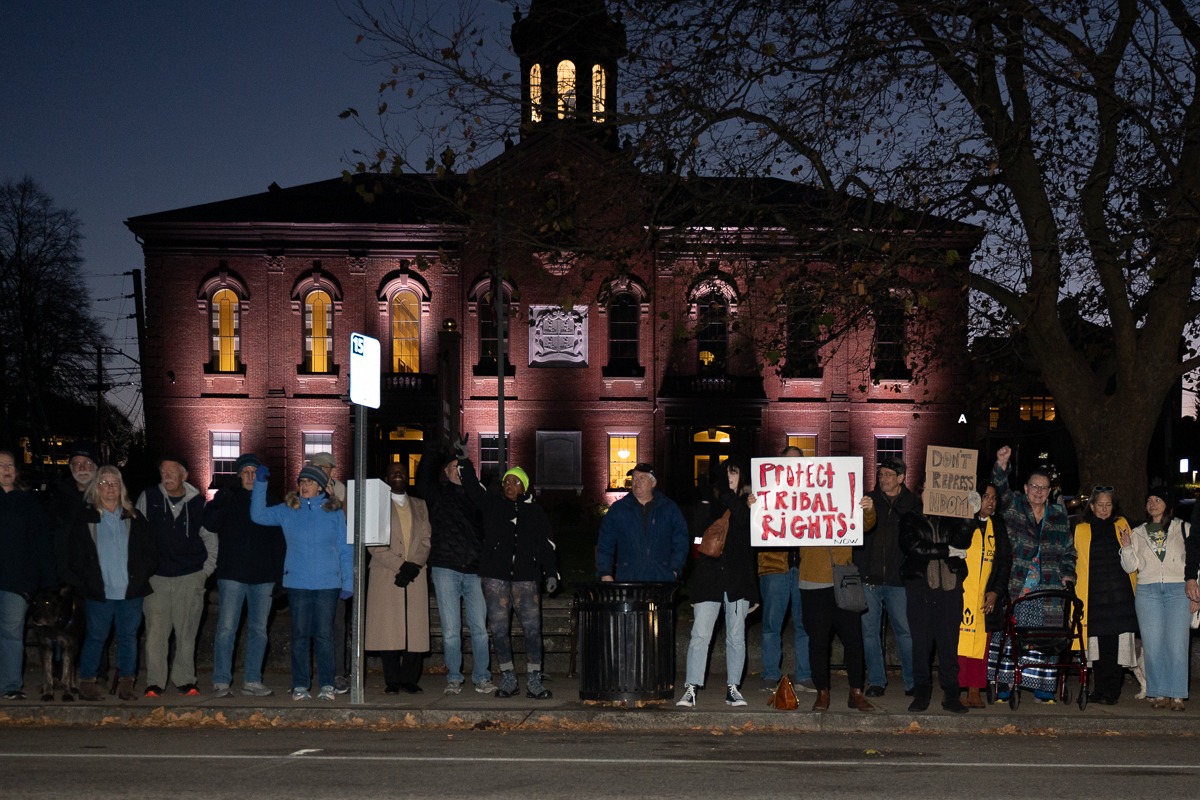
As a public historian and Plymouth resident, I am outraged by the Select Board’s November 10 decision to discontinue compliance with its 1998 settlement agreement with United American Indians of New England (UAINE).
This is an appalling failure of leadership and a betrayal of Indigenous peoples whose history Plymouth has spent centuries exploiting, sanitizing, and commercializing. For a town proudly calling itself “America’s Hometown,” the hypocrisy is staggering.
The agreement followed the disgraceful events of the 1997 National Day of Mourning, when Indigenous demonstrators were arrested and reported mistreatment. Nearly three decades later, Plymouth is once again forcing Indigenous people to defend their right to peacefully gather and commemorate their ancestors.
Plymouth does not get to profit from Indigenous history while attempting to control how Indigenous people tell it. As a public historian, I understand that responsible historical interpretation demands confronting uncomfortable truths, not protecting convenient narratives. The Wampanoag people’s history did not begin with the Mayflower, nor did it end with a shared Thanksgiving meal.
As a resident, I am ashamed that my community’s elected officials appear willing to undermine the principles of historical integrity, inclusion, and accountability. The National Day of Mourning is not an interruption of Plymouth’s history. It is essential to understanding it.
I urge the Board to reverse its decision, honor the 1998 agreement, and stop creating unnecessary obstacles for Indigenous organizers.
Plymouth cannot rewrite the history of colonization, but it can choose not to perpetuate its injustices. Indigenous peoples do not need Plymouth’s permission to remember, mourn, or tell their stories.
Honor your commitments. Respect Indigenous voices. Demonstrate that Plymouth is capable of learning from its own history.
– Lindsey Cahoon