
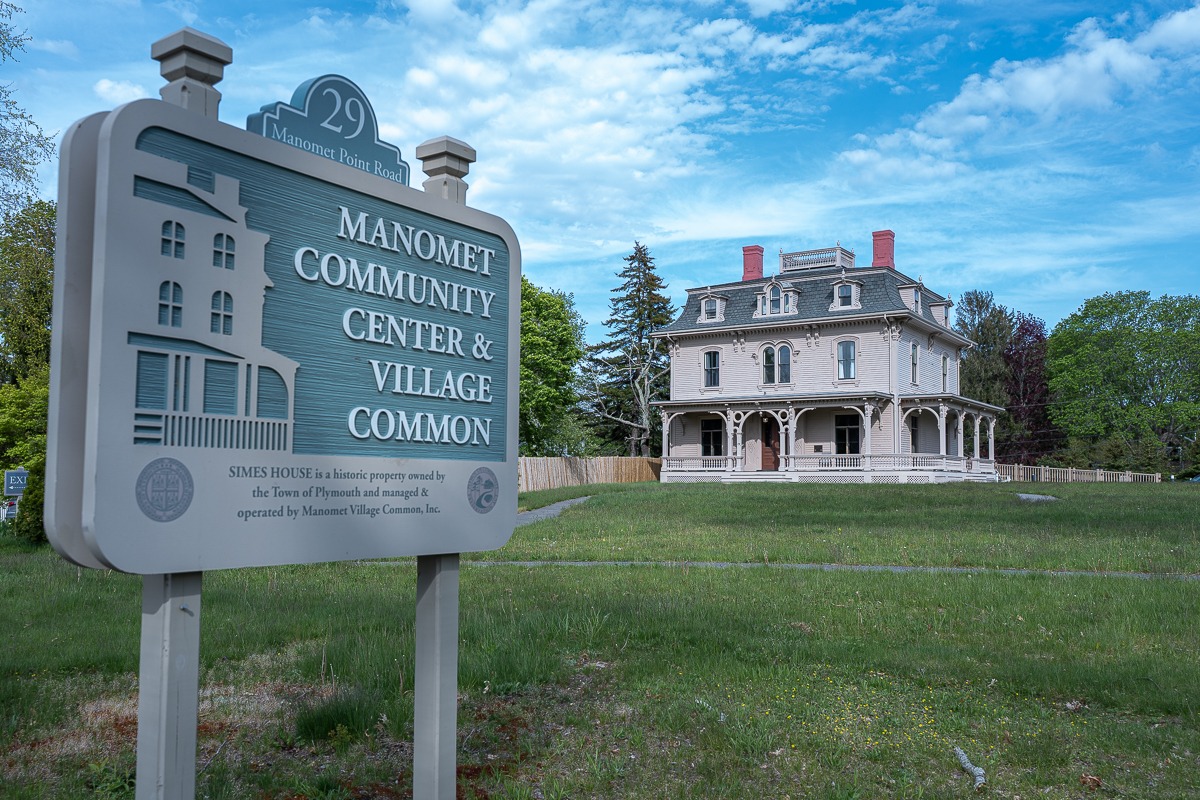
The Select Board has approved the sale of the historic Simes House in Manomet for $40,000, after the Town spent nearly $4 million and several years in an unsuccessful effort to find permanent use for the 19th century home.
The sale – to the operators of Manomet Bird Observatory – likely marks the end of the town’s expensive, 15-year saga working to preserve the home.
Since acquiring the house as a tax-title property in 2011, the town has approved spending $3.9 million to renovate and preserve the mansard-roofed 1863 Italianate summer house and surrounding grounds.
By a vote of 3 to 1, the Select Board on Tuesday sold it to Manomet Conservation Sciences – which intends to use it for its headquarters — for next to nothing. Select Board members who voted to unload the property cited the town’s inability to find tenants and the annual costs of upkeep and utilities.
“It seemed after many years of trying to find a good use for the property that would benefit the community, that this opportunity was the best option,” said board member Kevin Canty. Canty, David Golden, and Deb Iaquinto all voted in favor of the sale. Board member Dick Quintal was not present for the vote due to a death in his family.
The lone dissenting voice on the board, Bill Keohan, who as the longtime chair of the Community Preservation Committee was instrumental in the original decisions to save the Simes home from demolition, said the board was giving up too soon.
“We should have been leasing the building,” Keohan said. “This is not how you treat taxpayers’ money. I am completely opposed to giving the building away for pennies on the dollar. It is wrong to treat the people of Manomet in this manner. This was an investment in their community.”
Lizzie Shueler, president of Manomet Conservation Sciences, declined to comment.
The house was built by Joseph Simes in 1863, according to a history of the building from the Simes House Foundation. At the time, the farm consisted of 79 acres running from “Manomet House Road” east to the ocean.
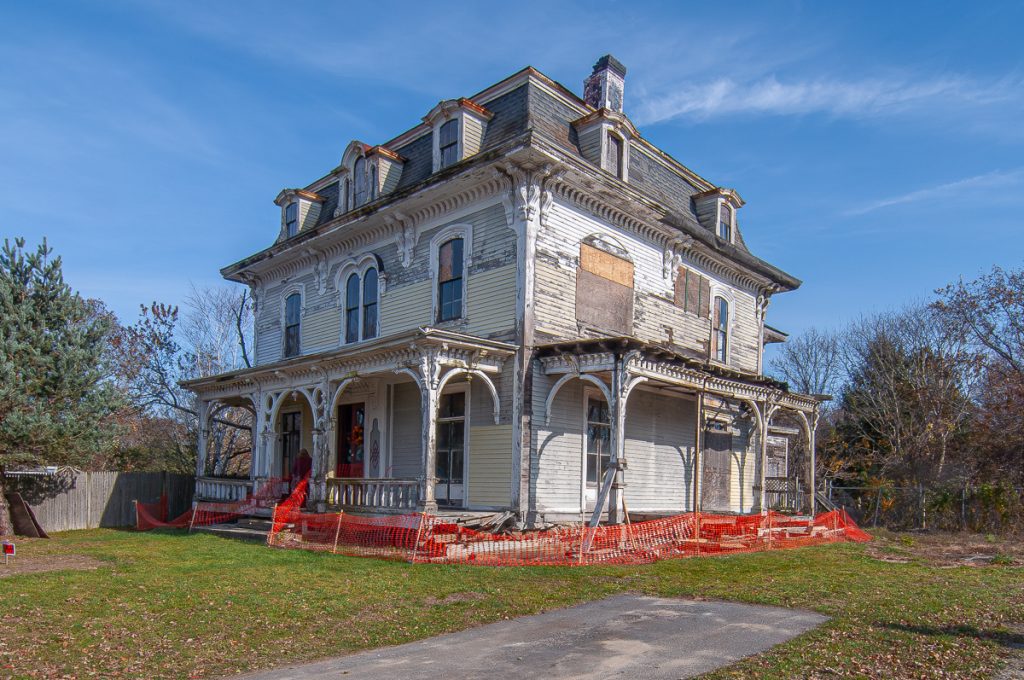
The property was slated for demolition in 2011 when the Manomet Village Steering Committee and some Manomet residents filed an application for Community Preservation Act funding to restore the outside, the roof, and the windows and doors and make the building weather tight with the goal of using it as a community center, recalled Keohan, who at the time was chair of the Community Preservation Committee. Town Meeting approved $1.5 million.
But the Simes House Foundation, the nonprofit entrusted with restoring the house, was unable to raise enough funds to restore the inside and returned the building to the town, Keohan said.
In 2015, Town Meeting approved another $2.5 million to create two affordable housing units on the third floor, four business office suites on the second floor to be rented to community-based nonprofits, and to restore the first floor so it could be rented out for meetings and functions. The land around the house would become a small public park.
In 2017, a nonprofit called Manomet Commons, Inc., was awarded a lease to manage the property. For three years, they rented out the top floor apartments and the second-floor offices, Keohan said.
Then the pandemic hit. The office tenants left. The community space went unrented. The nonprofit tried to persuade the town to renegotiate the lease and the insurance on the building, Keohan said. But when the lease ended in 2022, the Select Board declined to renew the lease and took the house back.
At the time, Betty Cavacco chaired the Select Board. Dick Quintal was vice chair. Harry Helm, Charlie Bletzer, and John Mahoney, the lone dissenting voice, also served on the board.
“I have absolutely no reason to believe that they wouldn’t have been successful,” Mahoney said of the nonprofit. “I was adamantly opposed that this piece of infrastructure come back to the town.”
Neither Cavacco nor Quintal immediately responded to requests for comment.
Since 2022, the building sat, as expenses mounted.
Last year, the town spent $64,000 on utilities, insurance, and maintenance and upkeep, said Lynne Barrett, the town’s finance director.
“So, the costs were really adding up,” said Iaquinto.
Last year, after getting no takers to lease the house, the town put out a request for proposals from potential buyers.
Manomet Conservation Sciences’s $40,000 bid was the only bid.
“Which we know is very low, but they were willing to live with all the restrictions,” Iaquinto said.
The house is being sold on condition the buyer honor deeded affordable housing and historic preservation restrictions.
Keohan said he is not sure the town can enforce the historic preservation restriction, as no historic preservation organization has agreed to enforce the restriction. The Massachusetts Historical Commission has not ruled on the acceptance of the restriction, he said.
The town is retaining an easement for 40 percent of the park, Keohan said.
“Sixty percent of the land is going with this organization, and they can do whatever they want with that land,” he said. “I beg to differ that this is allowable.”
Keohan said the Community Preservation Act requires Town Meeting to approve the sale of property that received CPA funds.
Fred Thys can be reached at fred@plymouthindependent.org