
Well, that was kind of awkward.
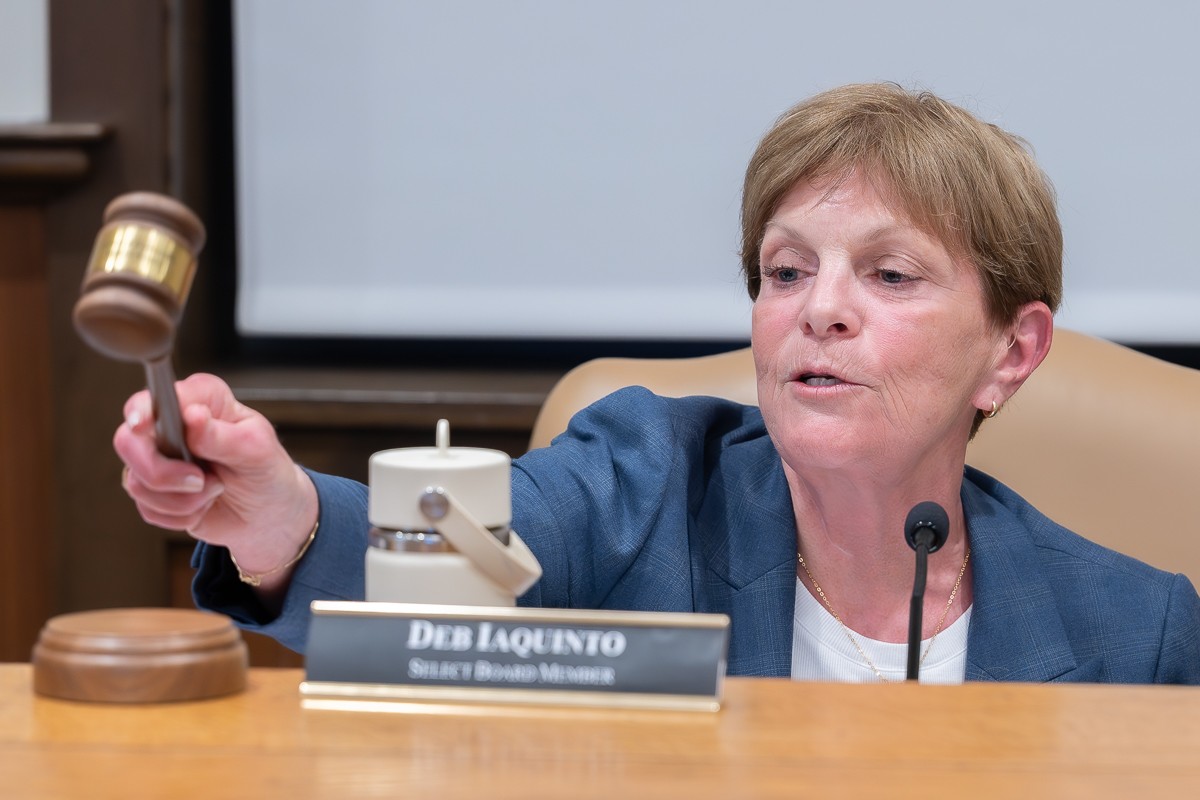
Following the most divisive election season in memory, the Select Board Tuesday convened with the same lineup and same tense atmosphere that marked the last 12 months. But after an unusually somber meeting, it adjourned with a new chair – the third one in a year – and the promise of a smoother functioning board going forward.
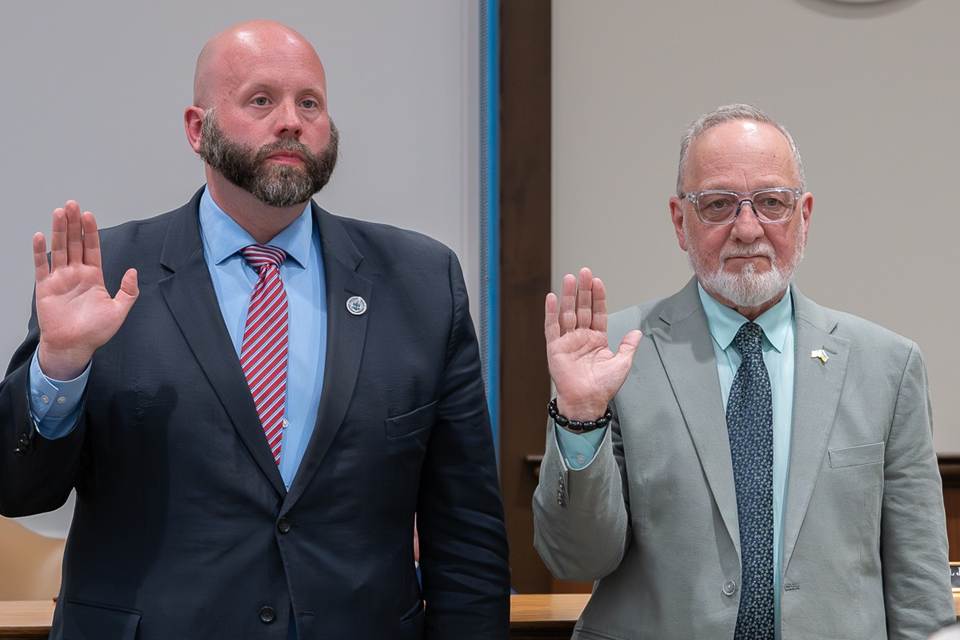
Political adversaries Kevin Canty and Dick Quintal were visibly uncomfortable as they stood to take the oath of office from Town Clerk Kelly McElreath at the start of the meeting. They remained on opposite ends of the dais until McElreath spoke.
“Are you OK doing it together or do you want to do it separately?” she asked the incumbents, who prevailed over challengers Betty Cavacco and Scott Vecchi in Saturday’s vote. OK or not, they moved forward and stood stiffly beside each other for the swearing in.
A few minutes later, the board made what was framed as a conciliatory move, voting 5-0 to appoint Deb Iaquinto as chair. Iaquinto, entering her second year on the Select Board, has emerged as the most diplomatic of its five members, able to disagree with her colleagues on occasion without stirring personal animosity.
Until last May, the traditional post-election board reorganization was largely uneventful, at least in public. That’s when Canty mustered the three votes necessary to replace a miffed Quintal as chair. Less than four months later, Quintal and Bill Keohan teamed up with David Golden to oust Canty and put Golden in charge. In calling for the vote then, Golden cited the need for a “restoration of collegiality.”
Saying he needed time to focus on his bid to gain the Republican nomination for state representative, Golden had already decided not to seek another year as chair. Regardless, it seems unlikely that Keohan – the swing vote – would have supported him this time. Golden was counting on Cavacco winning and Canty losing.
“This election was taxing…on a lot of citizens,” he said Tuesday in his remarks nominating Iaquinto as chair.
The campaign was marred by a slew of online accusations and grand promises – many from Cavacco and Vecchi – a crop of “Can Canty” signs, and an 11th hour anonymous mailing about Canty that included unsubstantiated accusations and outright fabrications.
Perhaps taking a cue from Michelle Obama’s “when they go low, we go high” strategy, he did not engage in the fray.
“The last year on this board has been really challenging, I think, for a lot of people to both watch and be a part of,” Golden continued. “We need someone in this chair that can bridge the divides that have happened over the last 12 months. I think we need someone who can create some healing for our community.”
Keohan nominated Canty to be chair, but he declined.
“I appreciate the thought, but I think that in the circumstances that we’re in, that the best course forward would be if we could unify behind Ms. Iaquinto,” Canty said in a measured voice. “She brings a fresh perspective and has been able to work with different folks in the community over the course of her tenure, which is only a year in so far. But I have always believed strongly in Deb Iaquinto and look forward to seeing what she can do, so I will not accept the nomination for chair.”
Golden then nominated Quintal as vice chair. That vote was 4-1 in favor, with Canty dissenting – a sign the rift between the two remains wide.
In an interview Wednesday, Iaquinto said she wasn’t seeking to become chair so soon but recognized it could signal a change in tone.
“We all were in agreement that we’re the same board, but we couldn’t continue to do things the same way because we were getting in our own way and we were just not being as productive as we knew we could be,” she said. “What we wanted to do was send a strong message to the community that we want to move forward.”
While board members have personal differences, Iaquinto said, “We have common goals for the Town of Plymouth. We have the budget we’re dealing with. We have affordable housing, economic development.”
Iaquinto acknowledged she faces a “learning curve” when it comes to parliamentary procedures and terminology and said she plans to be plain spoken.
“I hate to use the word ‘sides,’ but partnering with [Quintal] as vice chair kind of brings the two sides together,” she said. “I know we can work together. I’m very optimistic that we’re going to be able to get past the awkwardness that you might have seen last night and just stay focused on what we need to do.”
Iaquinto said a priority will be putting board decisions in better context for the public.
That brought to mind the lack of context for the board’s vote last week to approve the sale of the Simes House in Manomet. The town sunk almost $4 million into restoring the historic site but ended up selling it to the Manomet Bird Observatory for $40,000 after failing to attract higher bids. That vote was bundled with other items requiring action in a section of the agenda known as administrative notes. The board typically approves those notes collectively, without much – or any – discussion. And while they usually involve routine matters, the notes section can also serve as a place to hide a controversial decision.
In the Simes case, Keohan – who was intimately involved in the restoration project as chair of Community Preservation Committee – asked the item be taken up separately. He cast the sole vote against the sale.
“Everybody is not going to be happy with every decision that we make,” Iaquinto said Wednesday, “but if they understand why we made the decision, we have a much better chance of having them accepting in the end that it was the right thing to do. We have not been very good at that.”
Mark Pothier can be reached at mark@plymouthindependent.org.