
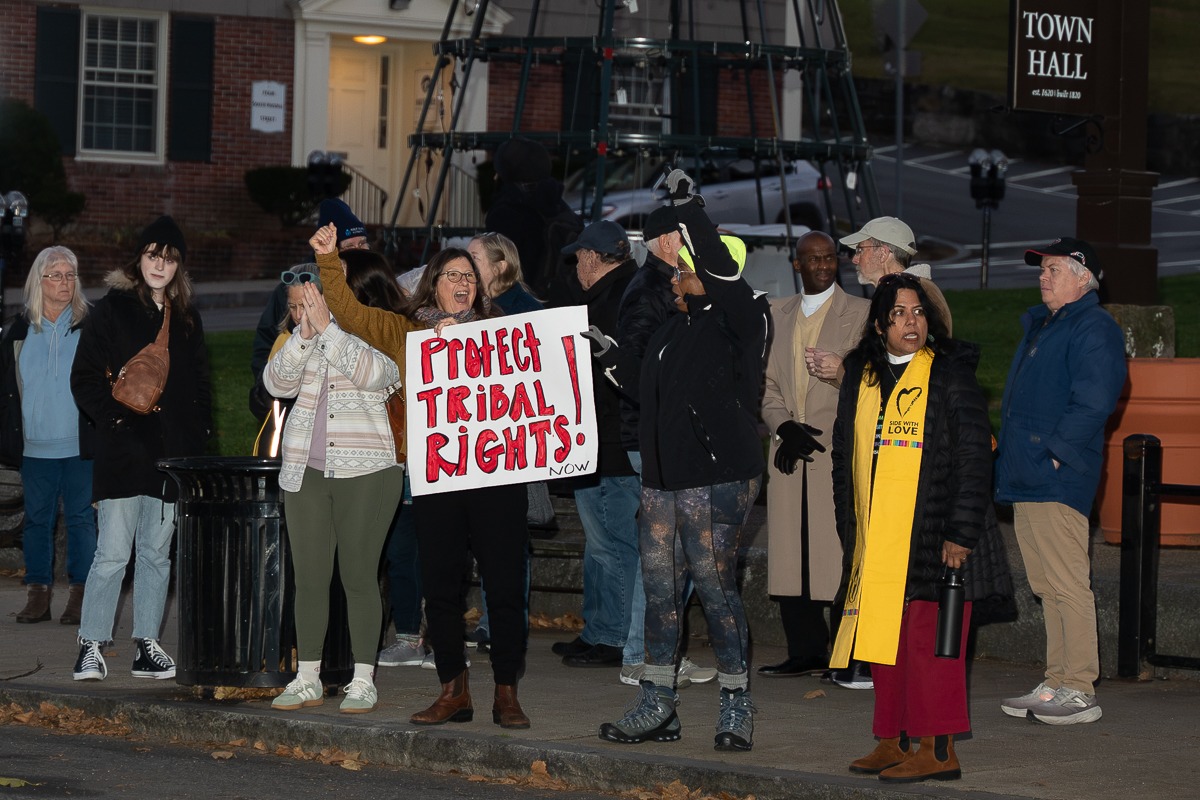
I read the Plymouth Independent article about the indemnification requirements imposed on the organizers of Plymouth’s National Day of Mourning. I wish I had been in town to join those protesting.
As co-author of the Native Land Reparation Pledge, along with Gail Melix, a member of the Herring Pond Wampanoag Tribal community, I find this requirement deeply troubling, not only because of the financial burden it imposes, but because it turns responsibility upside down.
The Wampanoag people welcomed the Mayflower passengers without demanding guarantees or protection. Their generosity of spirit helped the early settlers survive. Yet what followed was the taking of their ancestral lands, violence, disease, broken treaties, and the destruction of their communities and way of life.
Now, centuries later, Plymouth is asking descendants of those same people to financially protect the town simply so they can gather on Thanksgiving morning to remember what happened to their ancestors.
It is like inviting someone into your home, then they take possession of your house, and then, generations later, demanding that their descendants purchase insurance to protect you when they return to remember what was taken. At some point, common sense, historical awareness, and moral responsibility must enter the conversation. It takes civic responsibility and maturity to reverse direction and make amends.
I have no doubt the Select Board believes it is acting responsibly. But good intentions should not prevent us from recognizing when a policy is unreasonable. The Wampanoag are not just another outside group seeking to use town property. They are part of this land’s history, long before Plymouth became a town.
The Native Land Reparation Pledge offers an example of moving beyond words and accepting responsibility through meaningful action. I believe Plymouth should waive the annual required insurance and indemnification as its own version of that pledge.
Rather than placing this financial burden on the descendants of those who lost their homeland, the town should accept the responsibility itself. What better way to demonstrate that reconciliation means more than public statements and ceremonies?
The town should be making it easier for the National Day of Mourning to take place, not making it more difficult or expensive. Sometimes the most meaningful act of reparation begins with recognizing that a responsibility has been placed on the wrong shoulders, and having the decency to take it back.
You can indemnify a town against financial claims, but you cannot indemnify it against its own history.
– Lewis Randa
Randa is executive director of The Peace Abbey Foundation.