
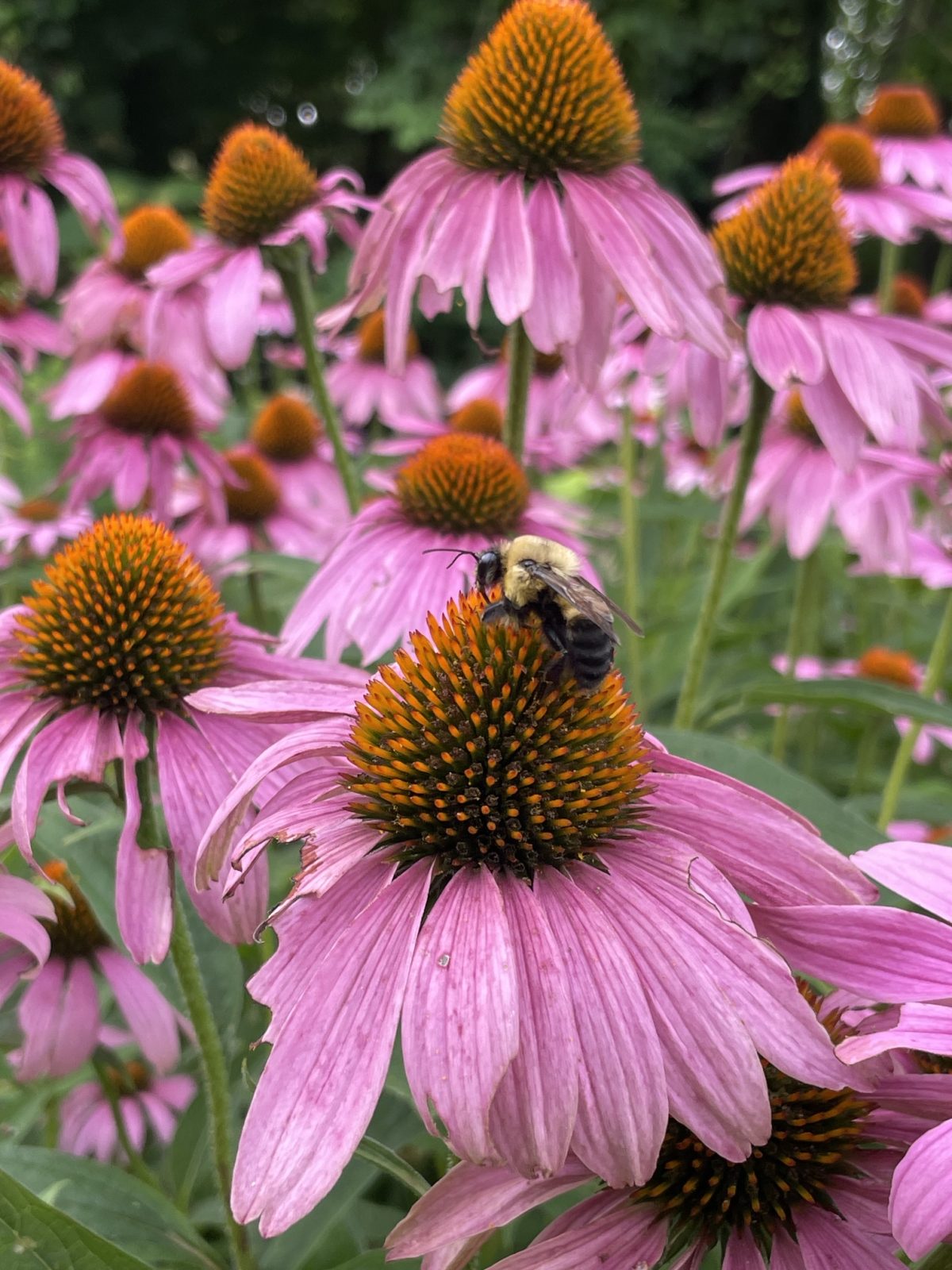
People across Southeastern Massachusetts and, especially Plymouth, are showing an increasing amount of interest in learning how to better support pollinators, particularly butterflies and our native bees which in turn support our bird population.
There have been more and more studies and headlines recently about how the populations of our pollinators and birds are continuing to decline at an alarming pace, and how many species are undergoing stress and are even at risk of extinction. Many of us have observed firsthand this decline in our own gardens, at our birdfeeders and even driving down the road with fewer insect splats on the car.
Pollinators, primarily bees, contribute more than $34 billion annually to U.S. agriculture and help produce one in every three bites of food we eat. Source: U.S. Department of Agriculture (USDA), “The Importance of Pollinators.”
We can all do our part to make a positive difference. Supporting these pollinators can happen in many small ways from flowering window boxes to planting native plants in home gardens, “Leaving the Leaves” in the Fall and participating in “No Mow May” in the Spring. Everything helps.
On a larger scale, through various organizations and programs, Plymouth has been established as an official pollinator pathway in Massachusetts and so has been listed on a wonderful international Pollinator Pathway website since the Fall of 2023. So far, Plymouth has listed 15 sites, and it continues to grow! All are great sites to visit for inspiration or just to take a walk.
The Plymouth Pollinator Pathway combines the following to create a connected network of pollinator habitat across Plymouth and neighboring areas:
- Ecological restoration of former cranberry bogs and waterways.
- Native plant demonstration gardens.
- Educational sites (schools, museums, library).
- Community gardens and farms.
- Conservation lands and wildlife sanctuaries.
- Faith-based and residential participation.
A few highlights of Plymouth’s current Pollinator Pathway include the following:
- Foothills Preserve — 84 Beaver Dam Road
- First Parish Plymouth Unitarian Universalist — 12 Church Street
- Manomet Observatory — 125 Manomet Point Road
- Myles Standish Native Plant & Pollinator Gardens — 194 Cranberry Road, Carver
- Plimoth Patuxet Museums — 137 Warren Avenue
- Plymouth County Sheriff’s Farm & Pollinator Garden — 74 Obery Street,
- Plymouth Public Library Gardens — 132 South Street
- Rye Tavern Garden — 517 Old Sandwich Road
- Tidmarsh Wildlife Sanctuary — 60 Beaver Dam Road
- Wildlands Trust at Davis Douglas Farm — 675 Long Pond Road
The Town of Plymouth’s Department of Energy and Environment continues to make impactful steps across Town conservation areas and has been instrumental in joining Sustainable Plymouth, America’s Hometown Garden Club and the Town of Plymouth Open Space Committee to launch a new collaborative Educational Pollinator Garden at Crawley Preserve which broke ground late last year.
All of this effort has gained the attention of the Environment Massachusetts Research and Policy Center in their article “Survey Reveals Buzz of Activity Across Massachusetts to Save Bees” in which Plymouth is mentioned as one of a dozen communities in Massachusetts that have earned the top possible pollinator protection score in their survey.
If you are interested in this effort, we highly recommend getting out to these wonderful sites for a visit and learning more through Plymouth’s Pollinator Pathway webpage. Our pollinators need all the help they can get and your yard has an important role in helping to sustain Plymouth
– Cynthia Goss
Goss is a member of Sustainable Plymouth’s native plant and pollinator pathway working group.