
Should a private entity do the public’s business behind closed doors?
The Plymouth Foundation was created in 2001 to straddle the worlds of public policy and private development. (Read a primer on how the foundation came to be and evolved.) But that approach is being questioned by some because of the foundation’s role in the development of a controversial business park at 71 Hedges Pond Road in Cedarville.
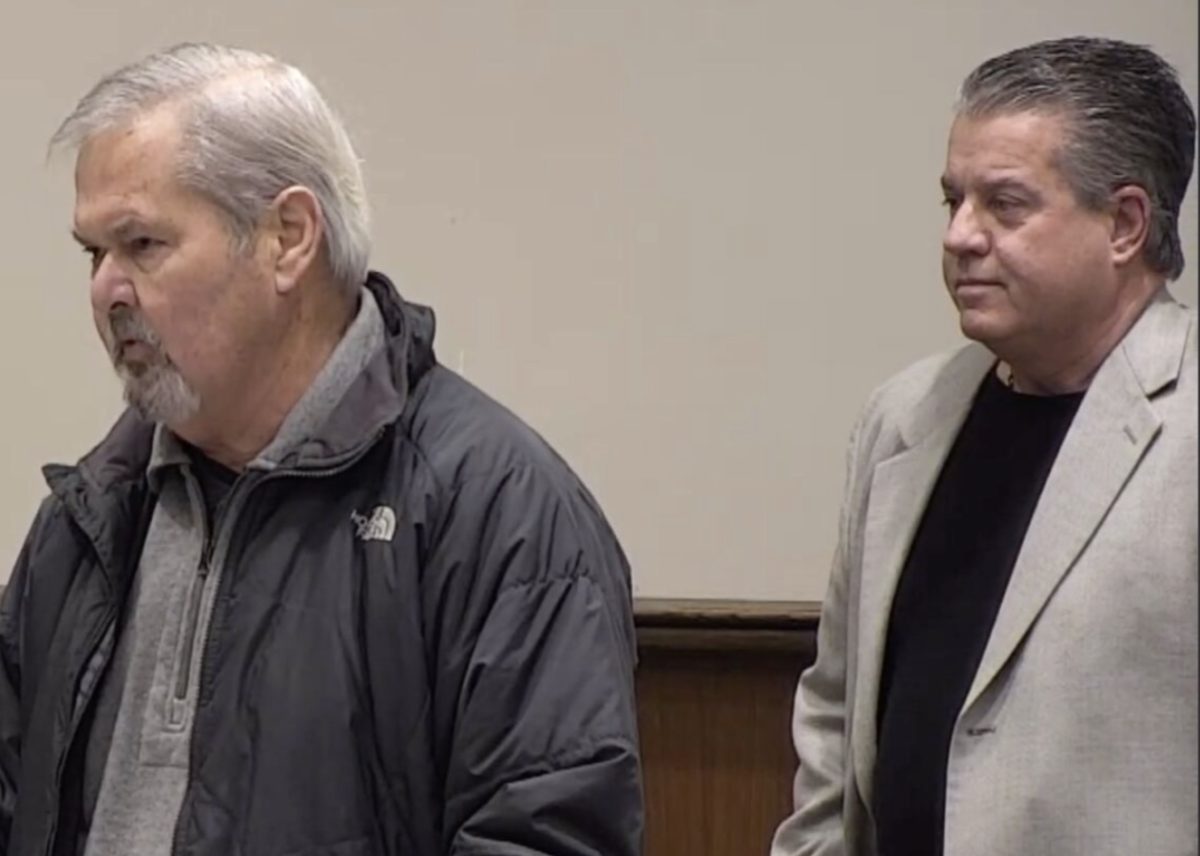
“We have the (foundation’s) board of directors infused with town officials, operating in secret, and not conducting meetings in full public transparency,” Town Meeting Member Bill Abbott said at the fall meeting in October. “Government always works best when it’s conducted in daylight.”
Abbott’s motion to debate the question of whether town employees should serve on the foundation’s board fell just four votes shy of the two-thirds needed to overrule Town Moderator Steve Triffletti’s ruling that the article was out of order. While the vote may have failed, it did draw more attention to the role of the foundation in shaping Plymouth.
“There’s some misconception out there that the foundation is an arm of town government. It is not, and it’s designed not to be,” said Select Board member Kevin Canty. “That’s unfortunate because I do think the foundation is trying to do what it was created to do.”
Members of the foundation’s executive committee say their private status is often helpful for the town because it can be more flexible than a municipality. As a nonprofit economic development entity, it is exempt from certain state procurement regulations, allowing the town to work directly with the foundation on real estate developments without having to put the work out to bid. And the foundation’s board can interact with private entities in ways the town cannot to speed action on projects that align with the community’s goals for economic growth.
“You could not ask for a better welcoming committee than this board,” said foundation board member and president William Hallisey. “When a business is thinking about Plymouth we can tell them how they’re going to have to navigate around town and we can answer questions in one meeting with everybody at the table. We can tell them what has worked in the past, what hasn’t worked, bounce ideas around, and give them our best advice to land that business in Plymouth.”
Stephen Cole, executive director of the foundation – and its sole paid employee -stressed that the organization does not grant any town approvals or permits. Any projects that may arise through planning by, or in consultation with the foundation, must go through the town’s regular permitting processes, he said.
“Everything we do is within the bounds of public policy and public law,” Cole said.
Being able to meet privately, without posting meeting dates, agendas or minutes for the public is also the foundation’s prerogative, board members say, and an important asset.
“If a business is thinking about Plymouth they usually don’t want their competition to know what they are doing,” said foundation board member Jack Meehl. “They want to scout things out and figure out if this is the right place for them. So, we can help them get answers and it’s all confidential. It doesn’t get out to the public.”
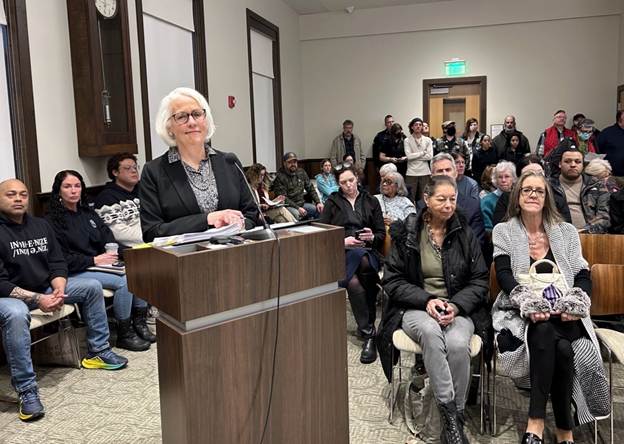
That public meeting question was tested by one of the foundation’s harshest critics, attorney Meg Sheehan, who has opposed the Hedges Pond Road project and others in the region because she believes their real purpose is to reap profits by mining large amounts of sand and gravel.
Last year Sheehan filed a complaint with the state attorney general’s office on behalf of Save the Pine Barrens Inc. and the Community Land & Water Coalition, two environmental groups she is aligned with. She argued that the foundation was a public body that violates the state’s Open Meeting Law by not posting advanced notices for its meetings. But that didn’t fly.
In a five-page decision dated Oct. 15, 2025, Assistant Attorney General Elizabeth Carnes Flynn, writing for the Division of Open Government, concluded that after reviewing the facts “we find that the Foundation is not a public body subject to the Open Meeting Law and therefore could not have violated the Open Meeting Law.”
In this regard, the Plymouth Foundation is not unique. There are scores of similar nonprofits across the state with economic or community development missions that are private and not bound by the Open Meeting Law. Many have direct connections with their local governments, others do not.
The Marlborough Economic Development Corporation is a good example that mirrors the role of the Plymouth Foundation. MEDC was created in 2007 to help that city recover from the loss of 5,000 jobs when Fidelity Investments moved operations out of Marlborough.
The MEDC is a private nonprofit entity that runs the economic development operation for the city. Its $1 million-plus budget is funded through a portion of the city’s hotel tax, subject to annual appropriation by the city council.
“We have both the mayor and the city council president on our executive committee, and that is so important,” said Meredith Harris, executive director of the MEDC.
City leaders help keep the MEDC aligned with community goals as it works to help local businesses grow, recruit new businesses to the city and to promote Marlborough as a tourist destination, Harris said.
Harris and her executive committee meet regularly in private with businesspeople considering projects in Marlborough. “Before they spend a whole bunch of money on plans and lawyers, we can tell them up front if it sounds like a good idea, or if it would be a good fit for our community,” she said.
The private nature of those early meetings “is critical,” Harris said, “because it helps people avoid blunders in the public process and it ensures that projects are aligned with community needs.”
That argument didn’t persuade Plymouth Town Meeting Member Sybill Holland, who spoke in support of Abbott’s motion in October. She said when town officials plan projects in private with the foundation, the public doesn’t realize what could be happening until it is too late to modify or stop something objectionable.
“Given this level of secrecy, it is critical that we maintain the boundaries between the foundation and the town’s employees,” Holland said. “A critical first step forward is to ensure that municipal employees are not working for the foundation.”
Town Manager Derek Brindisi, who holds one of the Plymouth government’s seats on the foundation board, disagrees.
“Could you imagine what the debate would be if the town was contributing money to the foundation but we didn’t have any input?” Brindisi said. “That’s why we have three seats on the board so we can be very clear about the community’s goals and have input on the direction of the foundation. And the foundation is able to help make some of those goals become reality, I think, a little bit more efficiently than if the town tries to do it on its own.”
For example, Brindisi said, the Plymouth Foundation moved quickly on his request to get involved in evaluating the future of Memorial Hall.
In October, Town Meeting approved money for a consultant to study what elements of the building have historic value and should be preserved. While that process is ongoing, Brindisi said the town also needs to understand the economics of such a venue and what the market potential may be when deciding whether to renovate, replace, or even sell the building. The foundation now plans to hire a consultant to conduct that study for the town.
“If we wanted to do that ourselves, we’d have to go to Town Meeting in April, ask for some money, issue an RFP, and then maybe have somebody on board to do the work by next fall. So, at best, we’d be looking at presenting a set of options to the Select Board in 2027,” Brindisi said. “By working with the foundation, we hope to be ready to make recommendations in the spring.”
Michael Cohen can be reached at michael@plymouthindependent.org.