
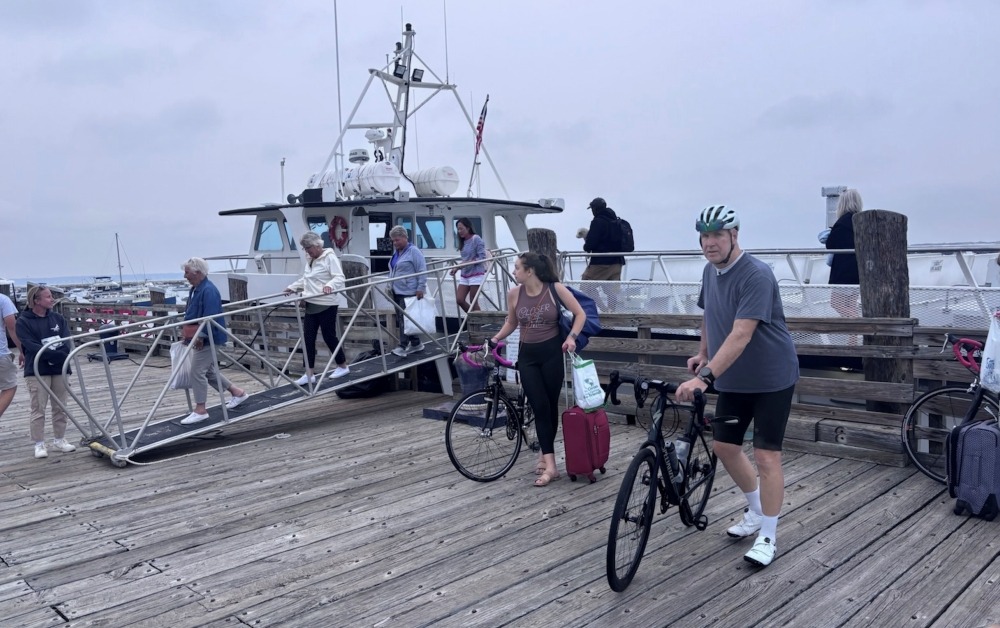
It’s the time of year when Plymouth takes on an international accent. Despite being known by many as a destination for day-trippers because of its proximity to Boston, the local tourism industry relies heavily on visitors from other countries, who stay longer and spend more money.
But this summer, fewer foreign languages are being heard around town.
Bad feelings over tariffs, inflated prices, and the implementation of tougher immigration rules are hurting business, with a noticeable decline in activity downtown and along the waterfront.
“Stricter immigration and visa policies have led to a noticeable decline in international visitors,” said Lea Filson, president of the tourism organization See Plymouth, during testimony last month before the Massachusetts House Committee on Federal Funding, Policy and Accountability. “In our area, this has impacted key heritage attractions like Plimoth Patuxet [Museums], Mayflower II, and other historic locations.”
Canadian visitors in particular have been staying away, Filson told the Independent.
President Trump and newly elected Canadian Prime Minister Mark Carney have been trading barbs over tariffs the U.S. imposed on its neighbor to the north, a key trading partner. Last week, Trump announced that he was increasing taxes on goods from Canada from 25 percent to 35 percent, and trade talks between the countries came to a halt. That’s created more bad blood and renewed calls for Canadian citizens to cancel vacation plans in the U.S. On top of the politics, the tariffs have added on to already higher prices. That is putting once affordable trips to places like Plymouth and Old Orchard Beach, Maine – a resort town long popular with travelers from Canada – out of reach for some. Others aren’t coming simply to show their displeasure with Trump’s policies.
“We’re getting many calls from Canadians telling us that while they love our area and while they have come here many times to vacation in the summer, they’ll see us in a few years or perhaps after the next administration comes to the fore,” Filson said. “A lot of them express their uneasiness with constantly being told [by Trump] that they are going to become a part of the United States, saying they want no part of that.”
Some Canadians say they don’t feel safe crossing the border because they have read about the detention of tourists, she said.
“Among other comments, they have told us they will not travel here because they no longer feel the United States is a friendly neighbor,” she said. They mention tariffs, that our President is not respectful to their [prime minister], that they are fearful of crossing the border and being detained or arrested, and that they will not be visiting here while this U.S. administration is in office.”
Tom Begley, executive director of Plimoth Patuxet, also said fewer Canadians are visiting this summer, though he did not provide any numbers.
“Canada is one of the larger changes that we’ve noticed,” Begley said.
Filson said some international visitors are still coming, but fewer are coming in groups, which boost hotels by booking swaths of rooms.
In addition to the ill will caused by the tariff skirmishes, she worries that an 80 percent cut in federal funds for Brand USA, a public-private enterprise that markets the United States abroad, could have an impact as well.
In the past, Filson said, See Plymouth has been able to join Brand USA campaigns.
Filson said total tourist spending was up in April and May, but early numbers for June indicated a drop. Plymouth County businesses that rely on tourism saw a 17 percent decline in spending in June compared with last year, she said. Hotels were down by 12 percent, restaurants by 1.8 percent, retail 9 percent, and arts, entertainment, and attractions 2.6 percent.
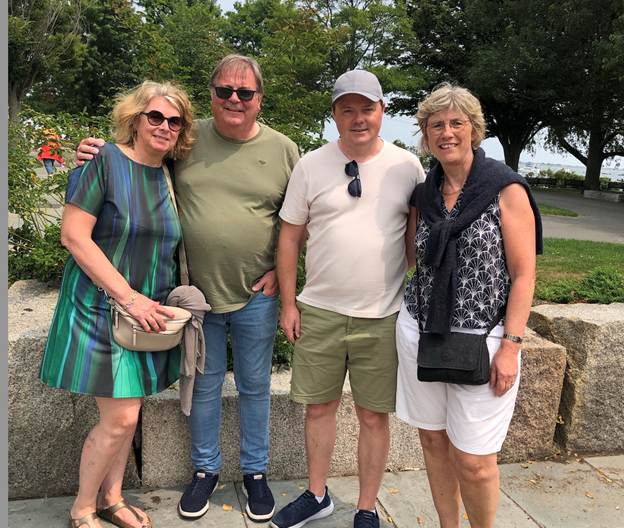
But, of course, people are still coming to town from other countries. On Tuesday, a reporter ran into visitors from Italy, Germany, and Belgium who were walking through Pilgrim Memorial State Park on Water Street.
Alexandre Delie, Vincent Ameye, Francoise Vanderhaegen, and Isabelle Vandeburie – all from Belgium – were among those taking in the views of the harbor on a hazy day.
“We wanted to focus on the history of the United States from its beginnings,” said Delie. “Plymouth is an important part of colonial history. We wanted to learn more about it by coming here.”
But he said they were apprehensive about coming to the United States after media reports in Belgium detailing problems with tourists being detained at airports.
“In the end, everything went very well,” he said. “We had a border control experience with someone who was extremely likable, so I think the media scare was somewhat exaggerated.”
The Belgian visitors said they planned to spend plenty of time and money during their visit. They flew into Boston and stopped in Plymouth on their way to Newport, New York, Philadelphia, the Pennsylvania Amish country, and Washington. D.C. After that, Delie and Vandeburie plan continue on to Chicago and Ohio, where Delie’s grandmother emigrated to join his grandfather in 1916 and where they lived for eight years before returning to Belgium.
Fred Thys can be reached at fred@plymouthindependent.org.