
In 1984, Paul K. Hurley graduated from the U.S. Military Academy at West Point and was commissioned as an officer in the U.S. Army, eventually becoming a captain of artillery in the famed 82nd Airborne Division. The Weymouth native loved the camaraderie of the armed forces, but felt like something was missing in his life. So he left the Army in 1990 to find out exactly what that was.
“The feeling wouldn’t go away, so I had to go off and figure it out,” the Plymouth resident recalls. “I resigned and joined the seminary – not to become a priest, but to look inside at what was missing.”
Except Hurley did become a priest and went back into the Army – this time as a chaplain. He served seven tours in Iraq and Afghanistan, performing last rites on the battlefield and otherwise ministering to the spiritual needs of lonely soldiers thousands of miles away from home. He was later promoted to major general and became Chief of Chaplains before retiring from the Army in 2019.
This Veterans Day, Father Paul – as he is known at his parish of St. Bonaventure Catholic Church in Manomet – proudly reflects on his time in the military and fondly remembers the special men and women he served with during difficult deployments.
“People often confuse Veterans Day with Memorial Day,” he says. “This is the day we honor those who are still living. We need to appreciate the people who step up and serve their country by joining the military. We must affirm and celebrate every person who is serving.”
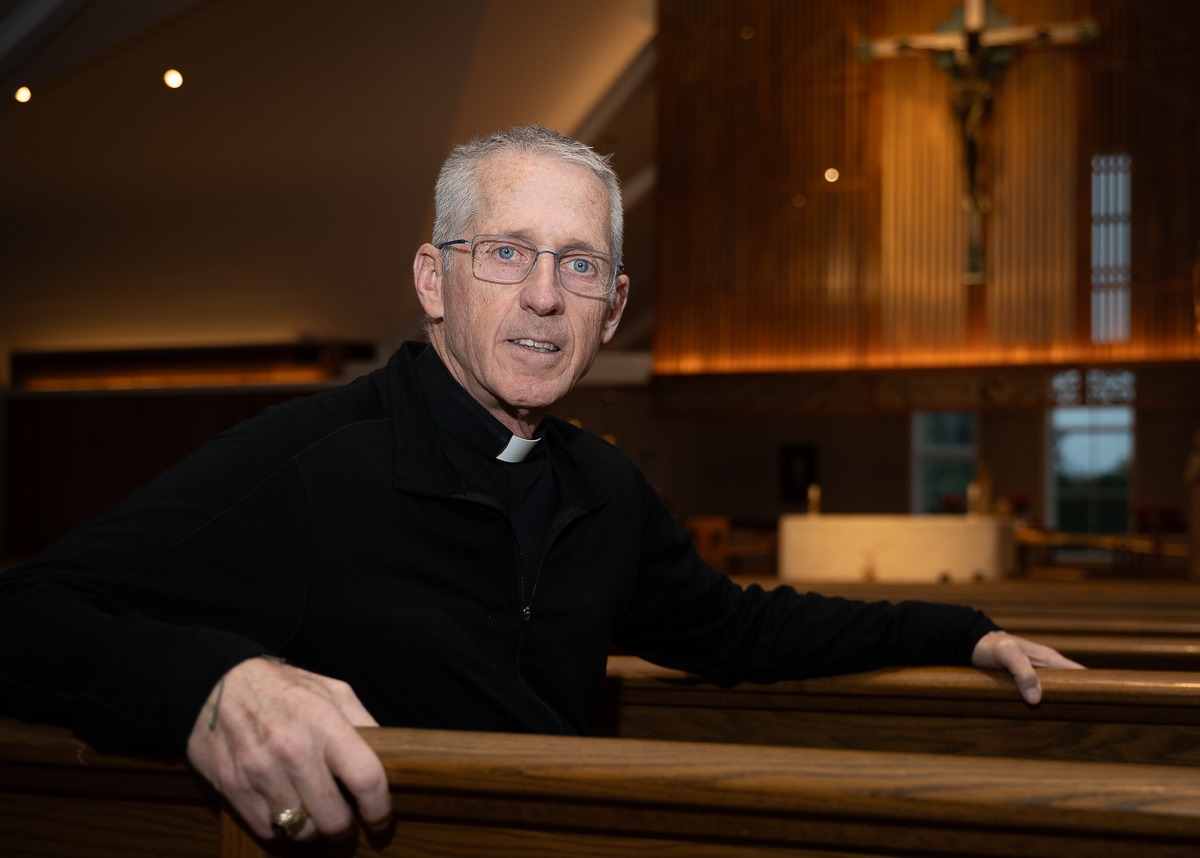
Sporting short-cropped gray hair and possessing a slender but wiry build, Hurley is a captivating presence as he paces the grounds at St. Bonaventure, where he became pastor in 2024. He has the unmistakable energy of a man used to commanding others as well as the peaceful demeanor of one who bows to serve their spiritual needs.
“This is a growing parish with a lot of young families,” he says. “We’ve expanded quite a bit in the last 10 years. It’s a great community. I miss the military, but I like it here.”
Being a priest at St. Bonaventure is a far cry from Hurley’s service during firefights in Iraq and Afghanistan. He witnessed considerable carnage as command chaplain for the XVIII Airborne Corps, a rapid-deployment unit. Many times, he was in the line of fire praying over and comforting severely wounded soldiers.
Hurley gets emotional when he talks about those moments on the battlefield or in military hospitals. He has locked away that part of his service, which is deeply personal and spiritually gut-wrenching, so he can stay focused on the now by helping those he can today. But he does open up about a few disturbing moments in careful, measured words.
“I was in a field hospital with the base commander and this tough-as-nails sergeant major who looked like he could bite your head off,” he recalls. “We were pinning a Purple Heart on a quadruple amputee in the mortally wounded ward. It was so quiet you could hear a pin drop. All of a sudden, I felt this tug on my sleeve. I turned around and it was the sergeant major. He was so overcome with emotion he couldn’t speak. He looked at me with pleading eyes, urging me to say a prayer.”
As a chaplain, Hurley was responsible for the spiritual wellness of thousands of men and women, as well as their families when stateside. He held religious services for Catholics and listened to “God questions and issues of mortality” from those of other religions in his unit.
“Catholics need a priest to lead them in the sacraments, so I prayed Mass for them,” he says. “I was also responsible for finding a reverend for Protestants and a rabbi for Jews when they wanted to hold religious services. Muslims pray on their own five times a day, so they don’t often need a religious leader.”
Once he became a priest, Hurley had no plans to go back into the Army. However, he was summoned by the archbishop of Boston, who asked if Hurley would consider becoming a chaplain. He declined – at first.
“I asked, ‘Why me?’” he says. “The archbishop explained that historically the Boston area has supplied the most chaplains to the military. At that time, in 2000, he told me there were 12 chaplains in the Navy from the archdiocese but none in the Army. Well, that old service branch rivalry kicked in and I said, ‘I’ll do it!’”
Hurley was not your average Army chaplain. Because he was assigned to an airborne unit, the physically fit and mentally tough priest went through paratrooper training, qualifying as a jumpmaster – meaning he was responsible for safety by checking troops’ equipment before they parachuted from the plane.
“I remember one time we were preparing for a jump,” he says. “There were two other jumpmasters with me. I looked over at them and each had a handful of soldiers they were inspecting. Then I looked at my line: there must have been 50 people waiting for the priest to check them over. I guess they figured they were divinely safer with me.”
While serving overseas, Hurley learned he was in line for a very important position: the 24th Chief of Chaplains, responsible for leading some 2,500 active-duty and reserve members of the Chaplain Corps. Since he was a colonel in 2015, his selection meant he would be jumped two ranks to major general to serve in the post.
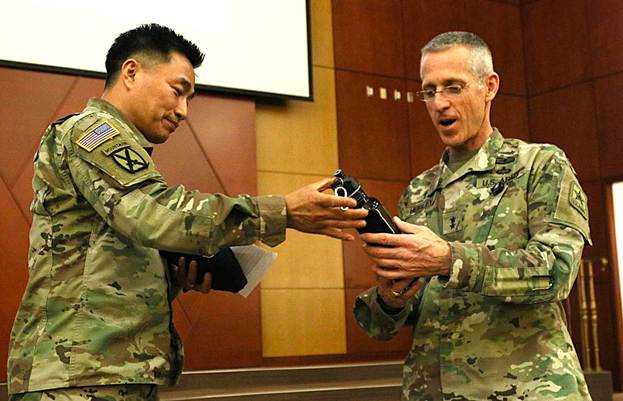
“When I found out, I thought they were messing with me,” he recalls. “That had never happened before where a colonel was made chief of chaplains. My plan after serving in combat was to go back to the Military Academy and become chaplain. They had never had a Catholic in that role before. But I was called to something different.”
In his new role, Hurley sought to transform the corps into a more spiritually present force. Too often, he says, chaplains get caught up in the regular routine of the Army hierarchy and don’t provide enough of the faith and reassurance military members need.
“My goal was to change the Chaplain Corps identity,” he says. “I wanted to remind them that they are chaplains first and foremost, and not line officers in the chain of command. When troops go out on a mission, they needed to be at the gate to wish them well as they leave. Soldiers are under a great deal of stress and they come back changed. Our job is to keep them spiritually healthy by caring for their souls.”
When Hurley retired from the Army in 2019, he brought home a host of honors: Legion of Merit, Bronze Star Medal with Oak Leaf Cluster, Afghanistan and Iraq campaign medals, and numerous other awards for bravery and service. He was also featured in the documentary Chaplains: On the Front Lines of Faith, which aired on PBS.
This Veterans Day, Hurley has special plans to honor the occasion. At his recommendation, the Boston Archdiocese has invited some 40 former chaplains from the Boston area for services at St. Bonaventure in Manomet. Archbishop Richard G. Henning will attend the observance.
“The gathering will include a simple dinner,” Hurley says. “We want to recognize the important role chaplains play in the military.”
Of course, on Veterans Day, the former soldier and retired chaplain will be thinking of those who served and still serve on active-duty around the world. His mind is never far from the battlefield or the brave men and women who have put their lives on the line for their fellow citizens.
“I consider it an honor to serve in the military,” Hurley says. “Less than 1% of people have done this. We owe a great deal of respect for those who serve.”
Dave Kindy can be reached at dave@plymouthindependent.org.