
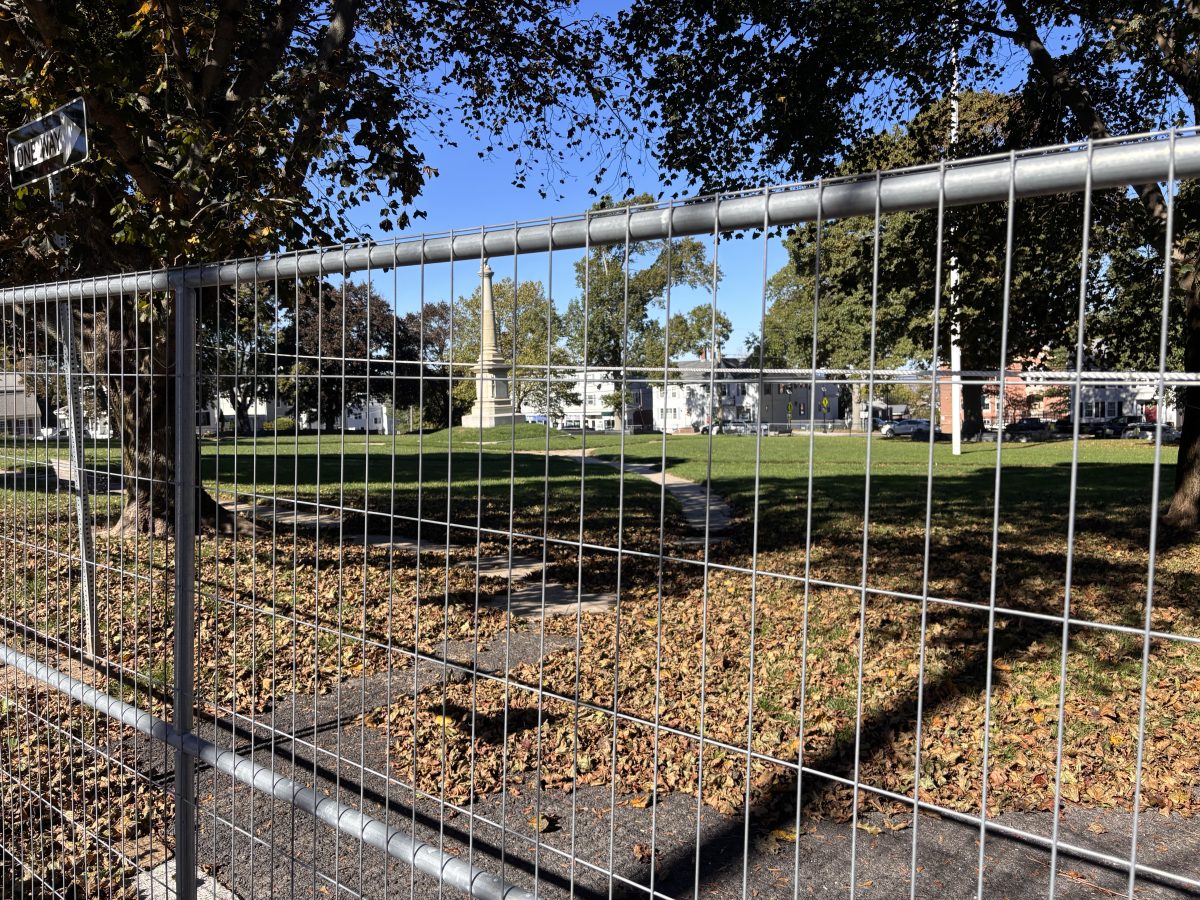
The chain-link fencing that recently went up around the town Training Green might make it look like an EPA hazardous waste site to passersby. But while they and neighborhood dogs deprived of a favorite walk route may disagree, the barrier signaled the start of something good – an overdue makeover.
The 1.4-acre public park dates to 1711 and was redesigned by famed architect Frederick Law Olmsted in the late 1880s. Despite its significance, however, the green doesn’t get the kind of attention heaped on many of the town’s other historic sites. Some residents aren’t even aware of its existence. For the record, the Training Green is bordered by Pleasant Street, Sandwich Street, and North and South Green streets, just south of the downtown business district.
Long in the making, the rehab project entails replacing and regrading cracked and uneven walkways, repairing and resetting stairs, installing railings, illuminating the flagpole and Civil War monument at the green’s center, adding ADA-compliant paths, and installing an underground irrigation system to better maintain the lawn, which often browns out at the height of summer tourist season.
The work will cost about $600,000, according to Nick Faiella, the town’s parks and forestry superintendent. The goal is to complete most of it before winter.
“Overall, it’s about safety and accessibility,” he said in an interview, “but we are going to respect its history. It’s one of the oldest parks still being used in the country.”
From its earliest years, the green was used for military training – a practice that lasted until World War II – and to this day it serves as the terminus for Memorial Day and Veterans Day parades.
The focal point is the Civil War monument, designed by Peter Blessington and built in 1867. It is inscribed with the names of 72 Plymouth men who died in the war. In a 2023 column, the Independent’s Bill Fornaciari said the monument’s 1869 dedication ceremony attracted a crowd of 5,000 people.
“The monument should have been lit a long time ago,” Faiella said. “We’re figuring if we’re going to do this [work], let’s do it right and let’s do it all at the same time.”
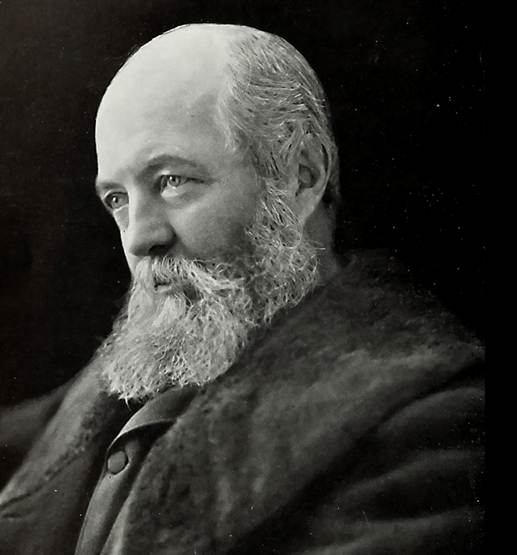
About 20 years after the dedication, the Plymouth Park Commission hired Olmsted’s architectural firm to redo the layout. He designed two other small parks in Plymouth as well: Burton Park on Whiting Street – not far from the Training Green – and Bates Park at the corner of Allerton and Vernon streets.
Having Olmsted’s fingerprints on three parks puts Plymouth in rare territory. Among his many notable projects are Central Park in New York and the grounds of the U.S. Capitol in Washington, D.C.
Preparations for the Training Green improvements have included protecting the root systems of the park’s trees from the stress of excavation work, Faiella said.
As for the fencing, he said, “It’s for the safety of passersby, just like any construction project.”
One element that is not part of the project: lighting along the pedestrian paths. Despite the urging of Town Manager Derek Brindisi, Town Meeting last October refused to fund the electrical work. One argument was that Olmsted’s version did not include lamps, but Brindisi said in an interview that archival photos supplied by Fast Eddie’s barbershop across Sandwich Street showed “gas lanterns on the perimeter of the park.”
Better illumination in public spaces is something residents often ask for, he said.
“Our parks are dark, our parking lots are dark,” Brindisi said. “It’s one of the primary complaints we get – people complaining about how dark they are, and that they are more susceptible to wrongdoing” taking place.
But even without lighting, he said, the project will result in a major upgrade – physically and symbolically.
“We put a lot of energy behind this to try to bring it back to its former glory,” Brindisi said. “This is a park that is a place where we can remember our veterans, our fallen soldiers… This is a park that’s been neglected for a long time.”
Mark Pothier can be reached at mark@plymouthindependent.org.