Taking the name “Yes on Charter Change,” a group hoping to push Plymouth Town Meeting into the history books is now public, with a fundraising committee and a Facebook page soliciting donations.
The group filed with the Plymouth town clerk establishing itself as a ballot question committee with town residents Leonard Levin as chair and Alan Costello as treasurer. The stated goal is getting a question on the 2027 town election ballot asking voters to create a Charter Commission to consider changing the town’s form of government.
“I don’t know what the right answer is, but we have to move away from Town Meeting to do things differently and get the people’s business done in a timely manner,” said former State Rep. Matthew Muratore, a leader of the charter change group.
Town Meeting is Plymouth’s legislative body. Nine members are elected by voters in each of the town’s 18 precincts, for a total of 162 members. The body has jurisdiction over the budget, zoning regulations, real estate dispositions, and other bylaws. It typically meets twice a year, in spring and fall, which is insufficient to handle the volume of important issues that must come before Town Meeting, change advocates say.
Several efforts over the years to move Plymouth to another form of government, such as mayor and town council, have fizzled. The latest was in 2022, when voters created a Charter Commission, but the elected commissioners ultimately decided to keep the current form of government.
“The problem last time was the group supporting change ran out of money. They couldn’t get people elected to the commission who wanted change,” Muratore said. “That’s why we are starting early and looking to raise enough money to run a strong campaign and a slate of people who believe we can do better.”
This time, public debate on the form of government comes in the context of the town’s fiscal crisis, rising taxes, surging housing costs, and the challenges of economic development, issues that often require Town Meeting review.
“Now that I am part of the government, I see what works well and not so well,” said Select Board member Deb Iaquinto. “For me, it’s the complexity of the town and the government. We need to be faster and more nimble in decision making. In this day and age, we can’t work in six-month increments.”
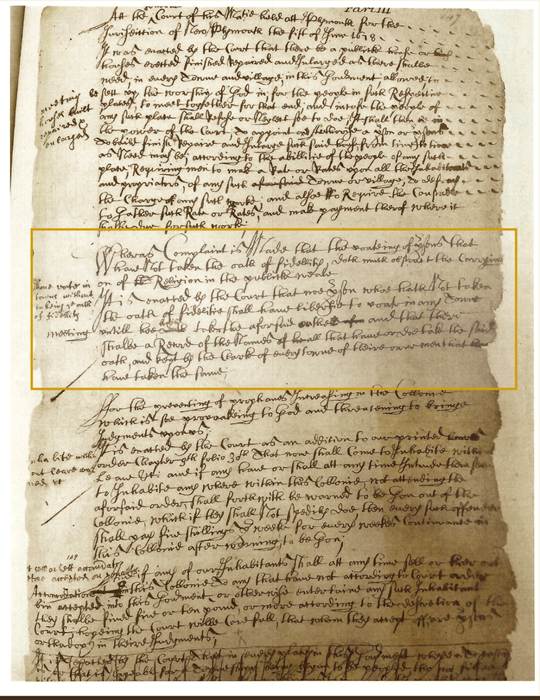
Supporters of Town Meeting rally around its history, reaching all the way back to the Mayflower Compact of 1620, which organized the local government as a “civil body politic” to “enact, constitute, and frame, just and equal laws” for the colony.
“The big issue is democracy, giving everyone the opportunity to participate in their town government,” said Town Meeting member Bill Abbott, who has served on previous Charter Commissions and is a long-time advocate for the current form of government. “Our Town Meeting is working extremely well and we are a model for many other towns. It requires participation of as many people as possible, which makes it a beautiful form of government.”
Betty Cavacco, a Town Meeting member running to reclaim a seat on the Select Board supports the charter change. “I enjoy my time on Town Meeting, but it’s antiquated,” she said. “People are not happy with the way things are going now. We are way too big to do business twice a year.”
Select Board member and candidate for reelection Richard Quintal has changed his position on the matter. “I’ve always been a proponent for Town Meeting. Now, I think it’s time to change. The town has grown so much, we need a full-time government to move things along.”
Quintal said Plymouth should always be a town, “America’s Hometown” to be specific, he said, noting that Braintree and Weymouth changed to a mayor and town council form of government in recent years, but remain “towns” in name.
Select Board candidate Scott Vecchi, who also served on the last Charter Commission, said Plymouth needs a significant change in its government. “I would lean towards a mayoral form, or we need major surgery on Town Meeting, sliming it down and making it more frequent, meeting at least quarterly.”
Kevin Canty, Select Board member and candidate for reelection, did not offer an opinion on the merits of the question, saying only “any citizens group can start this process and it will be up to the voters to decide.”
The next step in the process is for Yes on Charter Change to gather 8,000 signatures of Plymouth voters who support placing a Charter Commission question on the ballot. If the signature drive is successful, then both the ballot question and candidates for the nine-member commission will appear on the ballot next spring.
Muratore, who is a business partner with Plymouth Independent board member Patrick Flaherty, said his group will also work to recruit and support a slate of candidates running for the seats on the commission who want to see something other than the current form of government.
If a Charter Commission is established, any changes it recommends would then have to be ratified by voters.
“We’ve had this very special representative form of government for 400 years and I do not want to see us lose it,” said Select Board member Bill Keohan, who served on the 2022 Charter Commission. “It gives ordinary citizens many opportunities to get involved and have a voice. Can we make improvements? Of course. But let’s not throw out the baby with the bathwater.”
Michael Cohen can be reached at michael@plymouthindependent.org.