
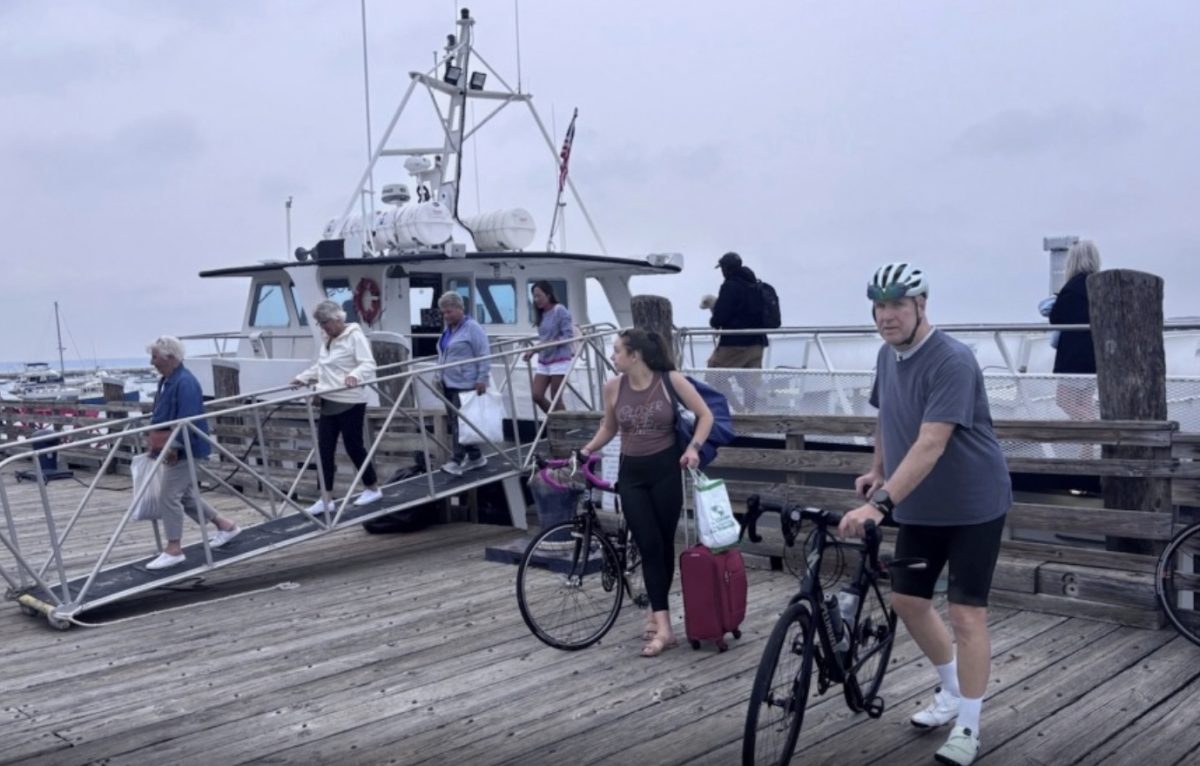
Plymouth Rock has long been a symbol of many things, including the town’s awkward tourism reality. People often stand before the “must-see” attraction, furrow their brows, and mutter the inevitable question: “That’s it?”
The same question might be posed about the 2025 tourism season here and across the state. International visits statewide dropped nine percent, a decline some attributed to the Trump administration’s tariff policies and controversial rhetoric regarding neighboring nations. A tenuous economy also did not help.
But hope springs eternal among tourism boosters and next summer shows promise. The state will host the FIFA World Cup and Sail Boston. It will also be a big part of the nation’s 250th anniversary celebration. For cities towns across Massachusetts, it promises to be a thrilling and lucrative season.
The question is: Will Plymouth be able to attract its share of the many thousands of people from around the country and the world who are expected to visit Massachusetts?
At the Hotel 1620 Plymouth Harbor, a mid-range, full-service hotel near the waterfront, general manager Thomas Anderson thinks so. He is using the off-season to renovate the hotel’s facilities in preparation for next year.
With hotel rooms expected to be scarce – and expensive – in and around Boston, Plymouth could be a good option for soccer fans coming to see World Cup matches in Foxborough at Gillette Stadium (which will be renamed Boston Stadium during the tourney).
Local businesses are already counting on benefiting from the overflow, especially after this year.
“Our peak season traditionally runs from late spring through early fall,” Anderson said. “Summer, in particular, sees the highest demand from leisure travelers, families, and tour groups. Our guest base is primarily drawn from the New England region, and international tour groups from Canada and Europe.”
Jay Kimball, longtime owner of Wood’s Seafood, said his business relies heavily “on the influx of visitors from April through November.”
“The fall definitely saw fewer visitors coming by car and bus, and international travel was down,” he said.
State data reveal a fundamental structural issue facing Plymouth’s tourism economy. In 2024 – the latest year for which numbers are available – visitor spending in the Plymouth region topped $1 billion, ranking fourth among the state’s 15 convention and visitors bureaus.
While ranking fourth sounds impressive, the gap between the region and the top three destinations is stark. Greater Boston, for obvious reasons, ranked first with $12.6 billion in tourism-related spending, accounting for more than 52 percent of the state’s total. Cape Cod and North of Boston followed with $2.8 billion and $1.2 billion, respectively.
But the problem for Plymouth isn’t just how much money is spent, but where.
According to the state’s Office of Travel and Tourism, more than 30 percent of visitor spending in Plymouth goes toward transportation and gasoline. Dining accounts for 19.5 percent, while lodging makes up just 15.8 percent — less than half the share of lodging spending on Cape Cod. Perhaps most telling is that day-trippers account for nearly 25 percent of all visitor spending despite having zero lodging costs — a figure that suggests the actual volume of day visitors is high.
Plimoth Patuxet Museums, the town’s historical anchor, may draw the biggest crowds, but many of its visitors are gone within hours, often off to the Cape.
One problem may be that higher-end lodging is lacking in Plymouth. There are some modern chain hotels, including the Hilton Garden, Hampton Inn, and Fairfield Inn, but aside from the Hotel 1620, the aging John Carver Inn is the only full-service hotel in the downtown/waterfront area.
There is good news on that front, however – the John Carver was bought by the award-winning Mount Vernon Company earlier this year, and major renovations are underway.
Also, Sisu, a “boutique motel” on Lincoln Street offers an alternative to the cookie-cutting chain hotels, and developer Rick Vayo plans to open a larger boutique hotel called The Drew on Chilton Street by next summer.
The timing of The Drew’s debut could not be better, with World Cup matches starting on June 13, when Haiti faces Scotland at “Boston Stadium,” a little more than 40 miles away. That will be followed by matches featuring England, Morocco, Ghana, and a marquee showdown between Norway and France.
The summer schedule throughout the Boston region will be packed. Boston Harborfest takes place July 1 to 4, ending with the 250th anniversary of the Declaration of Independence. A World Cup quarterfinal takes place in Foxborough on July 9, and two days later, 75 tall ships will arrive in Boston Harbor.
Although the city is the official host for these events, the hotel-room crunch presents it with an opportunity.
On forums like Reddit and Facebook, soccer fans are already discussing alternatives. The UK’s Independent has advised travelers to look for cheaper lodging in towns 30 miles outside the city.
That could be Plymouth’s opening. While hotels rates in Boston and closer to Foxborough have surged to $1,000 or more for match days, rooms in Plymouth can still be found for under $500 (considerably higher than normal summer rates).
“This global event creates the potential for increased demand across multiple segments” of visitors, said Hotel 1620’s Anderson. His team is planning a marketing campaign targeting soccer fans, including themed signage and game-day events designed to encourage longer stays and repeat visits. As of now, Hotel 1620 is fully booked for key match dates in 2026.
Plimoth Patuxet also is planning ahead. Executive Director Tom Begley said the museum is “currently working on strategies to figure out how we might be able to capitalize on these audiences.”
Begley worries that transportation remains an issue. With no direct public transit between Foxborough and Plymouth, tourists without cars may struggle to bridge the gap.
Kimball is optimistic but says it will take a unified effort to reap the benefits of the World Cup’s presence.
“These soccer fans will come from all over the world and have money to spend,” he said. “The regional tourism councils should be putting together a marketing program highlighting Plymouth and Plymouth County as a great day trip or extended stay for the visitors to watch the World Cup soccer in Foxborough.”
See Plymouth, the local tourism organization, did not immediately respond to requests for comment, citing a busy end of year schedule.
If the town can solve the transit puzzle and market itself effectively, next summer could paint a very different picture than this past tourism season.
Imagine this scenario in the summer of 2026: English soccer fans step out of Hotel 1620, fresh from a morning tour of the Mayflower II and Plimoth Patuxet. They head to Wood’s for a bowl of clam chowder, then board a shuttle bus to the match — passing Plymouth Rock’s granite portico on their way out.
A fan might still point and ask, “That’s it?”
They’ll also probably understand that there much more to Plymouth than a boulder in the sand.
Dinghan Meng is a Boston University student enrolled in the school’s statehouse program.