
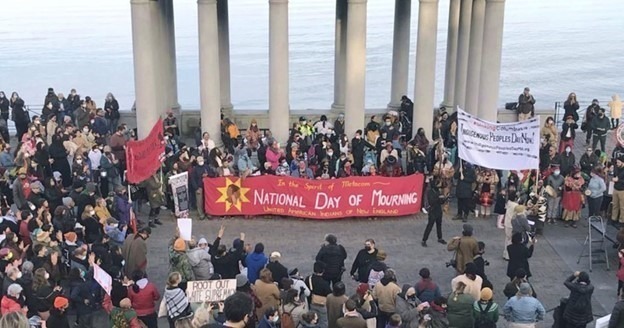
At a moment in history where the UN Declaration on the Rights of Indigenous People (UNDRIP) is becoming increasingly relevant to the international state of practice in acknowledging and restoring the rights and title of Indigenous peoples, you as a Selectboard have found yet another way to take a step sideways onto the wrong side of history.
Plymouth’s complicated history and relationship with the Wampanoag Tribe is well documented; settlers from Europe appropriated lands from peoples who had lived here for millennia. Regardless of the Pilgrims’ intent, the outcomes of colonization have devastated Native American cultures for centuries. We are finally at a point in time where colonial governments at all levels are beginning to recognize the longstanding impacts of these actions and taking initiative to do what is within our control in modern times to honor and reconcile past and present.
I have been working for a decade on reconciliation-based ocean planning in British Columbia, where both the provincial and federal governments have made formal commitments to work together with Indigenous communities to co-govern and move forward collaboratively. Reconciliation in practice is challenging, and it is so very rewarding. It is disappointing to witness how far behind Plymouth is falling, and even worse to consider that this latest step has been deliberate and calculated (or perhaps the result of apathy and ignorance? neither is acceptable).
Disregarding the UAINE agreement is an unnecessary and highly visible step backwards for Plymouth town government. You as individuals and you as a board can do better. You did not colonize Plymouth in 1620, but you have been entrusted with its legacy. Regardless of whether or not you personally, or as a group, have the compassion and wisdom to contemplate what it means to reconcile past harms, you aren’t fooling anyone by sticking your heads in the sands of willing ignorance. Maybe we could replace you with a Council of Elders who would remind us that Indigenous communities invented democracy thousands of years ago.
– Elise DeCola