
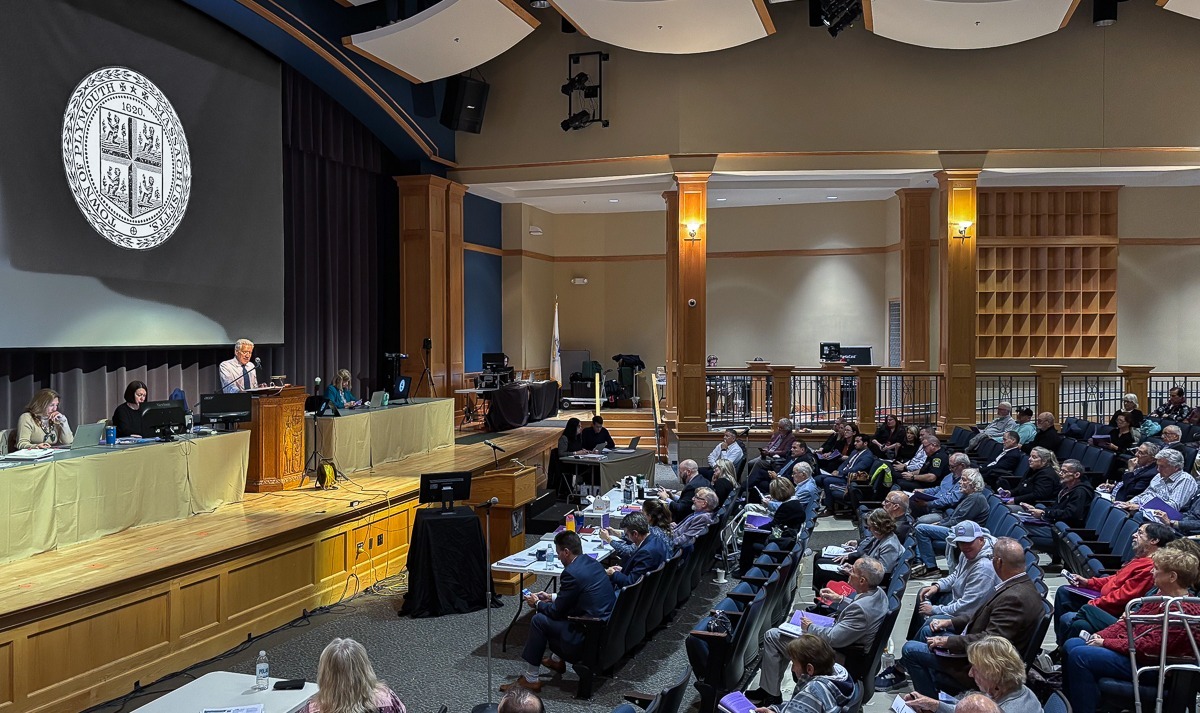
I was surprised and disappointed to read the article in The Independent in which the Chair of the Select Board was quoted as saying, “We need to do the work of educating Town Meeting and start talking about how serious the town’s financial situation is.”
The statement struck me as particularly puzzling because, at the beginning of Town Meeting, she urged members not to “panic” or allow the looming deficits to unduly influence their decision-making. Yet the tone of the article suggested that, because Town Meeting approved all the articles at Saturday’s Fall Meeting, its members were either cavalier about or uninformed of the town’s looming budget deficits for 2028.
Nothing could be further from the truth. Town Meeting is not the problem.
In fact, the looming “fiscal cliff”—a characterization we were essentially told was an inflammatory way of framing the issue—has been a topic of debate at least since the last three Town Meetings, if not earlier. We do not need to be “educated” about the seriousness of the situation. Indeed, that concern is precisely why amendments to reduce certain budget line items were introduced at the last two Town Meetings, as well as at previous meetings, although none were offered this time. Furthermore, the town itself brought back a funding reduction approved at last Fall’s Town Meeting for reconsideration this Spring, in an effort to reverse that particular cut.
The budget items approved last Saturday were carefully deliberated and discussed, both during Town Meeting and at the precinct caucuses held in the weeks leading up to it. Town Meeting’s decision to fund some of the more expensive projects was based, in part, on the understanding that these investments could ultimately increase town revenue and reduce future expenditures.
The best example is the downtown resiliency project cited in The Independent. This project received strong support from Ms. Iaquinto, the Select Board, the Advisory and Finance Committee, the Chamber of Commerce, and the Downtown Business Association. The total cost is $6 million, more than half of which will be covered by a state resiliency grant—the largest grant of its kind ever awarded to a municipality.
The project will dramatically improve the appearance and functionality of downtown. Plans include extensive new plantings and trees, rain gardens, permeable paving, curb extensions to improve traffic management and pedestrian safety, and additional public spaces. These improvements are designed to reduce the urban heat island effect, improve stormwater management, mitigate potential flooding, and increase groundwater recharge.
Beyond its environmental and public safety benefits, the project is also expected to stimulate economic activity downtown. Given the importance of tourism to the town’s revenue stream, these anticipated economic benefits could help offset the town’s investment over time. The project will strengthen the vitality and economic viability of the Main Street and Court Street district, while helping draw visitors from the waterfront to explore the many shops and restaurants along the way. These are among the reasons Town Meeting supported the expenditure.
Another approved article authorized $750,000 for the purchase of land in southern Plymouth that will become part of a 900-acre conservation area. That amount will be reduced by another $75,000 if an additional grant is approved. The project is a public-private partnership involving the Town of Plymouth, the Town of Bourne, and the Buzzards Bay Coalition. Plymouth’s contribution will come from existing Community Preservation Committee reserves. The total project will cost more than $6 million, with the balance funded through federal and state grants and private contributions.
Most of the land is located in Plymouth. As the Chair of our Planning Board has observed, one of the few effective ways to control unwanted growth is to own the land. This acquisition will remove a substantial parcel from potential residential development, helping to limit the residential expansion that contributes significantly to our growing property tax burden. It will also protect our sole-source aquifer, along with the ponds and wetlands in the area.
Preserving open space, protecting our drinking water supply, and proactively limiting residential sprawl were the principal reasons this project received broad support from the Advisory and Finance Committee and passed Town Meeting by a vote of 139 to 7.
Town meeting also voted to double the height allowed for buildings in our industrial parks. It is hoped this will increase commercial space available in town thereby benefiting revenue by drawing more businesses and industry to Plymouth. This was a zoning issue long in need of change.
Town Meeting members are homeowners and taxpayers, just like everyone else. We are concerned about rising property taxes, too. I believe most of us take our responsibilities seriously, think carefully about the implications of our votes, and make an effort to understand the issues before us.
As the town’s legislative body, Town Meeting serves as an important check and balance on the executive and administrative branches of local government. We can always benefit from more information and input, but I reject the suggestion that Town Meeting members are uninformed about the town’s financial circumstances.
There are many factors that have contributed to our current financial situation, and responsibility does not rest with any one person or body. Town Meeting undoubtedly has a role to play in addressing the challenges ahead. But we have been discussing these challenges, weighing difficult choices, and making decisions with their financial implications in mind for some time.
Town Meeting does not need to be educated about the seriousness of our financial situation. We need a constructive, shared effort to address it. Town Meeting is part of that solution, not the primary cause of the problem.
– Ken Stone
Stone is a Town Meeting member and vice chair of Precinct 16