
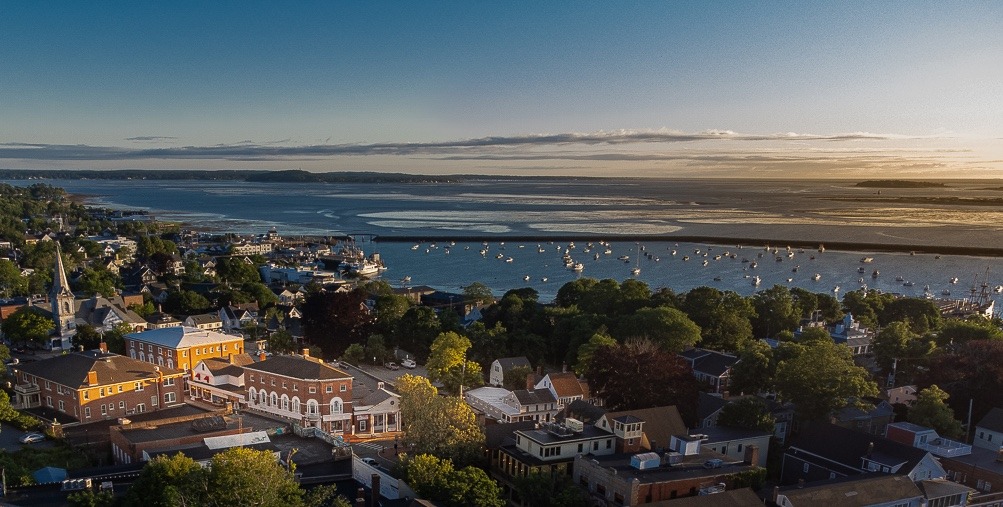
Plymouth is known around the world for its history. But for generations, much of the town’s identity – and its survival — came directly from the sea.
Fishing and shipping helped Plymouth thrive through the 19th century, as fisheries and seafood played a key role in the town’s economy and culture. Over time, however, that part of Plymouth’s story became less visible as the town became increasingly identified with its Pilgrim history, beaches and tourism.
Now seafood is having something of a renaissance here — particularly with the remarkable growth of oyster farming in Plymouth Harbor — and the Plymouth Downtown Waterfront District (DWD) thinks it is time to celebrate, said Rick Vayo, district president.
The inaugural Plymouth Seafood Festival will be from 11 a.m. to 4 p.m. Saturday, Oct. 10, at three downtown locations with Plymouth-grown oysters, lobster and clam chowder, local restaurants, breweries and Plymouth’s own musicians, along with marine education, boats, art and children’s activities.
“Plymouth has always been a hub of seafood,” Vayo said. “But for many years now, I don’t think it’s been focused on.”
In Plymouth, the sea has never been merely a backdrop. It carried the Pilgrims and many generations to these shores, but more importantly, it fed families, created intergenerational fisheries businesses and helped shape the town that grew up around it. The new seafood festival is, in some ways, a reminder of how the town’s connection to fishing and serving fresh seafood has endured even as the town continues to evolve.
There are numbers behind the resurgence.
In 2014, Plymouth reported 339,052 American oysters landed, valued at about $190,000. By 2022, Plymouth’s oyster harvest had grown to more than 3.9 million oysters worth nearly $1.5 million, according to data published by the Town of Plymouth from the state Division of Marine Fisheries annual reports.
The growth is particularly striking because shellfishing was prohibited in Plymouth Harbor for decades due to water-quality problems. Following improvements to the harbor, a large area along Long Beach was reopened to shellfishing in the past decade. Not only has seafood output grown, but the quality of restaurants and venues has improved along with it, Vayo said.
“We’ve always had lobster, we’ve had great fishing off our coast, but now we have a tremendous oyster presence as well with the oyster farms in Plymouth Harbor,” he said.
The resurgence — coupled with Plymouth’s growing appeal as a destination for people from neighboring communities as well as traditional tourists — helped make the timing right for a seafood festival of its own.
The DWD already creates events and promotions throughout the year, including the Harvest Festival and holiday activities. The Seafood Festival gives the organization a unique way to showcase what Plymouth has to offer, this time through one of the town’s oldest connections: seafood.
The event is meant to encourage visitors to explore more than one part of town. Rather than putting everything under one tent, the festival will be divided among three locations: the Hedge House lawn, 126 Water St.; Town Hall Green, 26 Court St.; and the area beside the Harbormaster’s Building, between East Bay Grille and Lobster Hut.
Each site will have a tent featuring multiple seafood tasting experiences. With admission, festivalgoers can travel among all three to sample oysters, lobster and clam chowder from participating Plymouth producers and restaurants. Additional food, beer, wine and nonalcoholic beverages will also be available for purchase.
Clam chowder competitors will include Artisan Pig (New England clam chowder), Cabby Shack (signature New England clam chowder), Cork + Table Kitchen and Bar (Portuguese clam chowder), and Second Wind Brewing. Lobster dishes will be prepared by Lobster Hut, Añejo (lobster bisque), Wood’s Seafood (classic lobster rolls), and Cabby Shack (lemongrass lobster tacos).
A free trolley, supported by Park Plymouth, will run continuously among the three locations, so visitors can ride from one festival site to another if they prefer not to walk the entire route.
And there will be plenty happening between tastings.
Each festival location will feature live music from local bands as well as beer or wine from local breweries and wineries – from Plymouth only, not just from the region.
In addition, nine Plymouth oyster farms are expected to participate, giving visitors the opportunity not only to taste locally grown oysters but to meet some of the people behind the town’s growing aquaculture industry. Oyster farmers in attendance will include Bear Tide Oysters, Beer Money Oyster Co., Plimoth 102s, Ichabod Flat Oysters, 1620 Oysters, Mayflower Oyster, Cold Bottom Oysters, Hometown Marina Oysters, and T&T Shellfish.
The emphasis on Plymouth is deliberate.
“This is featuring Plymouth oysters, featuring Plymouth restaurants, featuring Plymouth musicians,” Vayo said.
The day will also offer a closer look at the harbor itself, with lobster, oyster, and harbormaster boats on display. Marine and aquaculture education will be part of the festival, including representatives from the New England Aquarium. Whale & Dolphin Conservation’s life-size inflatable North Atlantic right whale — a 40-foot attraction organizers expect will be popular with children— will also be on display.
Festivalgoers will vote in a clam chowder competition, while an upcycled art sculpture contest will give them another chance to cast a vote. Children’s activities and educational displays will round out the day.
For the DWD, however, the festival is about more than filling downtown with people for one Saturday. It’s about creating awareness that Plymouth is, and has always been, among the best seafood destinations in the region, and introducing new patrons to the experience, Vayo said.
“Our real mission is that anything we do is to benefit the businesses downtown and the waterfront,” Vayo said.
That includes attracting people who may come for the weekend and those who live close enough to Plymouth to visit for the day or evening.
“We want people from far and near, from places like Middleborough and Norwell and on the Cape coming to Plymouth and seeing it as a destination for eating, dining, and entertainment,” Vayo said.
That combination is increasingly part of Plymouth’s appeal. Alongside the historic sites that have drawn generations of visitors, downtown now offers a concentration of restaurants, breweries, shops, arts organizations, entertainment venues and waterfront activities.
The Seafood Festival arrives at a strategic point on the calendar, Vayo said, and is part of the DWD’s efforts to create more activity downtown beyond the height of the summer season. When district representatives appeared before Plymouth’s Visitor Services Board in February, Vayo added, they described the Seafood Festival as a new event designed for the September and October shoulder season. The board later approved $2,500 to support it.
“This is the first year,” Vayo said. “We plan on expanding dramatically over the next few years.”
The DWD expects several thousand people this year, but its ambitions are much larger. Vayo said the organization believes the festival could eventually attract as many as 20,000 people and develop into a regional seafood celebration comparable to established events elsewhere in New England.
“We think it’s going to grow into a phenomenal event,” he said.
For its first year, though, the formula is straightforward: three locations, one ticket and a day built around the seafood, businesses, music and people of Plymouth.
And for a town whose relationship with the sea stretches back more than four centuries, the festival offers a new way to celebrate something that has shaped Plymouth from its earliest days — and is becoming an increasingly visible part of its future.
There will be live music by Lars Chappell, Paul Horton, Chris Ballerini, Birch Swart, Nate Ramos, and special guest sea shanty singer David Coffin. Tickets are $39.19. For information, go here; to purchase tickets, go here.