
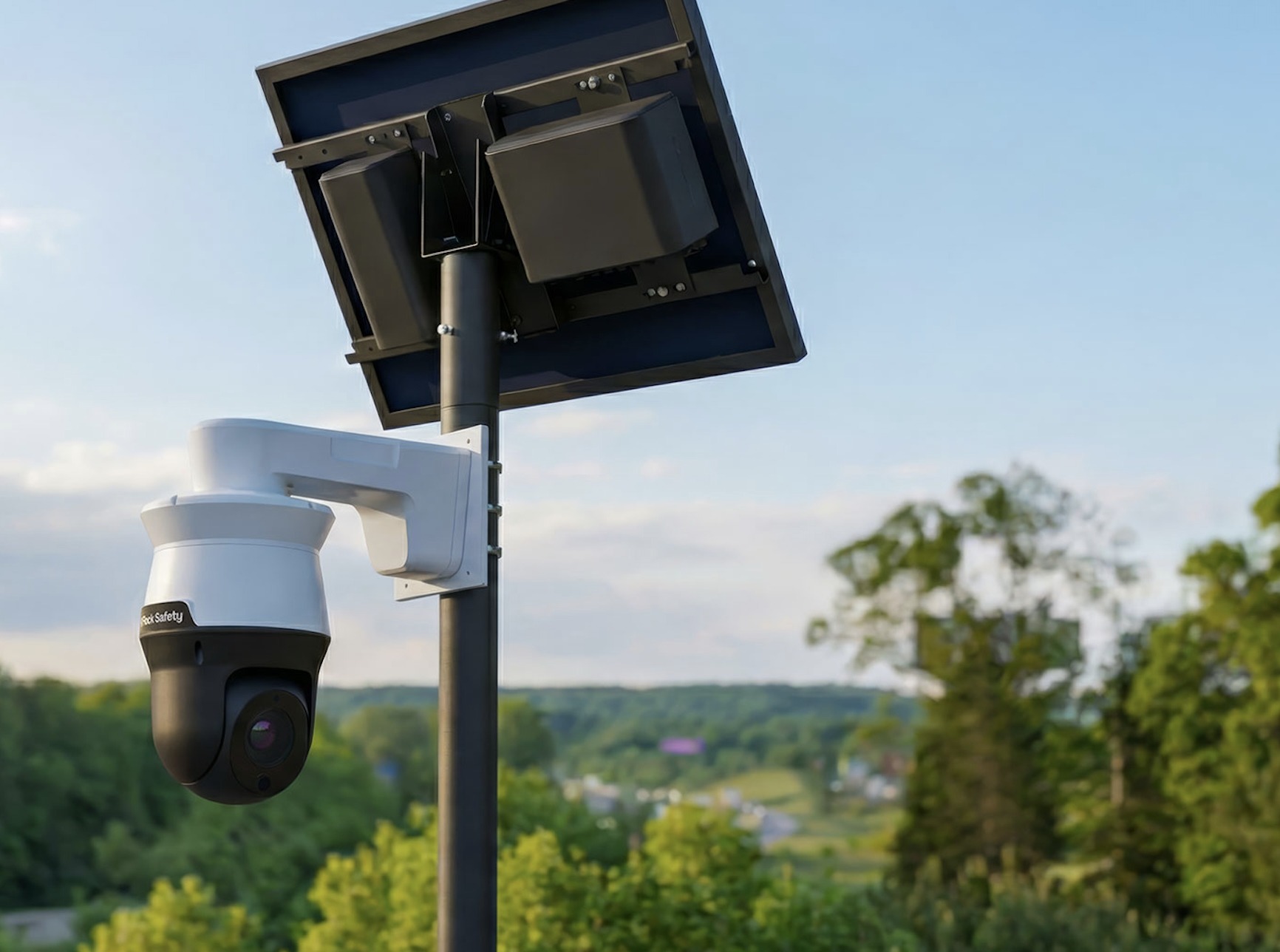
In case you haven’t been paying attention, take notice: You’re being watched. Privacy is at a premium in Plymouth and most of the world. Cameras are everywhere, from the front doors of homes to stores to streets to parking lots and more. They’re mounted on posts, peering down from the sky, and in the hands of anyone with a cellphone or tablet.
It’s both unsettling and reassuring – mostly the former – but one type of surveillance in particular is under a rising wave of scrutiny: automated license plate recognition systems, or ALPRs.
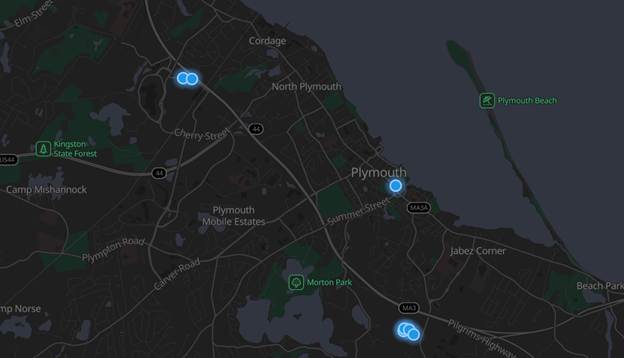
The technology’s most prominent company, Flock Safety, says it has more than 120,000 ALPRs in 49 states, including about 1,000 in Massachusetts. The crowdsourcing site DeFlock puts the number at about 138,000. They are deployed by private companies and public entities, including government agencies and police departments. There are about a half dozen Flock devices in Plymouth, according to DeFlock. A precise number is difficult to pinpoint. Most notably, the local police department is not a Flock customer.
The systems have proven powerful in helping to solve crimes such as car thefts or finding missing and abducted persons. For example, in 2024 Flock was used to locate a child who was allegedly kidnapped from a Canton childcare center by his father.
But critics say what makes the cameras effective – their ability to read license plates and other markings on a vehicle and then communicate that information with each other to create a trail – also makes them susceptible to misuse.
Just last week, the New Bedford Light reported two police officers were found to have “abused the Flock system to track their ex-romantic or current romantic partners,” the news site said. Police Chief Jason Thody wants them fired and has asked the Bristol County District Attorney’s office to investigate whether to file criminal charges.
In a follow-up story this week, the Light said New Bedford Police Department internal affairs documents showed one of those officers “searched the license plate of her ex-girlfriend more than 650 times in Flock. She then ran the plate of her ex’s new romantic partner more than 200 times this summer, tagging the searches as a ‘traffic infraction.’”
Another officer looked up his girlfriend’s plate nearly 70 times, the Light said.
Earlier this month, the Boston Globe reported a Revere police officer received a three-day suspension in August for using Flock to track the whereabouts of his former girlfriend and her family.
And in August, a suspended Stow police officer resigned after being accused of misusing the cameras for their own purposes.
Plymouth officials have been monitoring those and other incidents, which have led at least 25 municipalities in Massachusetts to ban their use by public entities, according to the American Civil Liberties Union of Massachusetts.
“We don’t have any contracts with either Flock or any of the other ALPR vendors, nor are we planning to implement them at this time,” Select Board Chair Deb Iaquinto said in an interview.
“The original intent of these cameras is very good, obviously, because it’s more information for our public safety officials to have for whatever they’re investigating,” she said. “But there’s been a lot of concern about the privacy violations that sort of are inherent with the technology.”
Police Chief Dana Flynn said his department several years ago considered adding the Flock system to its roster of tech tools but decided it wasn’t practical.
“Due to the size of our community and the number of cameras needed to provide adequate coverage, the cost was prohibitive,” Flynn said in an email. “I do support any technology or programs that enhance public safety and the expediency in solving serious and violent crimes, however, there needs to be proper safeguards and oversight in place to ensure it is not being used for unauthorized activities.”
The Massachusetts Chiefs of Police Association, of which Flynn is a member, supports ALPRs, with some cautions.
The “technology remains an important and effective public safety tool for law enforcement agencies,” it said in a press release last month. “When used appropriately, ALPR systems can help officers locate missing or endangered individuals, recover stolen vehicles, identify suspects, and develop critical leads in serious criminal investigations.”
The association also urges “clear policies, strong supervisory oversight, and meaningful accountability measures” governing their use.
On its website, Flock says it merely supplies the surveillance equipment – it does not control what clients do with the information gathered.
“Data collected through Flock systems belongs to the customer operating those systems, whether that is a law enforcement agency, business, school, or community organization,” it says. “Flock does not claim ownership of customer data, use it for advertising, or sell it to third parties. The platform exists to help customers manage and use their own information according to their policies and applicable laws.”
Cognizant of the blowback it’s receiving, the company recently updated its safety recommendations. They include “a 7-day ALPR data retention period and introducing Evidence Mode to preserve specific data for active investigations when needed,” and “mandatory multi-factor authentication” to access the system.
That doesn’t reassure Kade Crockford, director of technology and justice programs for the ACLU of Massachusetts.
“One of their PR strategies seems to be to just change their policies all the time and then announce, ‘Oh, never mind, everything’s fine. All your concerns have been addressed.’”
For instance, she said, the seven-day default setting for erasing data is “not required. Police could easily say, ‘No thanks, we want to keep it for 30 days.’”
Police counter that it’s often necessary to retain evidence for an extended period.
That’s not a concern in Plymouth, though cameras on private property present different issues. At least one appears to be deployed in the downtown area – in a parking lot near the intersection of Court and Leyden streets. A message to the real estate management firm that apparently owns it was not returned.
Two more are located near the Plymouth-Kingston border in the vicinity of the Amazon distribution center, according to a DeFlock map.
Home Depot off Long Pond Road has Flock cameras in corners of its massive parking lot. While people can request public records regarding how governments deploy the technology, Crockford said, “Home Depot’s not subject to public records law…So whereas you could go to the Plymouth Police and say, ‘Hey, give me all your records about license plate readers,’ Home Depot can tell you to pound sand. You don’t have any right to access information about what they’re doing. You could call Home Depot and ask them. You can call Flock and ask the company, but they don’t have to tell you anything and that’s hugely problematic in the Home Depot context because one of the major concerns from the civil rights community and from a lot of Massachusetts residents is that ICE is going to get access to information held in these databases.”
Flock has said it does not have contracts with the federal Immigration and Customs Enforcement agency.
“That’s sort of beside the point,” Crockford said. “There are law enforcement agencies all around the country who do collaborate very intentionally, deliberately, consistently, with civil immigration authorities. We have seen in places like Los Angeles and elsewhere, ICE intentionally targeting Home Depot parking lots because that’s a place where immigrant day laborers will wait for jobs.”
In an email, a Home Depot spokesperson said the company has “had parking area security cameras in place at our stores for many years, as many retailers do. These cameras are used solely as a security measure to prevent theft and protect the safety of our customers and associates in our stores. We do not grant access to our license plate readers to federal law enforcement.”
Flynn said he can envision requesting data from a private company’s Flock cameras in the event of a crime, just as the department might ask “any other owner of private security cameras” in such a case.
“Then, of course, it would be governed by whatever corporate policy they may have to share the information,” he said.
The ACLU is calling for Massachusetts to join at least 20 other states that have regulated license plate readers. Legislation to that effect has yet to be filed.
Nationally, the readers’ proliferation has become a rare bipartisan issue. Conservative Republican governors Greg Abbott of Texas and Ron DeSantis of Florida have recently taken steps to rein in Flock technology. Abbott ordered police departments to halt spending on the equipment. DeSantis issued an order calling for cameras alongside state roadways to be taken down. Earlier DeSantis said he “didn’t want [Florida] to become a surveillance state.”
The ACLU’s Crockford acknowledges that the technology “can be quite effective” in assisting police for legitimate reasons, but “there’s really a profound lack of trust,” on the part of many people.
“It seems to me that police would do well to get on our side and join us in going to the state Legislature and saying, ‘Hey, we need some checks and balances here,’ because without those checks and balances people are resorting to saying, ‘We don’t want this at all.’”
Mark Pothier can be reached at mark@plymouthindependent.org.