
The town’s $6 million cost to take school kids to and from school each year could be getting a boost from taxpayers statewide next year under a new plan adopted unanimously by the state Senate.
Under a budget amendment co-sponsored by State Sen. Dylan Fernandes, D-Falmouth, state lawmakers for the first time are considering the long miles Plymouth school buses must travel in the state’s largest town by area. The measure, included in the state’s massive budget bill, must now win approval from a joint committee assigned to agree on budget language.
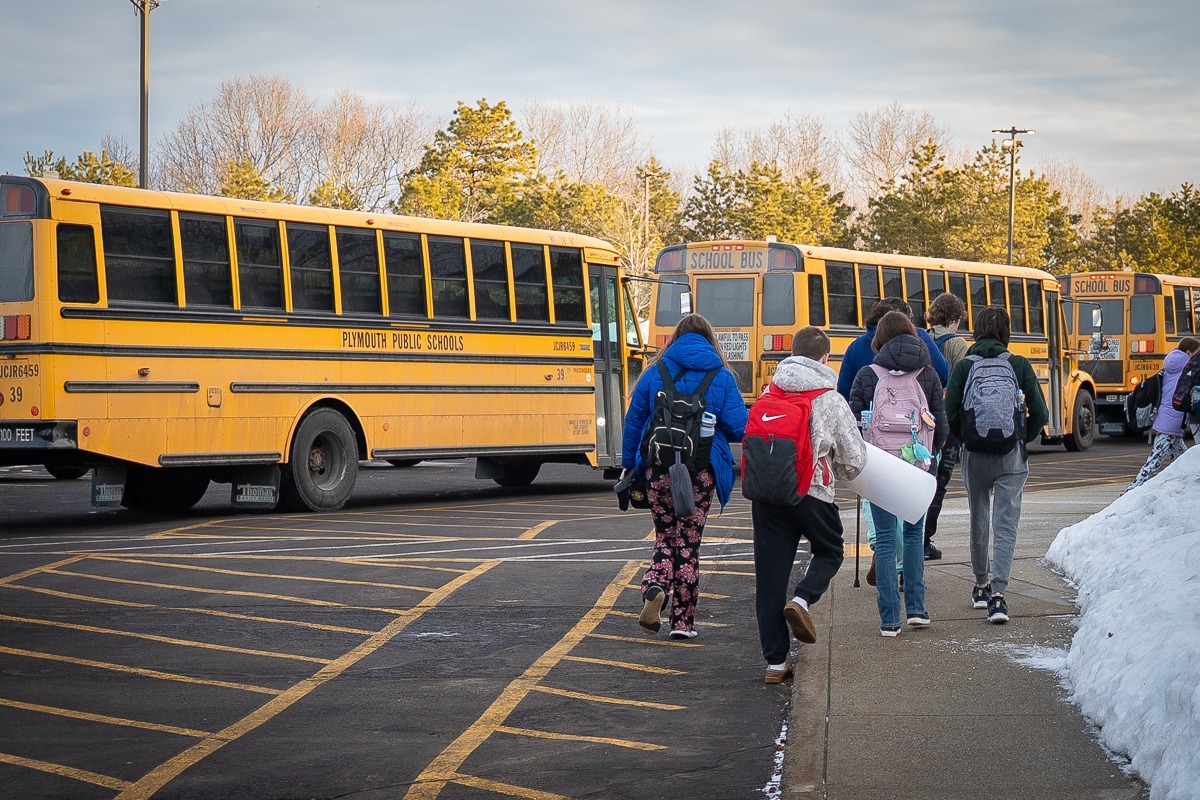
Every day, 65 Plymouth school buses travel a total more than 4,700 miles, said Christopher Campbell, Plymouth’s superintendent of schools.
“Managing transportation here is uniquely complex; we navigate a distinct blend of urban infrastructure, urban fringes, and highly rural conditions,” Campbell said in an email. “These geographic factors make our transportation operations tricky and significantly costlier than most other districts.”
Plymouth spends $6 million a year to transport more than 4,800 students who take yellow buses to school.
“It’s quite an expensive endeavor,” Fernandes said.
The state does not reimburse Plymouth or other large-area towns for their outsized costs of transportation.
Under the Senate proposal, a commission formed to review state funding of education would adopt a new formula when figuring out how much each town should receive for transportation that would factor in road mileage and geographic area.
“It’s really important to me that this time around, school bus transportation is included in that formula,” Fernandes said.
Fernandes said many rural Massachusetts towns face a similar problem of high costs of transporting students.
Massachusetts cities and towns are not reimbursed for regular school transportation costs unless they belong to a regional school district.
“It is incredibly difficult to have to fund transportation at such a high percentage of our operational budget when we desperately need every single dollar to directly support students in the classroom,” Campbell said.
The House has not adopted an identical proposal in its budget. The differences between the House and Senate budgets would have to be resolved by a recently appointed conference committee.
By law, the final budget for fiscal year 2027, which begins July 1, is supposed to be sent to the governor by July. However, most years the legislature has blown past the deadline, requiring it to pass temporary budgets.
The House budget did include a related measure requiring the state Department of Elementary and Secondary Education to maintain a database of school transportation contracts that school districts could use when negotiating with bus and van operators. Vans for some special education, homeless, and foster students can cost anywhere from $250 to $800 a day, said State Representative Michelle Badger, D-Plymouth.
Badger and Plymouth’s other state representative, Kathy LaNatra, D-Kingston, have introduced their own proposals. The first, H. 513, would allow a town’s schools to apply for a grant from a special fund if its transportation costs per pupil exceed 125 per cent of the average transportation costs per pupil in the state.
The other, H. 4011, would set cap the daily price of contracts between private transportation companies and school committees for the transportation of pupils receiving special education and homeless students.
Fred Thys can be reached at fred@plymouthindependent.org