
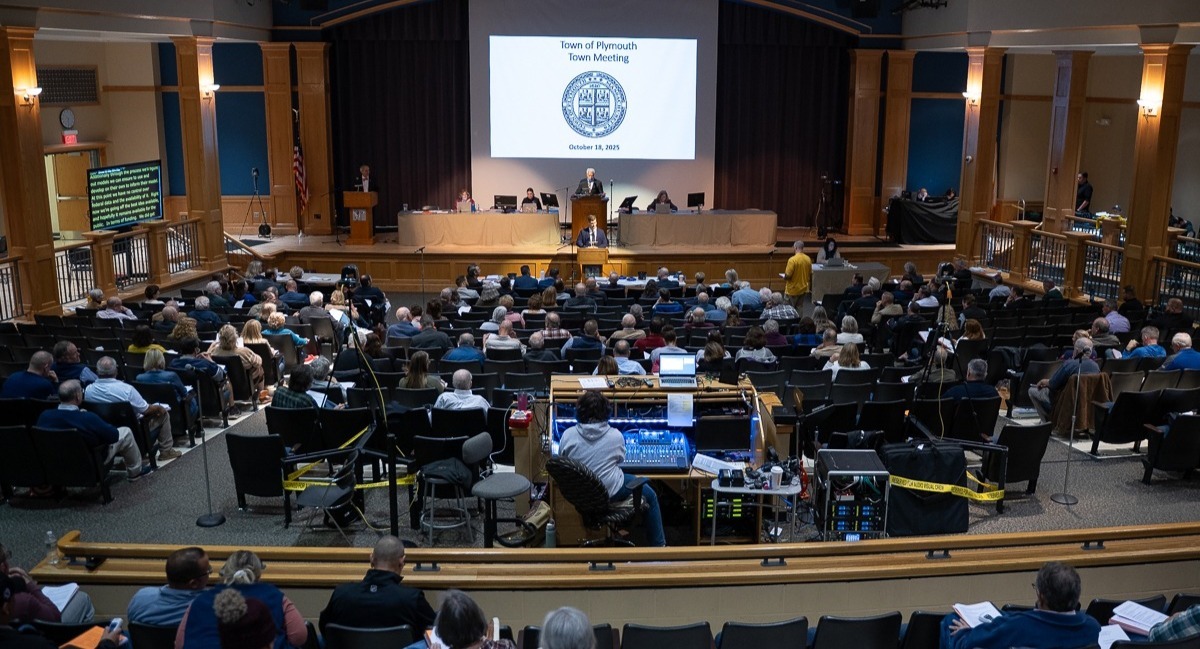
Saturday’s Town Meeting will focus on fiscal restraint, local immigration policy, and the timing of the twice-yearly gathering of 162 residents who will decide each issue.
The session is set to begin at 8 a.m. Saturday at Plymouth North High School.
On the table are decisions to spend up to $100,000 on July 4 and Thanksgiving celebrations, reducing health benefits for future town employees to save money, and a plan to spruce up Town Square.
But among the most heated of topics is the codification of a police policy designed to prevent cooperation with agents of the Immigration and Customs Enforcement who sometimes come to town looking to arrest undocumented immigrants.
There’s also a proposal to move the dates for spring Town Meeting starting next year to May and the town election from May to June.
Town Meeting is Plymouth’s Legislature, with 162 elected members. It is overseen by longtime town moderator Steve Triffletti, who only votes in the event of a tie.
Each of Plymouth’s 18 voting precincts elects nine members to three-year terms. Those terms are staggered so that three members from each precinct are elected in May’s annual town election.
The public can attend Town Meeting in person. It will also be streamed live by The Local Seen. Anyone can speak, including non-residents, but they must wait until after Town Meeting members have spoken on a particular agenda item.
If all business is not conducted on April 11 because of time constraints, the meeting will be extended to the evening of April 13.
Spring Town Meeting is really two town meetings in one. The Annual Spring Town Meeting is prescribed by the town charter and must be held the first Saturday in April. But the Select Board is also convening a Special Town Meeting to deal with issues arising after the deadline for the Annual Town Meeting.
The two warrants contain a total of 47 articles, which are the items approved by the Select Board for discussion and votes.
Here are summaries of some of the most significant articles:
Special Spring Town Meeting articles 3-4: “Free Cash” subsidies for fireworks and parades

After much debate, the Select Board ultimately recommended awarding $100,000 for fireworks and parades, but some suggest the money is better spent elsewhere. The money would come from an account called “free cash.”
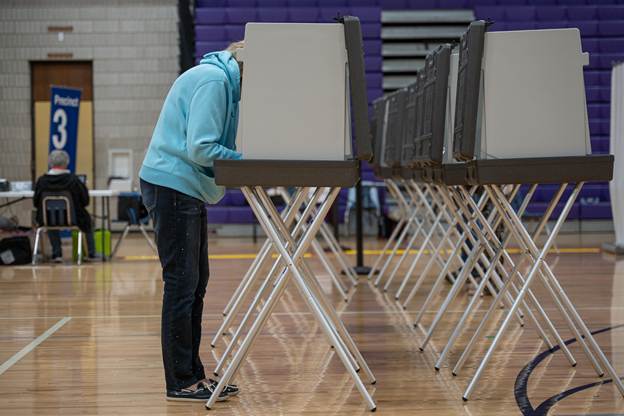
Special Spring Town Meeting articles 5-8: Moving the dates for Town Meeting and the town election
The Select Board is recommending the Spring Annual Town Meeting starting next year be moved from the first Saturday in April to the third Saturday in May and the annual town election be moved from the third Saturday in May to the second Saturday in June.
Select Board member Kevin Canty proposed the changes. They were unanimously approved by the board.
At the March 17 and 24 meetings of the Select Board, Canty argued the changes are necessary so Town Meeting can have better information about how much money will be coming in from the state.
The state House and Senate Ways and Means committees typically form their budgets in May. The legislature closely follows those recommendations when it comes to state aid to cities and towns. Canty argued moving the election to June would ensure everyone at the May Town Meeting would have time to go over the budget figures.
Special Spring Town Meeting Article 10: Reform of Retirement Benefits for New Employees
Some Plymouth employees pay as little as 10% of their health insurance premiums when they retire.
In December, Select Board member Deb Iaquinto proposed the town reexamine the arrangement. By a 2-2 vote, the board decided not to propose Town Meeting consider the change but a citizens’ petition was successful in putting it on the agenda anyway.
Health benefits for retirees are among Plymouth’s costliest expenses at a time when the town faces a budget crunch.
Town employees currently pay for 30% of their health insurance premiums. But upon retirement they are allowed to contribute at the rate they paid when they were first hired. That means many retirees go back to paying just 10% of their premiums, a rate considered minimal with rising health insurance costs straining town finances.
“To my knowledge, Plymouth is the only municipality that has a provision like this,” Iaquinto said in December. “It’s a very generous benefit for sure and it has a significant and ongoing impact on our healthcare costs.”
Iaquinto proposed an article for the spring Town Meeting to discontinue this benefit for new employees.
Plymouth’s costs for retirement benefits – excluding pensions – are the fourth highest in the state, after Boston, Worcester, and Springfield.
Current employees and retirees would not be affected.
“This particular promise is costing us quite a lot,” said Select Board member Kevin Canty in December. “It’s important to take this up sooner rather than later.”
But Canty was the only board member to support Iaquinto’s proposal. Board member Bill Keohan said he wanted more feedback before sending the measure to Town Meeting. And Select Board Chair David Golden and Vice Chair Dick Quintal said the proposal would antagonize employee union leaders by circumventing the collective bargaining process.
“It’s wildly inappropriate for us to even have this conversation without having first engaged our partners who are leaders of the unions,” Golden said in December.
So, Town Meeting member Richard Serkey gathered enough signatures for a citizens petition to put the proposal before Town Meeting despite the opposition of the Select Board.
Annual Town Meeting Article 18 Item A30: Town Square
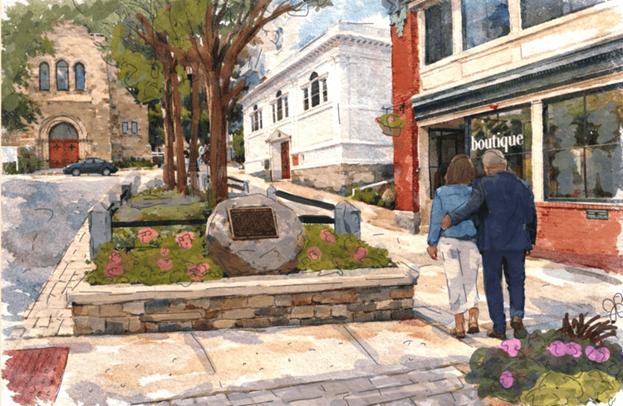
The Department of Energy and Environment is seeking $117,250 to plan and design phase 2 of the downtown resiliency project, which includes a remaking of Town Square into a much more pedestrian-friendly and environmentally friendly area.
The proposed improvements include nine new trees, cobblestone pavement, and native landscaping. In one sense, the project will restore the square to some of its original features, with shade trees and permeable pavement that allows the rainwater to seep into the ground before flowing on out into the harbor.
Phase 2 of the downtown resiliency project also includes Courthouse Green and the Main Street Extension parking lot.
The design and permitting phase of the project is projected to cost $175,650. Town meeting approved $60,400 in 2019 from community preservation funds. The town is seeking another $117,250 from this upcoming Town Meeting.
Construction of phase 2 would not begin until phase 1, which covers Main and Court Streets from Samoset Street to Shirley Square, is fully funded. The town was turned down by the state for a $3 million grant last year and has reapplied for that grant. The town should hear from the state by May whether it has received the funding.
If the grant comes through, the town will ask the fall Town Meeting for another $2 million. Construction would begin in November and would be completed in the spring of 2028. At that point the town would apply for funding for construction of phase 2. If the funding comes through, the town would then go once again to Town Meeting for more funding. Construction would begin in the fall of 2028 and would be completed in the spring of 2030.
Annual Town Meeting Article 37: ICE
Town Meeting will consider a citizen’s petition to enact a bylaw restricting the town’s cooperation with U.S. Immigration and Customs Enforcement.
By a close 3-2 vote, the Select Board endorsed the citizens’ petition. Select Board Chair David Golden and Vice Chair Dick Quintal voted against the recommendation.
The Select Board had already adopted the Police Department’s policy restricting cooperation with ICE, but the petitioners argue the current police policy does not go far enough to ensure ICE will get no help from Plymouth. They also argue adopting a bylaw will make it harder to change the anti-ICE policy.
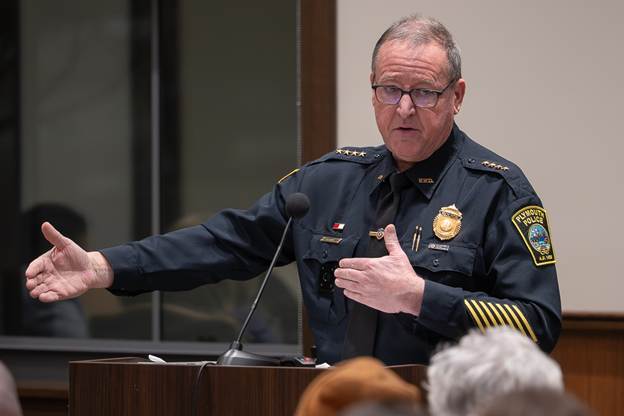
The current Police Department policy adopted by the Select Board does not allow police to be involved in immigration enforcement. Police Chief Dana Flynn has said officers do not typically inquire about immigration status and are not allowed to assist federal authorities on immigration-related investigations.
The Police Department is governed by a 2017 decision from the Massachusetts Supreme Judicial Court, Commonwealth v. Lund, which prohibits local police from arresting or holding anyone based solely on their immigration status – even if the person is the subject of a federal immigration detainer, a request from ICE to hold a person for immigration proceedings.
Select Board Chair David Golden and member Dick Quintal voted against recommending Town Meeting pass the bylaw.
Golden said the current arrangement provides oversight from the Select Board but also allows the police flexibility to adapt to changing circumstances.
“We want to keep this in the hands of the police,” Golden said.
Select Board member Kevin Canty argued Town Meeting has a role to play.
“There is a benefit to having a bylaw and a policy that, right now, line up,” Canty said in February. “Town Meeting is the best place to have a further discussion about the merits of this approach.”
Fred Thys can be reached at fred@plymouthindependent.org.