
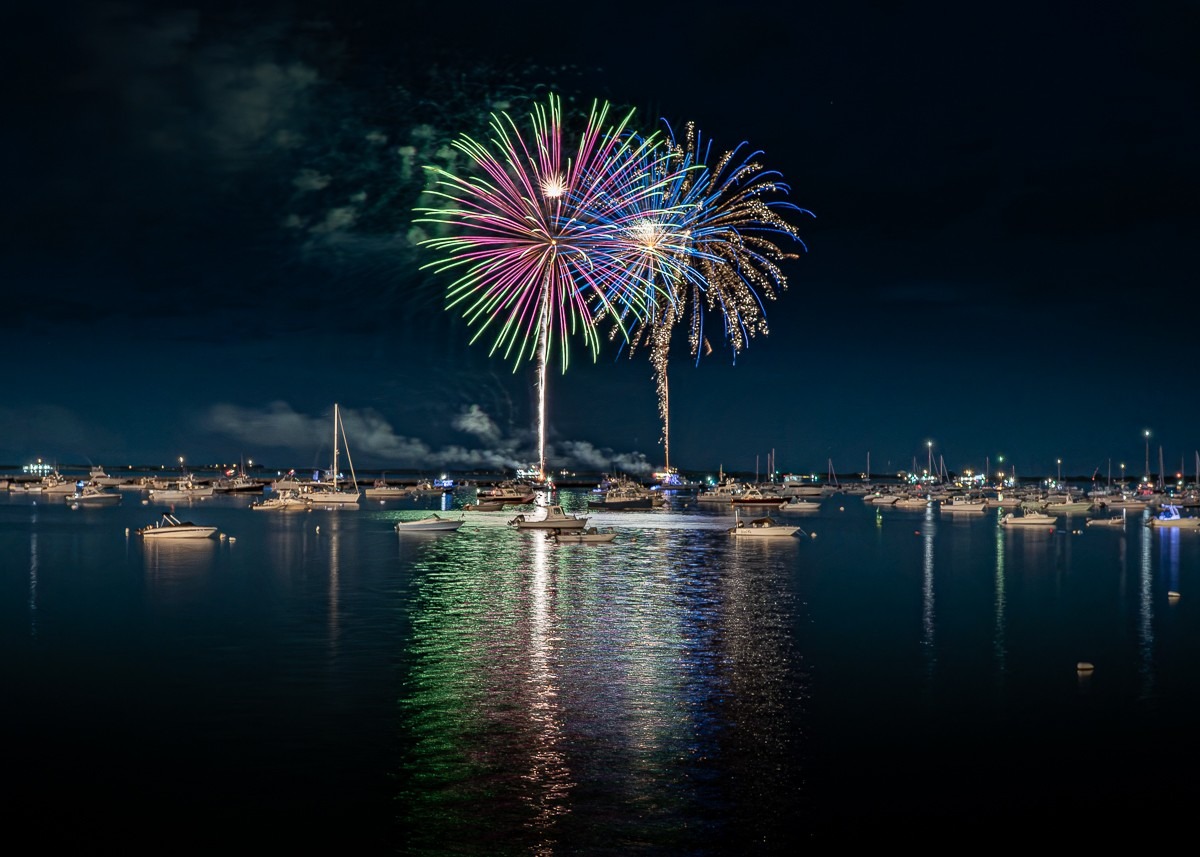
You know the old saying: “Everyone loves a parade.” I suppose the same goes for Fourth of July fireworks displays, although Plymouth’s dogs may, uh, beg to differ.
Then why are so few people willing to come up with a few dollars to support these annual festivities? And why should the town have to dip into its so-called “free cash” bucket to subsidize the events, as well as the nonprofit behind the Thanksgiving parade, by $100,000 more than last year? Especially at a time when the budget is tight and money might be better spent on things like a second sidewalk plow, road repairs, or a $3 million snow removal bill that will only be partially reimbursed?
These questions – and more – come to mind as two warrant items are set for consideration during the Special Town Meeting portion of Saturday’s Town Meeting at Plymouth North High School.
The answers, as you might figure, are complicated.
Article 3 calls for the town to allocate $50,000 in “250th Anniversary Funding for July 4 Plymouth Inc.,” the nonprofit overseeing the parade and fireworks.
Article 4 would appropriate another $50,000 in “250th Anniversary Funding for America’s Hometown Thanksgiving Celebration,” another nonprofit.
The 250th anniversary is, of course, a reference to the country’s birthday, more affectionately known as the semiquincentennial. The birthing took place in Philadelphia, not Plymouth – a key point some officials seem to have overlooked in their advocacy for additional spending – but who can fault “America’s Hometown” for wanting in on the party?
Matt Tavares, a Town Meeting member, is the seemingly tireless champion behind the July Fourth events. He took over responsibility for organizing them from his father, Ken Tavares, a well-known former Select Board member who did it for decades. The position comes with long hours and lousy pay – $0 – but civic engagement runs in the family.
In recent weeks, the younger Tavares has gone before the Select Board and Finance and Advisory Committee to detail July 4 Plymouth’s dire financial condition. He told me the five-person volunteer group needs at least $175,000 to pull off this year’s events.
Here’s the discouraging part: As much as people claim they cherish the parade and fireworks, in 2025 just 52 individuals donated a total of about $1,500 in a town whose population is climbing toward 70,000. This year, there have been 10 donations so far.
The biggest pile of money – $60,000 – will come from the Visitor Services Board, using dollars collected from the town’s hotel rooms tax. It’s a $20,000 bump. The Plymouth Growth & Development Corporation contributes $10,000, while food truck and vendor fees, along with pledges yet to be collected are expected to add $10,500. Throw in about $2,100 in parade entrant fees, and it accounts for $84,100, Tavares figures.
The town doles out another $15,000 apiece to the July 4 and Thanksgiving groups, according to Select Board member Kevin Canty, which would leave the Fourth organizers in need of approximately $85,900.
“Based upon the recent history over the last six years that is not achievable,” Tavares said. “Without the support of town meeting and increased backing from the citizen community, the July 4th committee will have no choice but to cut either the parade or the fireworks.”
He’s not bluffing.
Even with the $50,000 from Article 3 – both articles were proposed by Select Board member Dick Quintal – the parade and fireworks would still face a significant deficit.
By far, the biggest difference between this year and last – when the July 4 group had to drain down its emergency CD bank account to make ends meet – is a $20,000 increase in public safety costs. That line item alone is estimated at a $109,500 – nearly twice the price of the fireworks display itself.
The July and November celebrations are “something for our residents and the kids and the families,” Quintal said in explaining his reasoning at the March 24 Select Board meeting. “More than that, it’s the 250th anniversary. If it wasn’t, I wouldn’t even be requesting this. I’ve got to be honest with you, I think it’s time the town stepped up to the plate moving forward in support of these projects a little more than what they do.”
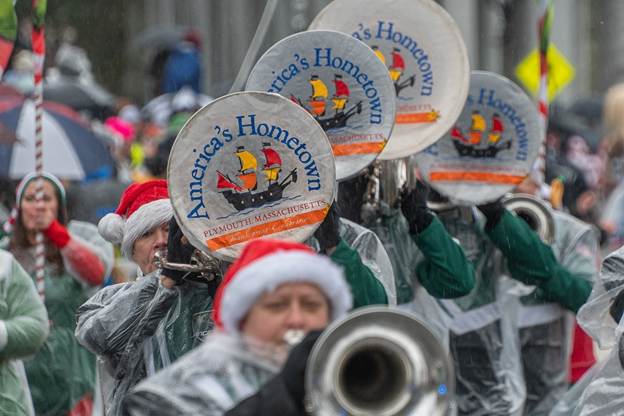
The board ultimately voted to recommend Town Meeting appropriate the money. Deb Iaquinto voiced concerns about the wisdom of the adding funding but did vote to let Town Meeting wrestle with it in the context of the full town budget. Only Canty dissented outright.
“In the current [economic] climate that we are in,” he said last month, “I am not in a position where I can support” spending more on fireworks and parades.
In a phone conversation last week, Canty elaborated on his position.
“Spending more money on a parade or on fireworks is less responsible than spending it on your existing snow and ice bill or on the various other known financial liabilities that the town currently has,” he said.
Like the Select Board, the FinCom also recommended articles 3 and 4 to Town Meeting.
Where are the deep-pocketed residents who could together foot the bill this year? Where are the “regular” folks who can afford to spend hundreds of dollars at Market Basket to stock a July Fourth backyard party but not write a $50 check to the July 4 group? How about one less lobster roll in favor of a donation? It would take only a little bit from not that many people to solve this problem.
And then there’s the overarching issue Canty rightly raised: Why should the town spend more on one-day events when long-term budget problems are at the doorstep? Where will Plymouth stand on the nation’s 251st birthday in 2027?
Tavares says he’s wrestling with the funding issue from both sides – as the director of July Fourth Plymouth and as a Town Meeting member representing tax-paying constituents. He also recognizes it’s been a tough couple of years for many local businesses.
“Plymouth has so many organizations and they’re all just like us – looking to these businesses for help and for support,” Tavares said. “I get it. If I was a small business owner, I’d be like, ‘Man, it’s every week I turn around and somebody wants money from me.’”
At the same time, he said, businesses benefit from the parade and fireworks crowds, though not on an equal basis. No one, however, was able to put a dollar figure on those benefits, even though Quintal, Select Board member Bill Keohan, and various FinCom members made generalized statements about the positive economic impact of the parades and fireworks in expressing support for articles 3 and 4.
In other words, we don’t know what the ROI is on spending an extra $100,000 this year, beyond obvious metrics like sold out hotels and motels. I suspect a private company facing a fiscal crunch would demand more than anecdotal evidence before increasing a budget.
But time is ticking by. Tavares has pinpointed June 15 as D-Day. If his group doesn’t have $140,000 to $150,000 committed by then, he said, “I’m going to be very worried about having to make a decision on which shoe drops – whether it’s the parade or the fireworks.”
“I wasn’t a petitioner of the article [to increase funding], obviously,” he added. “But I’m going to go out and support it as long as I can until the vote is taken.”
He won’t have to wait much longer.
I also spoke with Olly deMacedo, director of the much larger weekend spectacle that is America’s Hometown Thanksgiving Celebration, which is seen nationally through a partnership with WCVB-TV. He’s fueled by the same level of zeal Tavares runs on and takes care to laud the many volunteers helping make the events happen. The November parade will go on with or without the $50,000 called for in article 4, but he would certainly welcome it.
“Since COVID, the cost of almost everything has doubled,” deMacedo said. “From security to the pretty significant floats we build.”
“It’s $400,000 to $500,000 a year to put this on. And on top of that we pay for all police, fire, ambulance – everything. We pay all the town services. I would say it’s well over $60,000.”
He said America’s Hometown Thanksgiving Celebration receives about $100,000 from various town sources, “but a lot of it goes back to the town, because we pay for all the services.”
Unlike the July parade, which has a purposely homemade feel, the November one – held on the Saturday before Thanksgiving – boasts a professional sheen and is partially tailored to TV and streaming audiences. That’s why it drops some serious dough on bringing in groups such as the 380-member UMass marching band – to the tune of $39,000.
“That’s travel, housing and everything. It’s transportation, feeding them. the whole deal,” deMacedo said. “That’s just one single group, and we have so many groups and every, we pay them to come from all different parts of country.
He’s “grateful” for the possibility of $50,000 in extra support, but says he did not seek it out.
“We want to bring people from Virginia, South Carolina. We want to really bring the nation into what we do, but all that takes money,” deMacedo said, adding the one-time funding boost is “going to help us this year. But I think the best thing would be for the town to just basically take over public safety.”
He also acknowledged beefing up public funding for a nonprofit’s parade might not be a top priority this year.
“There might be others, I understand that,” deMacedo said, “but at some point, we also need to think of the cultural impact. You know, a cultural thing that brings economic impact. But we love doing it. We’re not going to go anywhere.”
This last section risks lulling you to sleep, but it matters a lot. The funding for both articles would be pulled from the misleadingly named “free cash” account. (Thanks, state bureaucrats.) Town finance director Lynne Barrrett, God bless her, spent a considerable amount of time patiently explaining the concept to this English major. My big takeaway: There’s nothing free about it.
Basically, free cash is money budgeted but not spent, such as for department positions left unfilled, equipment not purchased, or services not used. It also comes from income that exceeded estimates, like added excise tax revenue from those overpriced big trucks roaring all over town. Because the amount varies from year to year, the money is not recommended for funding permanent jobs or any kind of recurring cost. It doesn’t all have to be spent, and about 10 percent is rolled over into the next fiscal year as a cushion.
The pie chart below shows where the money came from.
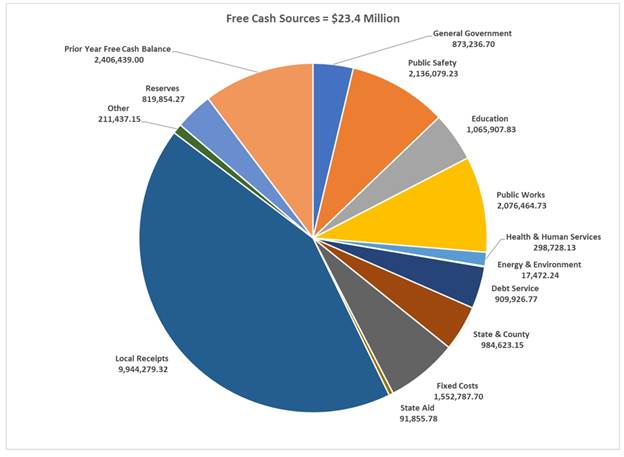
For this Town Meeting, Barrett said, there’s almost $22.8 million in free cash on hand, after some spending at the fall meeting.
“We are recommending to set aside $9,609,403 in various reserves and spend $11,681,894 on capital and other one-time purchases, leaving $1,499,837 balance remaining,” she said in an email.
Whether that includes bigger bangs for more bucks on the Fourth of July will be up to the discretion of your elected precinct representatives at the annual and special Town Meetings. There’s still time to let them know where you stand.
Mark Pothier can be reached at mark@plymouthindependent.org.