
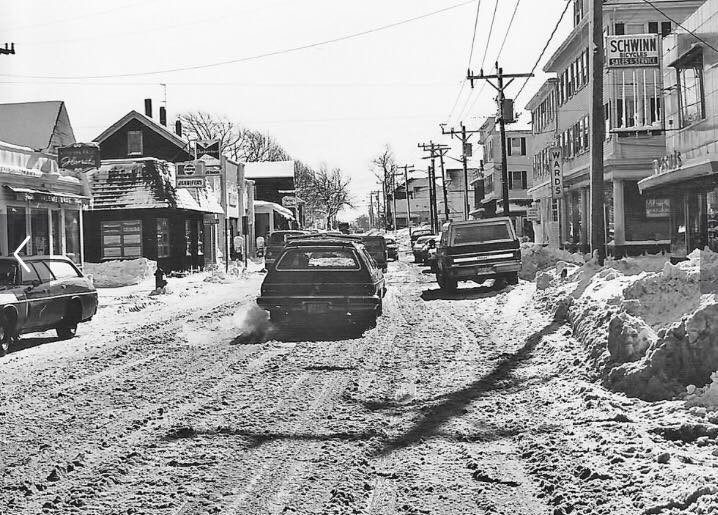
As the Blizzard of 2026 nightmares begin to fade, it’s been a constant topic in my office of 9 people. Four of us compared it with the Blizzard of 78, much to the chagrin of the younger members born after the storm. Paul Fiocchi was a sophomore at what was then Southeastern Massachusetts University in North Dartmouth. His normal drive home of 45 minutes became a 4.5-hour trek. Cherie Tavernelli, a junior at Plymouth Carver High School clearly and happily remembers the cancellation of the mid-term exams. I was a sophomore and remember my dad as an essential worker who was allowed to drive despite a travel ban. He made grocery runs for the neighbors. Michelle Mott, the youngest of us at 6, remembers her mom, a nurse, not coming home for several days.
My younger staff members, Brie, Chris, Noah, Aydin, and Sheila, can now add their own accounts of the Blizzard of 2026 to their memory banks. Generations often remember significant weather events in their lives and recount tales to younger generations. With over 400 years of history in Plymouth, I have been asked, which generation has the most bragging rights?
Snowstorms have been documented in Plymouth since that boat dropped anchor in the harbor, and no doubt, the native people’s stories, if recorded, would reach back thousands of years.
The written history of snowstorms begins with William Bradford documenting the Pilgrims first winter in Plymouth. He describes it as “sad and lamentable.” No doubt, countless snowstorms, freezing temperatures, and an ice-choked harbor were responsible for their misery. Almost two decades later, in Boston, John Winthrop recounted the tale of a foot and half of snow still on the ground at the end of March, with another snowstorm in April destroying a newly planted crop of cold weather vegetables. No doubt the same storm affected Plymouth.
The defining storm of the next century occurred over several days in 1717. It began at the end of February or the beginning of March. The exact day is unclear because of the switch from Georgian and Julian calendars. Regardless, the storm began in New England with a day filled with rain, sleet, and snow from a passing nor’easter. Three days later, our area was hit with another snowstorm, with a third arriving three days after the second storm.
Author Sidney Perler mentions in his 1891 “The Winter of 1716-1717” book that “Some of the oldest Native Americans said that even their ancestors had never spoken of a storm of this magnitude.” In the end, Boston received 40 inches. Plymouth undoubtedly received a fair amount of snow although it is not officially recorded. What is recorded is a response to snow in 1773, and a storm in 1778.
In 1773, town records indicate there was a requirement of the town surveyors to enforce snow clearing from roadways. The clearing would fall to the residents, and they would not expect to be paid for their labor. Town surveyors evolved to Town Meeting members, and clearing of roadways became the requirement for residents to clear sidewalks in front of their homes.
This community responsibility was put to the test in 1778. On Christmas Eve, revolutionary privateer General Arnold, commissioned by the government to patrol with his armed ship, was sailing south from Boston towards the West Indies. Carrying a crew of 105 and captained by James Magee, the Arnold sailed directly into a major blizzard. By Christmas Day, it was anchored at the mouth of Plymouth Harbor in the area just off Gurnet Light. Unfortunately, the storm would intensify, and the ship’s anchors would fail, dragging it aground on the White Flats of Plymouth’s inner harbor. The community worked together to rescue the ship. Plymouth residents built a causeway of ice floes and finally reached the ship by Dec. 28. The survivors and dead were brought to the 1749 courthouse. The entire account of the grim tragedy and the Arnold’s fate are detailed here.
The 1800s no doubt saw its fair share of blizzards, but these storms were most likely reported on by local papers, most commonly by Plymouth’s once-famed Old Colony Memorial. Sadly, researching these events in historic newspapers requires old-school microfiche machines in the library. There is a current push by local historians, me included, to pursue funds under the Community Preservation Act to digitize these records for easy research.
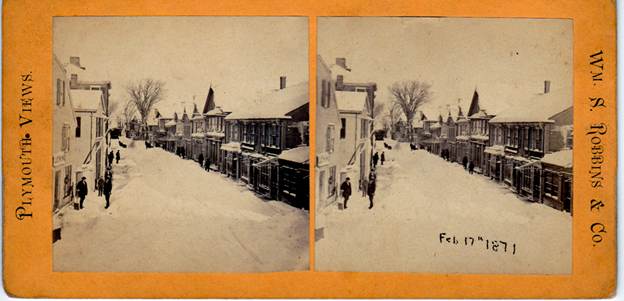
One major storm receiving wide attention throughout New England was the Great Blizzard of 1888. It began March 11, and when it finally moved out to sea on March 14, 14th snow depths ranging from 10 to 58 inches covered an area from New Jersey, New York, Connecticut, Rhode Island, Massachusetts, and the maritime provinces of Canada. In Plymouth, we lucked out. Thomas Bradford Drew wrote on March 14, “A terrible snow storm raged in New York and Western Massachusetts day before yesterday, while we not much more than a cold rain storm.”
Plymouth wouldn’t be so lucky a decade later when the Portland Gale of 1898 struck. Although more of a hurricane than blizzard, the storm struck Plymouth November 26-27. Damage was extensive and included the destruction of several wharfs, the three-story Columbia Pavilion hotel on Plymouth Beach was swept away, and the course of the Eel River was diverted. To add insult, a few short months later in February of 1899, a major blizzard struck. The storm arrived on the 18th and resulted in drifts covering Plymouth towering 6 to 8 feet.
As the 20th century began, the advent of photography helped document storms. There are several photos chronicling those storms in Plymouth throughout the century. It seems to have been a common occurrence to photograph piles of snow throughout town versus documenting the actual snow fall amounts. In addition to the photographs, records of storms are often accompanied by notes of destruction, buildings lost, and days without power. All these add to a generation’s bragging rights. I have already heard one such comment from a person not alive in 1978. My younger staff pointed out how I never mentioned losing power in 1978, while in 2026 the outage lasted three days.
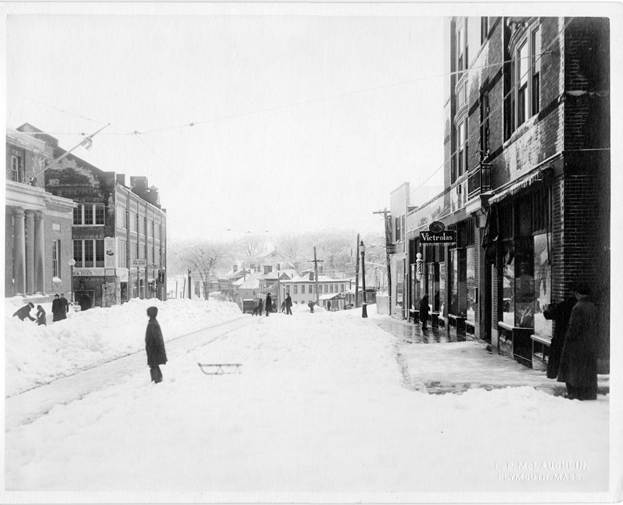
I have many photos my mom took of my brother and me in the ‘60s playing in snow drifts several feet high. I witnessed the Blizzard of ‘78 and the Blizzard of 2026. And truth be told, I have finally betrayed my hardy New England roots in this last storm. After one day without power, I packed hubby and dog up and sought refuge in a hotel.
I guess I’m older and wiser now.
Architect Bill Fornaciari is a lifelong resident of Plymouth (except for a three-year adventure going West as a young man) and is the owner of BF Architects in Plymouth. His firm specializes in residential work and historic preservation. Have a question or idea for this column? Email Bill at billfornaciari@gmail.com.