
The recommendation of a citizens advisory committee to torpedo controversial plans to change the way Plymouth disposes of its wastewater was itself rejected by the Select Board on Tuesday.
The Wastewater Groundwater Discharge Citizens Advisory Committee – appointed by the Select Board in 2024 to investigate and recommend a solution on how to dispose of Plymouth’s wastewater – voted 3-2 to recommend the town make no changes for now in the current disposal method, which sends treated water into Plymouth Harbor.
Hampton Watkins, the committee’s vice chair, appeared at the meeting to say the proposed alternative to transfer the waste to five treatment beds at the wastewater treatment plant in Camelot Park poses too many environmental risks of its own.
The alternative plan, which would discharge up to three million gallons of treated wastewater a day into the Eel River watershed, has been adamantly opposed for years by residents living nearby.
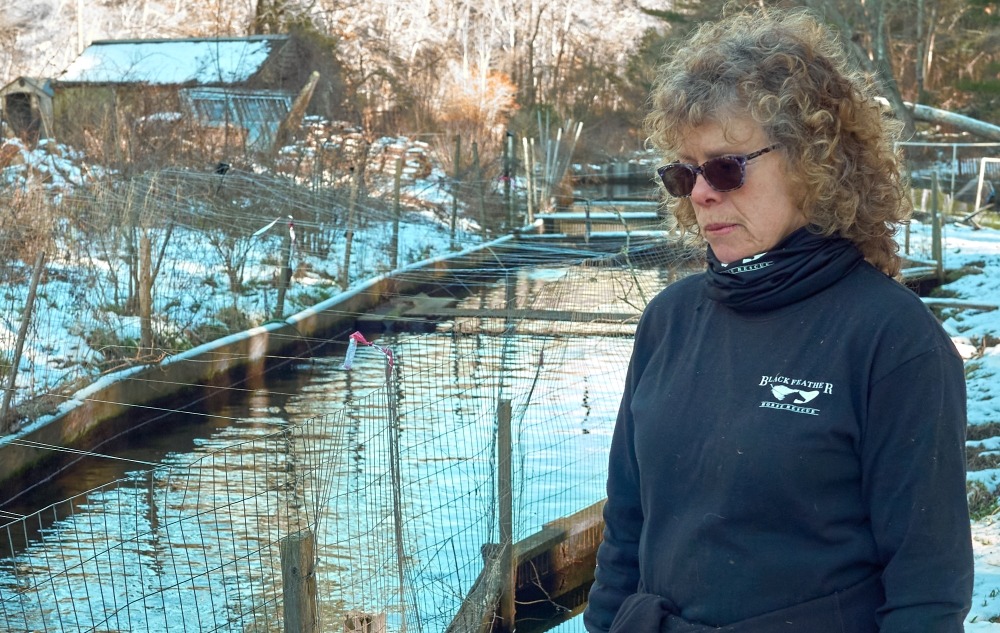
“I’m the first one you’re going to put under,” said Darlene Nickerson, who runs the Gilbert Trout Hatchery on nearby Warren Wells Brook in Chiltonville. She was one of nine members of the public who turned out to urge the Select Board to take the advice of the committee.
But the Select Board, acting on the advice of its own consultants and staff, voted 4-to-1 to proceed with the Camelot Park alternative.
The debate over what to do with Plymouth’s treated wastewater has been raging among environmentalists and residents for years. Plymouth currently discharges 1.6 million gallons a day of wastewater into the harbor. It has a permit from the state Department of Environmental Protection to discharge up to 1.75 million gallons a day there and additional overflow of 750,000 if needed.
Concerns about the environmental impact of the discharge into the harbor are central to the debate.
In 2022, following a 2018 dye test to trace the distance wastewater traveled from the outflow pipe, the Massachusetts Department of Fisheries reclassified Plymouth Harbor, Plymouth Bay, Kingston Bay, and Duxbury Bay as only partially safe for shellfish consumption. It prohibited harvesting shellfish from an expanded portion of Plymouth Harbor. It also applied a “conditional” designation to harvesting from Kingston Bay, southern Duxbury Bay, northern portions of Plymouth Harbor, and westerly portions of Plymouth Bay.
The change in designation means shellfish caught in those areas can be sold in the United States but – under more stringent European Union rules – may not be exported to the EU.
As an alternative, town officials are seeking a permit to increase discharge should it need it someday to 3 million gallons a day, with the primary destination the beds at Camelot Park. The harbor would be used only as a backup in emergencies.
The primary goal is to improve the water quality in Plymouth Bay. Transferring the treated water from the harbor to Camelot Park would reduce the amount of nitrogen discharged into the ocean and thus reduce the number of algae blooms in the harbor, as saltwater algae feed on nitrogen.
At issue Tuesday was whether the town should proceed with the next step in the environmental review process and submit a draft environmental impact report to the state.
Final approval from the state could take one to three years, said Kendra Martin, the town’s water and wastewater engineer. If the state approves the draft report, a final report would have to be approved before the Department of Environmental Protection could issue a permit.
It would also eliminate viruses threatening oyster beds in Plymouth, Duxbury, Kingston, and Scituate, Martin told the Independent in 2024.
Another goal of pumping the water at Camelot Park is to recharge depleted groundwater, according to Neal Price, a consultant hired by town officials. When water is poured into the five infiltration beds at the park, the water table there will rise by 12 feet, Price said.
Most of the water discharged at Camelot Park will work its way into the Eel River, Price said. But the closest stream to the discharge beds is Warren Wells Brook, near Nickerson’s property.
Price said phosphorus is of concern because it causes algae growth in fresh water. He said phosphorus is held back in groundwater and tends to move slowly, at a rate of about 12 feet per year. So, if the plant were to discharge treated water for 50 years into the beds and then shut off, at the end of 80 years, the phosphorus would just barely get to Warren Wells Brook, he said.
Nickerson and other nearby residents are not persuaded.
Rose Forbes, another member of the advisory committee recommending against the change, said in 12 meetings over 14 months all the members of the public who turned out opposed changing where the town discharges its treated wastewater.
Watkins did not immediately respond to a request for comment.
In the end, the Select Board voted 4 to 1, with Bill Keohan dissenting, to proceed with the project. The state will now review the draft environmental impact statement and make further recommendations.
Fred Thys can be reached fred@plymouthindependent.org