
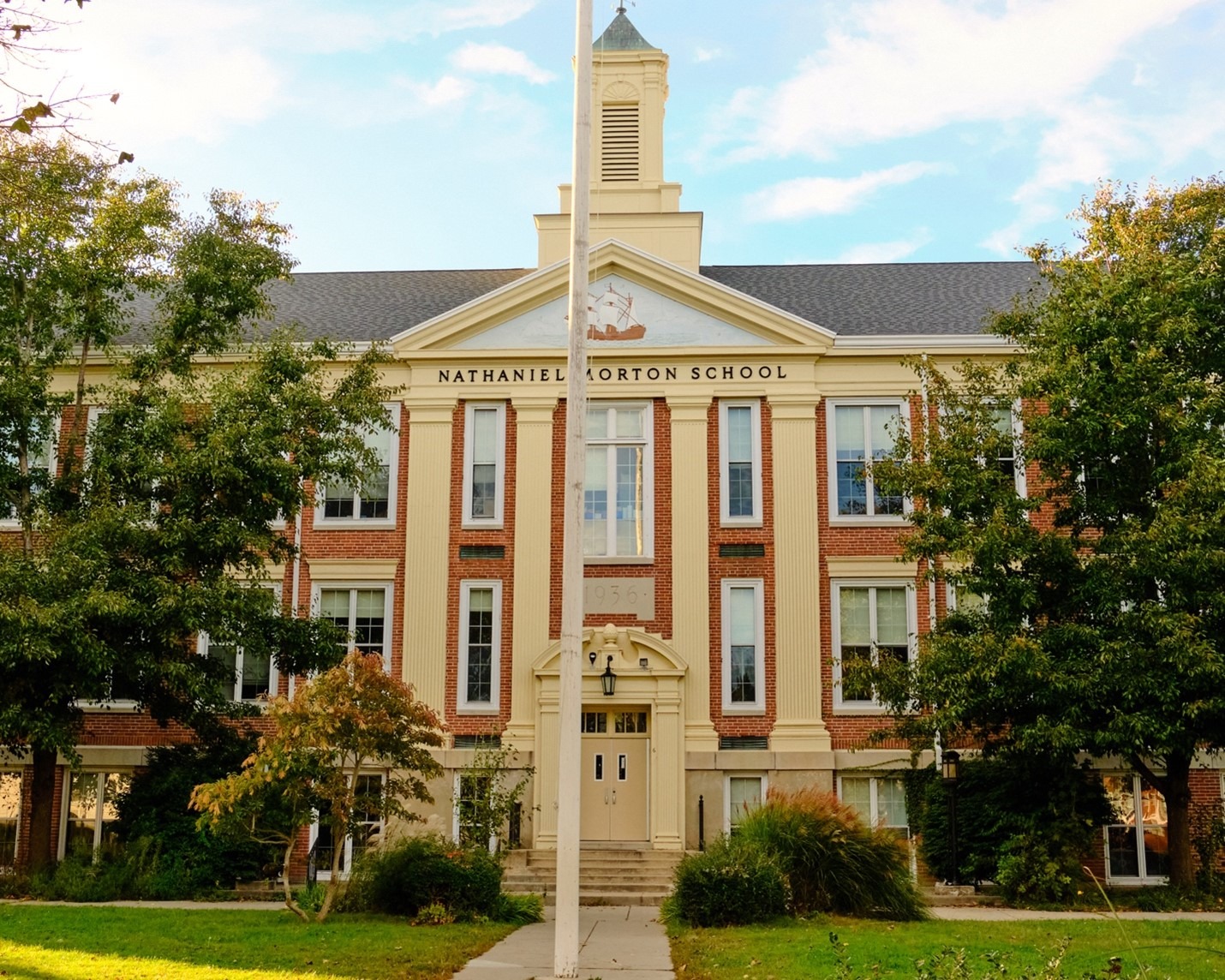
Last Wednesday at the Planning Board meeting we heard from the school facilities chief and an accompanying engineer who presented to the board (Bolotin, Grandy, Mand) and the downtown steering committee a plan to turn the entire back of the Nathaniel Morton school into a parking lot (expanding from 60 to 150 spaces).
The meeting was rich with densely detailed, difficult to discern slides and repeated assurances that the planners want to be neighborly in their work.
On the surface, there was much to admire, 14-15 trees, 74 shrubs (all native species), systems to direct water away from abutters and address flooding on the property, historic parking lot solar lighting.
A dozen-plus residents who spoke said they had not been included in the planning (despite the presenters stating otherwise) and raised concerns about traffic, noise, public urination, lack of privacy, light pollution, trash, fencing, weed killers near/in their homes, and how all of the above will extend beyond school hours.
The presenters said that school staff had not been consulted about the plan or traffic changes, but they said they were sure staff would be on board as they were on board with other school improvements (i.e. the new roof).
At the end of the comments the presenters said that Park Plymouth had been helping to fund the project, and they are working with them on a plan for parking outside school hours for public parking, which suggests that the neighbor’s complaints might extend from daytime, school-hours parking to general public parking into evenings and weekends.
I was left with these questions: Is Park Plymouth a ‘town agency’? What’s in it for them? School property should be free and accessible to all children in the town of Plymouth-weekdays and weekends- not taken over and monetized by Park Plymouth.
As a neighborhood resident, I understand the need for more public parking; I do not believe that monetizing a school yard is the answer. Additionally, this plan seems diametrically opposed to the overall downtown plan to create more green space and reduce the impact of heat islands. Let’s get these questions answered before signing onto creating a heat island sandwiched between a densely populated neighborhood and a school playground.
– Jenny Healy