
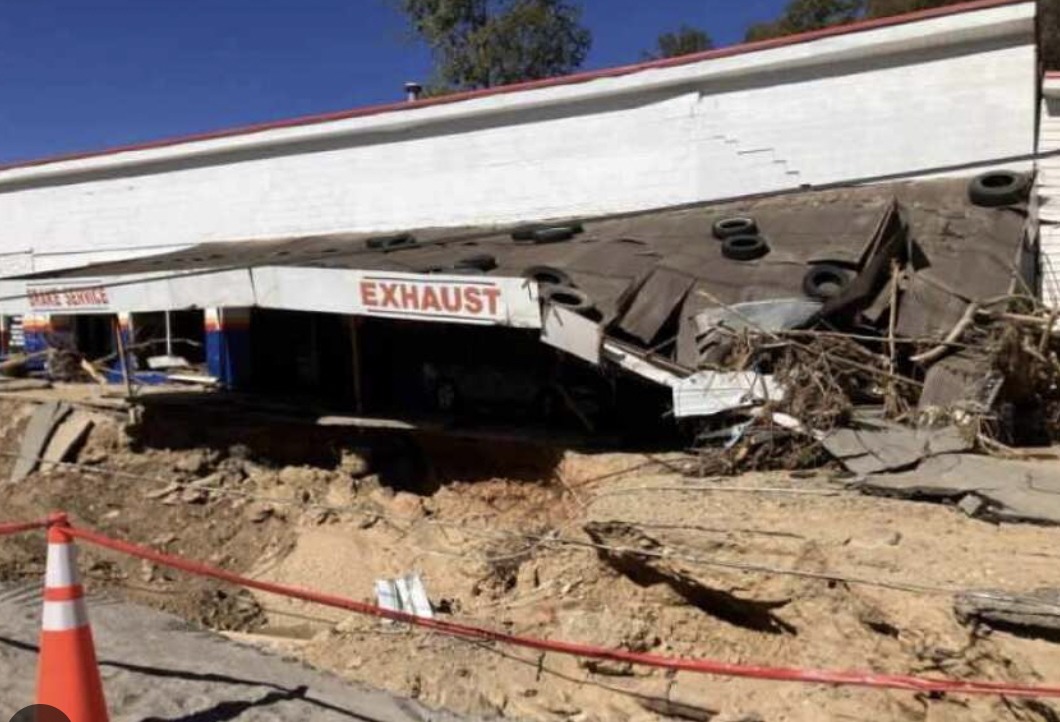
At the Sept. 24 screening [at the library] of the PBS Frontline film “Hurricane Helene’s Deadly Warning,” I found myself reliving some anxious moments. At the time of last year’s hurricane, I had family and relatives living in Florida, Georgia, North Carolina, and Tennessee and I was worried about their safety and wellbeing. The storm made landfall in the Big Bend region of Florida on Sept. 26, made its way through Georgia into North Carolina on the 27th, and then Tennessee. Thankfully, none of my people were directly hit with the most devastating impacts. The catastrophe was, of course, everlasting for so many unfortunate others and the region broadly. Yes, it still unfolds in uneven and costly recovery.
While feeling some anxiety again, I was reminded of Dave Kindy’s excellent reporting in the Plymouth Independent on the wildfire risks Plymouth faces now and into the future. Recently, local fire officials were anxiously tracking the path of Hurricane Erin as it moved up the Eastern seaboard. The current drought has increased our vulnerability to lightning strikes and strong winds spreading wildfire.
“When you realize the potential of what we are dealing with, it raises the hair on the back of my neck,” chief fire warden David Celino of the Massachusetts Department of Conservation & Recreation told Kindy.
That trained first responders also – perhaps especially – feel climate-related anxiety was reinforced last night by prepared comments given by Christian Horvath, the town’s director of emergency preparedness. Given the film was primarily focused upon flooding impacts from Helene, Chris acknowledged Plymouth’s vulnerabilities to coastal and runoff flooding. But he is most concerned with wildfire risks and took time to address both town and citizen’s concerns and preparation for mitigating fire hazards.
He also briefly addressed the inevitable response and recovery needs of possible extreme events. The geographic size of the town presents some unique challenges other municipalities do not face. Spread across five villages, our residents and businesses face somewhat different circumstances for which we must plan. A primary concern for him is the need to develop a robust community emergency response team (CERT). Currently, he has a network of dedicated and professional volunteers to assist with input and guidance. What we are missing, he acknowledges, is a well-trained and funded CERT.
Some of us feel that we need more than one, ideally a team for each village to maximize response and recovery impacts to enhance resiliency. Priority Plymouth, the town’s Climate Action and Adaptation Plan (CAAP), has a dedicated action item for the development of CERTs to help realize the goal that “all community members are prepared for and have the tools necessary to endure the impacts of a changing climate.”
As I pointed out [at the film screening], the CAAP is designed to prioritize community wellbeing. Yet, even if it comes to be fully implemented over many years, it cannot guarantee the protection of residents and infrastructure. Together we must cultivate and encourage cooperation among us and develop a social infrastructure that provides robust mutual aid during extreme events. A goal of lessening, if not eliminating, the disproportionate impacts on the most vulnerable individuals and groups must be a shared responsibility and commitment.
The film reveals how disasters are fundamentally social experiences, and that collective responses are essential to mitigation, preparedness, response and recovery. More than just individuals preparing for what is to come, our community must prepare together for the benefit of all. Whatever the natural hazard that we end up facing, the disaster will be made worse by not recognizing our collective yet differentiated vulnerabilities and preparing accordingly. Fostering social bonds by acting together is whole of community resilience. Useful resources for personal and town resilience planning can be found here.
As Chris Horvath posed [at the film screening] and the MA Climate Chief Melissa Hoffer often declares, it is not a question of if we will face an extreme climate-related event, it is only a matter of when one (or more) will happen. We need to keep tending to the challenges and tasks by acting together now.
Many thanks to Sustainable Plymouth for initiating and hosting the screening of this important film (which is available free for viewing), and for promoting Climate Week. Likewise, thanks to Christian Horvath and Mike Cahill, the town’s climate resiliency and sustainability planner, for their participation. Those of us who comprise the Climate Action, Net-Zero advisory committee (CANZ) welcomed the opportunity to co-sponsor and participate.
Lastly, next time you are in the main branch of the library, be sure to look into the resources provided, as the branch is a dedicated Climate Resilience Hub.
– Dale Bryan
Bryan is chair of CANZ.