
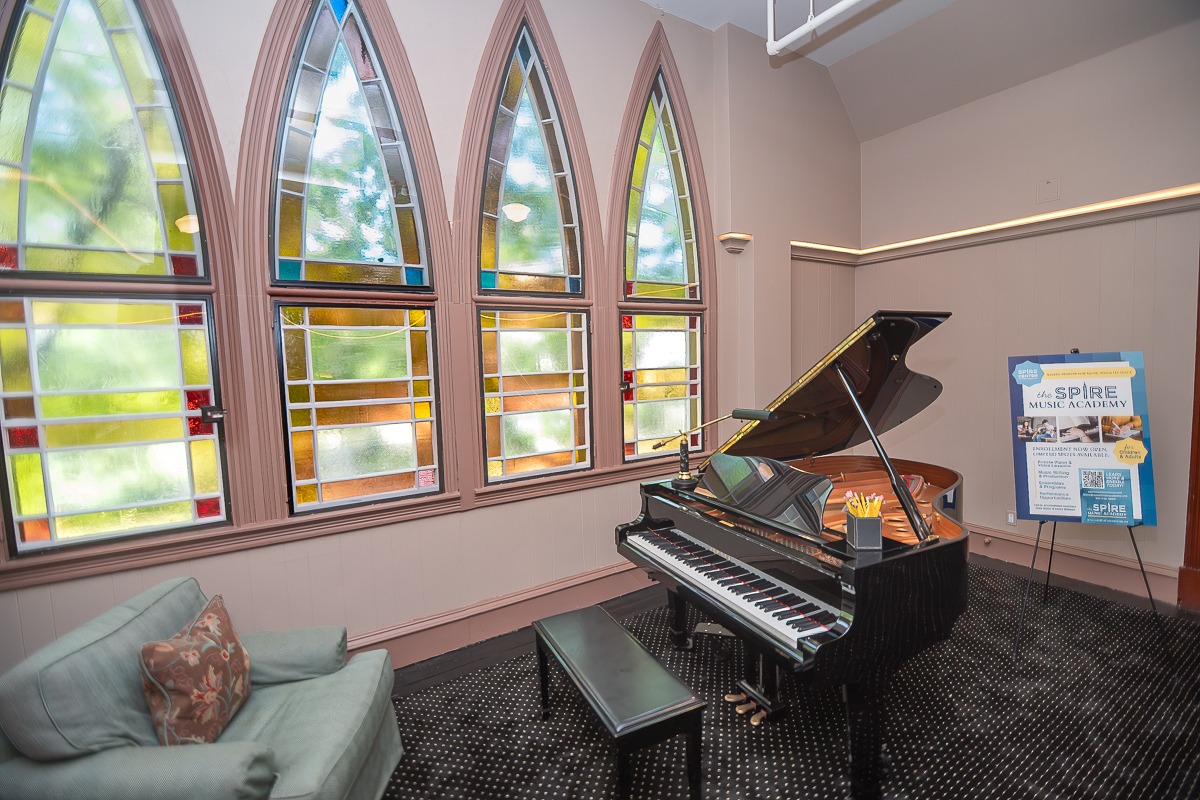
When Bob Hollis steps through the doors of the Spire Center for Performing Arts, he still slows for a moment before walking inside. He doesn’t pause out of habit. He stands for a moment in reverence.
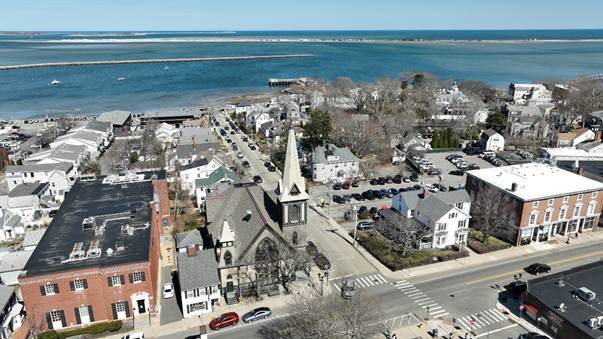
For Hollis, President and Founder of the Spire Center for Performing Arts, the 140-year-old building represents more than a successful restoration project or a busy concert hall. It is the realization of a vision that began more than a decade ago—and one that is still unfolding. Now, with the opening of the Spire Music Academy, another piece of that long-held dream is becoming reality.
“We’ve always wanted to see this building full during the day with students,” Hollis said.
For more than 12 years, the Spire has welcomed nationally acclaimed musicians, comedians, actors, poets and speakers, growing into one of Plymouth’s cultural anchors with approximately 167 performances and events each year. This fall, however, another chapter begins.
For the first time, the Spire will do more than present artists – it will nurture them.
The launch of the Spire Music Academy transforms the historic Court Street landmark into something few communities can claim: a place where aspiring musicians study under accomplished professionals, rehearse on a working concert stage and become part of the same artistic community that fills the theater night after night.
The academy is the latest evolution of an idea first taking shape in 2010, when Hollis and a small group of volunteers formed the Greater Plymouth Performing Arts Center with a single goal—to bring a professional performing arts center to Plymouth. The search eventually led them to a neglected former church built in 1886. After Plymouth Town Meeting approved Community Preservation funding to acquire and restore the building, the town entrusted it to the nonprofit organization through a 100-year lease. The Spire opened its doors in April 2014.
Yet, ask Hollis what makes him proud and he doesn’t begin with the building. He talks about music.
A lifelong musician, Hollis performed in bands through high school and college before building a successful insurance business. Music, he says, shaped the way he understands community.
“Music teaches the same things sports teach,” Hollis said. “Teamwork. Discipline. Individual practice. Becoming part of something bigger than yourself.”
Those lessons are at the heart of the academy.
“Maybe someone has had music lessons or voice lessons and just wants to go further,” Hollis said. “We want to provide the place for that journey.”
To turn that vision into reality, Hollis found a partner who shared both his passion for music and his belief that high-level instruction should be welcoming rather than intimidating.
When he asked Dona Maher if she would help create a music academy at the Spire, her answer came without hesitation.
“How could I possibly say no?” she recalled.
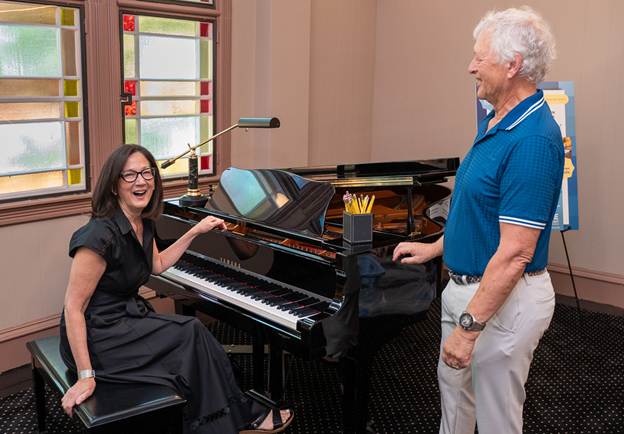
Maher, Director of the Spire Music Academy, Executive Producer of Sunday Serenades and a member of the organization’s Board of Directors, has spent decades as a concert pianist, accompanist, vocal coach and educator. A graduate of the New England Conservatory with a master’s degree in piano performance, she has taught throughout Massachusetts and the Baltimore-Washington region while maintaining an active performing career.
Last year, she moved her teaching studio into the Spire. The response was immediate.
Saturday lessons filled within weeks. Tuesday instruction quickly grew into a full day of private students.
“We dipped our big toe in to see if it worked,” Maher said during a recent interview. “It just took off.”
The early success convinced Hollis and Maher the community was ready for something much larger. What they envision is not a traditional neighborhood music school, nor an intimidating conservatory. “We wanted something sophisticated yet welcoming,” said Maher.
Instead, the Spire Music Academy is designed for students of every age and ability—from an eight-year-old climbing the stairs for a first piano lesson to an adult rediscovering music after decades away. Students preparing for conservatory auditions will study alongside working musicians looking to sharpen their craft.
The faculty reflects that philosophy.
Every instructor brings conservatory training together with active professional experience. Rather than learning solely from teachers, students will study with musicians who continue to perform, compose, arrange and record professionally.
At the helm is Lenny Williams, Distinguished Faculty at the Spire Music Academy and Professor of Film Scoring at Berklee College of Music. A six-time Emmy Award-winning composer and longtime professional pianist, Williams will lead jazz studies, improvisation, composition and ensemble coaching while helping students understand both musicianship and today’s music industry.
“All of our faculty are conservatory-trained,” Maher said. “They have pedagogy backgrounds, active performing careers and real-world teaching experience.”
Students will find far more than private lessons.
The academy will offer jazz ensembles, children’s chorus, songwriting, composition, digital music production, improvisation, audition preparation and performance coaching. High school musicians can audition for ensembles. Singer-songwriters can develop original music with experienced mentors. Established local bands can even book coaching sessions with Williams on the Spire’s main stage, receiving professional feedback on everything from arrangements and musicianship to stage presence and group dynamics.
“We’re going to teach students how to use digital audio workstations and how to produce themselves,” Maher said. “When they go to Berklee or another music school, they’ll already understand those tools.”
What makes those programs different, however, is where they take place. Throughout the year, students won’t simply practice behind closed doors.
Jazz ensembles will rehearse on the Spire’s main stage. End-of-semester showcases and recitals will take place under the same lights that illuminate nationally touring artists. The children’s chorus has already been booked to perform as part of productions on the Spire’s regular concert calendar.
“People work hard to get onto that stage,” Maher said. “Our students won’t just imagine what it feels like to perform professionally. They’ll experience it.”
The connection between classroom and concert hall is what makes the academy unique. Students won’t spend years preparing for a stage they may never see. From the beginning, they’ll rehearse and perform in a professional venue, gaining confidence in the very place where audiences gather each week to hear accomplished musicians.
Maher has already seen what can happen when talent is matched with encouragement.
Soon after bringing her studio to the Spire, she began mentoring a young Plymouth singer-songwriter Laney Powers. Working with mentors she refined her original material and prepared for the Levitate songwriting competition. Out of roughly 850 applicants, Powers was selected as one of only six finalists.
“That’s exactly what we want to happen,” Maher said. “Someone who’s writing songs in their bedroom comes into an environment that encourages creativity and pushes them outside their comfort zone.”
Just as important as technical skills, she hopes students discover confidence, friendships and a sense of belonging.
The academy aims to complement the strong music education already happening throughout the region. Rather than competing with local school music programs, Maher has begun reaching out to area music directors with the goal of creating partnerships that allow students to continue growing outside the classroom.
“We want to complement what they’re already doing,” she said. “We’re here for the student who wants to take that next step.”
For Hollis and Maher, however, success won’t ultimately be measured by enrollment numbers, competition winners or famous alumni.
“I want someone to walk by here ten years from now and say, ‘I remember those stairs. I took lessons there. I remember performing on that stage.’ Those become foundational memories,” Maher said.
It is a simple thought, but perhaps the clearest expression of what they hope to build. Not simply accomplished musicians. Lifelong ones.
Hollis smiles when he talks about the future because, in many ways, it looks exactly as he imagined more than a decade ago.
For years, the Spire came alive when audiences filled the seats for an evening performance.
Now, he imagines the building alive all day long—with children carrying instrument cases up the stairs, jazz musicians rehearsing on stage, songwriters discovering their voices, parents waiting in the lobby and music flowing from room to room.
The concerts will still begin each evening.
Now thanks to the Spire Music Academy, the music itself will begin long before the lights go down.
The Academy officially opens for classes on Saturday, September 12th. And Open House will take place on Friday, August 7th 10:30-12:30 open to the public to visit the venue, teaching, and performance spaces. Open Auditions: Friday, August 14th 12:00-2:00 for any student wanting to participate in the vocal and jazz ensembles. Both are opportunities to meet Lenny and Dona, welcoming family & community members to accompany interested students. There will be an opportunity to register on site. For more information or to register, go to www.spiremusicacademy.com.