
Should eighth graders learn that unprotected sex is especially risky, while deep tongue kissing is low risk and holding hands is not risky at all?
Should they be taught what constitutes consent for sex— when “no” means no?
Some Plymouth parents don’t think so.
They object to a new sex education curriculum for eighth graders that Superintendent Chris Campbell says has widespread support.
The program, Campbell said in an email, reflects “best practices in health education.”
“We remain confident in the appropriateness and value of this instruction and expect to share an updated timeline soon,” he said, adding that the school department feels “strongly that comprehensive, age-appropriate sex education is important to keeping students safe. “
The curriculum was supposed to take effect in late October, but it was postponed after a parent and a priest raised concerns at a School Committee meeting last month. They argued that the program was being implemented before parents had a chance to review the particulars.
The only way they could learn about the curriculum was to read documents in person at school offices. They were not permitted to photograph the plan, they were told, because of copyright concerns.
A mother who reviewed the material in a school office and took notes described the specifics to the Independent. She asked not to be named out of fear her children might face a backlash.
“What I saw and reviewed would teach my children things about sex that are counter to our beliefs,” she said. [They are] unhealthy for their physical and emotional well-being and quite frankly illegal in some instances.”
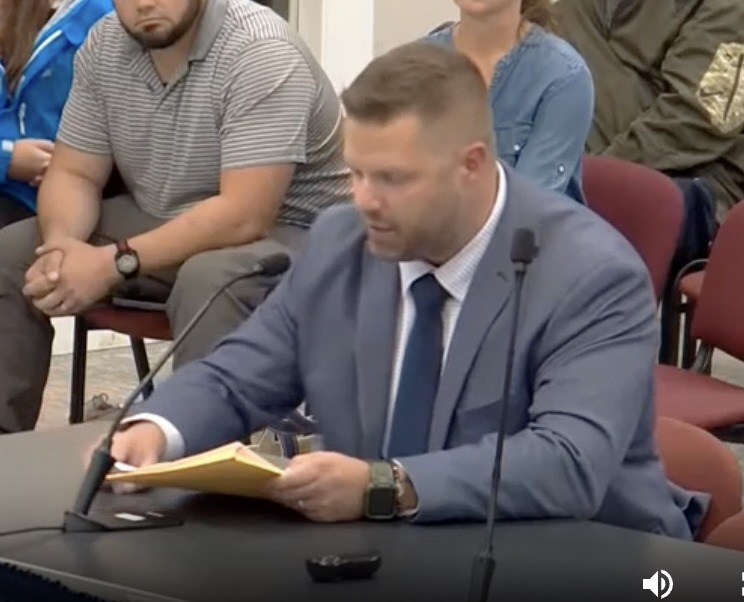
At the October 20 School Committee meeting, parent Brian Fitzgibbons, who also read the documents in person, said the rollout of the curriculum “lacks transparency, creates barriers, and leaves parents uninformed about what’s being hidden.
“The school department has not ensured that the materials are age appropriate and communicate factual information with regard to Massachusetts consent law,” said Fitzgibbons, who has two daughters attending the Plymouth Community Intermediate School.
Many videos that were part of the original curriculum were removed right before the School Committee meeting where Fitzgibbons spoke, he said.
He had reviewed the documents multiple times before the meeting, and each time the details changed, he said. Four of 11 videos in the original curriculum were eventually removed, he said, including one that said that 13- and 14-year-olds can consent to sex.
Massachusetts law says that no one under 16 can legally consent to sex.
“Any content that normalizes sexual activity by our 13- and 14-year-old children ought to be removed,” Fitzgibbons said.
Several other videos from the original curriculum were also removed, according to Fitzgibbons, including one about a young girl pretending to get her period and her mother throwing a “First Moon” party to honor the occasion, along with one that highlighted “six ways not to get pregnant.”
The mother who reviewed the documents also confirmed that several of the videos were no longer in the curriculum.
But opponents of the program remain dissatisfied because the program still includes a video on sexually transmitted diseases and how they’re spread and still refers kids to Amaze.org., a website that offers videos like “Is it Normal to Watch Porn?”
“This is not a viable source for our classrooms in Plymouth,” Fitzgibbons told the Independent. “We believe our children’s innocence should be protected.”
Amaze.org offers a variety of videos and educational materials on topics as varied as how to deal with anxiety and depression to virginity and gender identity.
Last Thursday, Fitzgibbons and his wife, Jess, wrote Campbell, imploring him to “reconsider this curriculum in its entirety.”
Massachusetts schools are not required to teach sex education, but the state Department of Elementary and Secondary Education has voluntary guidelines for districts that choose to implement a sex education curriculum. Plymouth’s plan “aligns” with those guidelines, Campbell said. Parents can also opt out of all or part of the program, he said.
A bill pending on Beacon Hill would require that communities offering sex education programs use the state curriculum.
Campbell said implementation of the “sexual health unit” was postponed “simply to allow additional time to ensure [it] is delivered in a well-sequenced and consistent way for all students.”
This is the first year the program will be offered to eighth graders, the parents said. According to the woman who viewed the documents, her two high school aged children have also been offered sex education, but she opted out for them.
School officials did not respond to a request for information about what students in grades other than eighth are taught in sex education classes.
Campbell did say that the eighth-grade curriculum includes the study of anatomy and puberty, healthy relationships and consent, personal safety, and sexual health, including information about (sexually transmitted diseases).”
“We respect each family’s right to make decisions for their own child,” he said in the email, adding, “but we do not believe individual families should determine whether other students receive this education. Feedback at the building level consistently indicates that the majority of families want this information provided.”
Fitzgibbons isn’t so sure.
“I’d like to know if I missed a survey or parent meeting where this was asked,” he said, pointing out that 244 people attended a forum on the proposed curriculum last week at New Hope Chapel, a Christian, non-denominational evangelical church in Plymouth.
“The vast majority of people we talk to whether they are or aren’t religious, were shocked by the videos,” he said.
“I think this is something parents were not aware of,” he added. “When they saw (a reference to the curriculum), they just thought it was about the birds and the bees and the reproductive system.
The Massachusetts Family Institute, which opposes the state’s sex education guidelines, has an interactive map on its website showing what some of the state’s cities and towns — those that responded to requests for information — teach in their sex ed programs.
It is fighting the legislation that would require communities with sex ed programs to use the state curriculum, which the group alleges “promotes sexual rights for children and serves as a how-to manual, encouraging teens to become sexually active,” according to MFI’s website.
MFI describes itself as a “faith-based, pro-family advocacy organization providing legal support, research, and education on critical issues impacting the sanctity of life, religious liberty, and family values.”
Andrea Estes can be reached at andrea@plymouthindependent.org.