
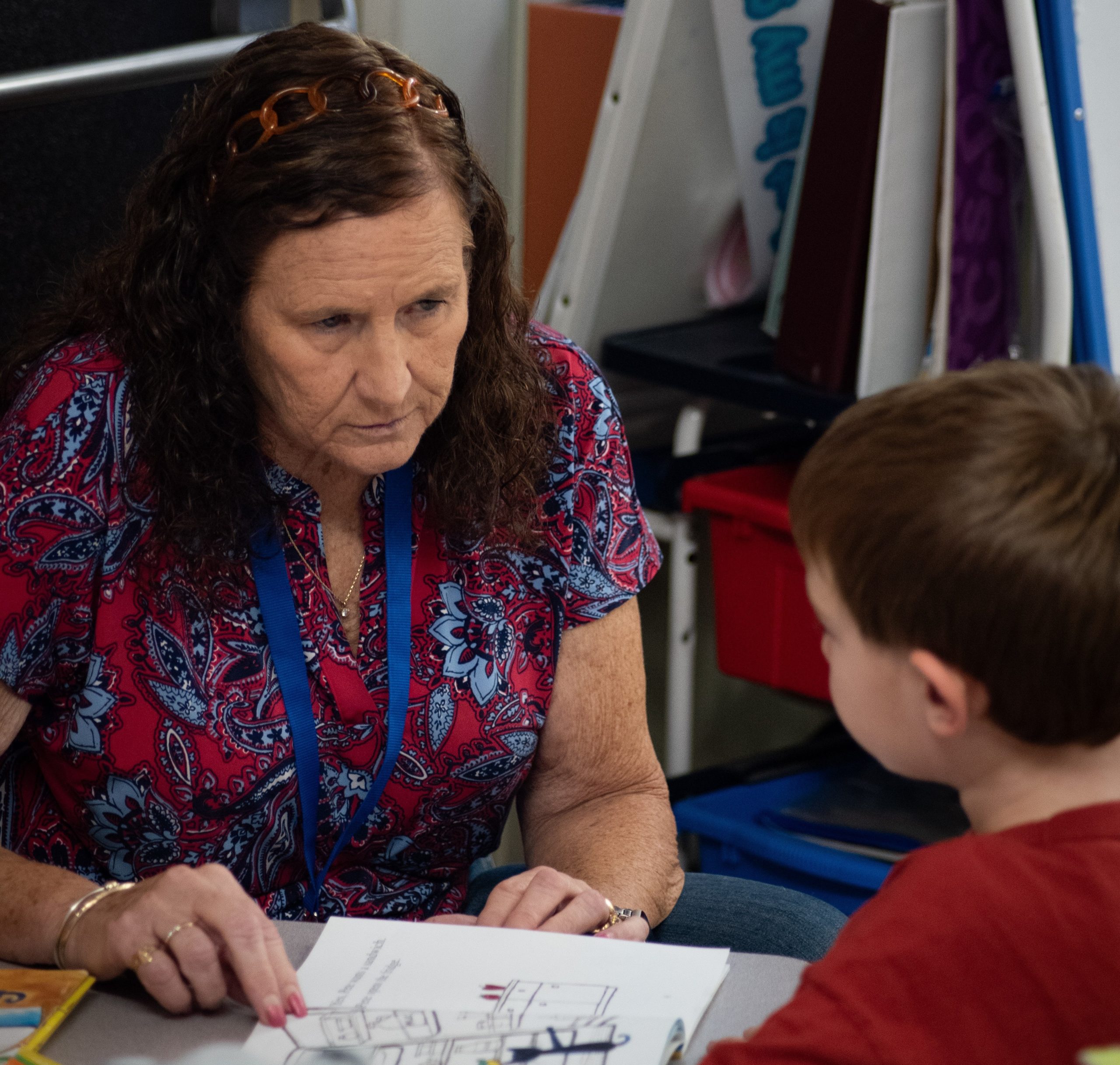
Sitting in the back of a classroom at Indian Brook Elementary School, Cathy Clifford Bowman quietly guides three kindergartners through a lesson on letters.
Clifford Bowman, 72, doesn’t work at the school or have children in the district. But twice a week, she walks across the street from her home to help teachers and give young students one-on-one instruction.
“When I retired, I always thought I would volunteer in schools,” said Clifford Bowman, a Social Security Administration retiree. “It’s just so much fun.”
Clifford Bowman is among a growing number of volunteers working in Plymouth Public Schools classrooms to connect with students and get involved in the community. Although individual schools have welcomed volunteers for years, the district developed a formal program last year, aiming to connect community members with schools in need of help.
“It’s really about matching the interest and talents of the community with the needs of the school,” said Superintendent Chris Campbell. “We have so many just amazingly talented and experienced people within this community, and really just bridging that relationship is important because it helps the community to see what’s happening in our schools.”
While anyone can apply to Volunteers in Plymouth Public Schools (VIPPS), administrators have focused on recruiting the town’s large population of retirees and seniors. The effort reflects a broader trend of schools creating opportunities for students to interact with older adults during the school day.
Swampscott High School was even built with a senior center, while schools across the country have partnered with nearby senior living communities.
Campbell said VIPPS aims to help community members who otherwise wouldn’t be involved in schools understand what is happening in the district, building relationships with the residents who fund the school budget.
“I see it as an opportunity for people within our community to engage in our schools who otherwise may not because they don’t have children,” he said.
District administrators also pointed to research showing that both school-aged children and older adults benefit from intergenerational relationships; for students, studies have found improved attendance and social skills, while older adults report greater connectedness and sense of well-being.
“We have so many people in Plymouth who have so much to offer, and many of them are retirees who still want to feel like they’re making a difference,” said Lisa White, director of curriculum and instruction for the district. “Couple that with the fact that in schools, we’re always looking for help and support. It’s a win-win for everybody.”
Volunteers can also help schools manage shrinking budgets, providing individualized attention to students and taking on tasks that would otherwise fall to teachers. Some help with administrative work, such as taking inventory of books or organizing Teacher Appreciation Day celebrations.
VIPPS is modeled on a similar program at Falmouth Public Schools that has existed for more than 40 years and has had a “tremendous” impact, said Tracey Crago, the Falmouth program’s executive director.
“The return on investment is millions and millions over the existence of the program,” Crago said.
Campbell said he has long wanted to replicate Falmouth’s program. The idea became reality when Falmouth’s program received a grant from the Massachusetts Service Alliance, allowing it to devote resources to helping Plymouth launch its program.
“Every community should have this program because it just makes sense, and it allows kids to get so much more,” Crago said. “So, we were trying to find a way to share the model.”
Falmouth’s program has developed into an independent nonprofit that solicits grants and private donations to fund programming and supplies for volunteers. Crago and a secretary are employees of the school district, while the nonprofit covers the cost of all programming in the schools, she said.
Plymouth has hired Angela Costa, a parent in the district, as a part-time VIPPS coordinator. She connects volunteers with schools and has helped get the program running.
Campbell said he hopes the district can continue supporting the program using grant funding.
“I would love to see it grow as big as Falmouth’s,” he said. “You’re talking about millions of hours of volunteerism — think of the impact that that’s had on that community.”
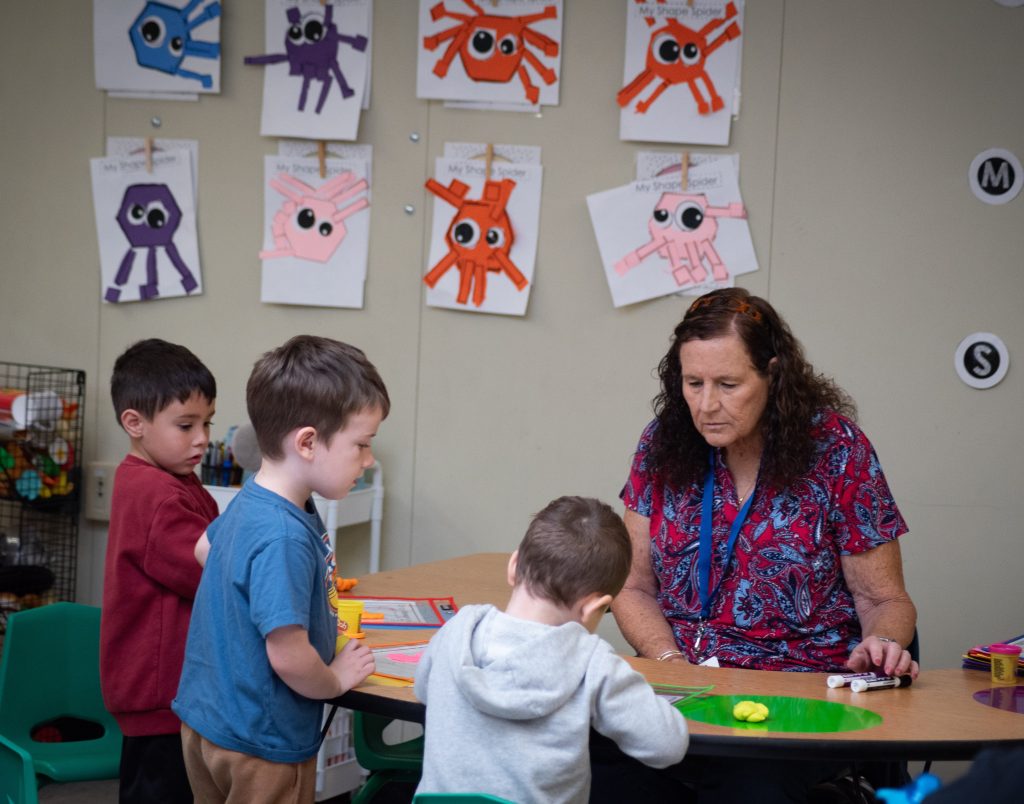
Volunteers indicate what kind of work they would prefer to do and are matched to schools based on need, Costa said. Some, like Clifford Bowman, regularly help younger students with one-on-one classroom instruction. Others mentor high school students, helping with college and internship applications or simply providing a space to talk.
Gabriel Paci, 82, volunteers at Plymouth North High School twice a month. With a background working in youth mental health, he meets with students in a career readiness class to talk and offer guidance.
“We would go around the table and tell a story,” Paci said. “Any help we can give with our knowledge, our experience in life … just bridge that gap. I mean, that’s the whole point, between young people today and those of us who have been around for a while. I find that very rewarding.”
Last year, the program had about 20 volunteers throughout the district. This academic year began at about 40, Costa said, with hopes of reaching more than 100 by the end of the school year.
“It’s just amazing to have extra hands, especially with this age group,” said Galynn Frechette, a paraeducator in one of the kindergarten classrooms where Clifford Bowman volunteers. “The teachers love it; the kids love it every time someone new comes in here.”
Emily Spatz can be reached at emily@plymouthindependent.org.