
The e-bike regulations proposed by the Select Board in October seemed straightforward enough.
All they were supposed to do was to make the increasingly popular electric bicycles safer for riders, as well as for motorists and pedestrians who encounter them.
The proposed rules set registration, age, and helmet requirements and limited use of the bikes to public and private roads.
“Right now… we do have kids under 16 riding motorized bicycles who don’t know the rules of the road,” said Select Board member Deb Iaquinto, an avid cyclist, at a public hearing last month. “We have riders zipping down our rail trail, We have e-bike riders cutting off cars, riding on sidewalks.”
“If we don’t define expectations, we end up with confusion, frustration and serious injuries,” said Iaquinto, the driving force behind the effort.
It seemed like the regulations would whiz through the Select Board on their way to a vote at spring Town Meeting.
But its backers didn’t anticipate the reaction the town’s biking enthusiasts — many of them older. The reception was overwhelmingly negative.
They came out in force at the packed November 25 hearing to oppose the measure, offering sometimes blistering critiques and urging the board to rewrite the regulations or abandon them altogether.
Of the more than 40 comments – delivered to the board at the hearing and in emails – just a few were positive.
“I am completely in support of this proposed legislation,” one resident said in an email to officials. “We have really young kids (none are anywhere near age 16) zipping around our neighborhood without much regard for pedestrians or cars nor of any kind of speed limit, some without helmets and some trespassing on our private road.”
But many others called the proposal an overreaction to the recklessness of a few, mostly young, riders. Those cyclists, they pointed out, are often operating e-dirt bikes, which are different from lower speed Class 1 and Class 2 e-bikes.
The regulations seek to regulate Class 1 and Class 2 e-bikes, which have pedals and can reach speeds of up to around 20 miles an hour.
These bikes operate like regular bikes but can provide a boost when riders need it. They are generally not regulated, according to Iaquinto.
Cyclists on Class 1 and 2 bikes have gotten into serious accidents, but e-dirt bikes are far more dangerous— as some commenters pointed out.
The more powerful bikes have no pedals, can weigh hundreds of pounds and can reach high speeds of up to 50 mph or more.
The rules under consideration would not apply to these bikes which Plymouth police have said are the most dangerous. Officials say they are already governed by state law. But the issue, as some commenters pointed out, is a lack of enforcement on the local level.
It was an e-dirt bike that was involved in a horrific head-on crash on the Plymouth waterfront in May. Two teens, 14 and 15 years old, were riding tandem on the bike when they allegedly crashed into a Jeep in the other lane.
The bike, police said, was a Surron Light Bee X, with a price tag of more than $4,000 and an advertised speed of up to 46 mph. Essentially an electric dirt bike, this type of bike is considered an off-road vehicle and is not permitted on public streets in the town or the state.
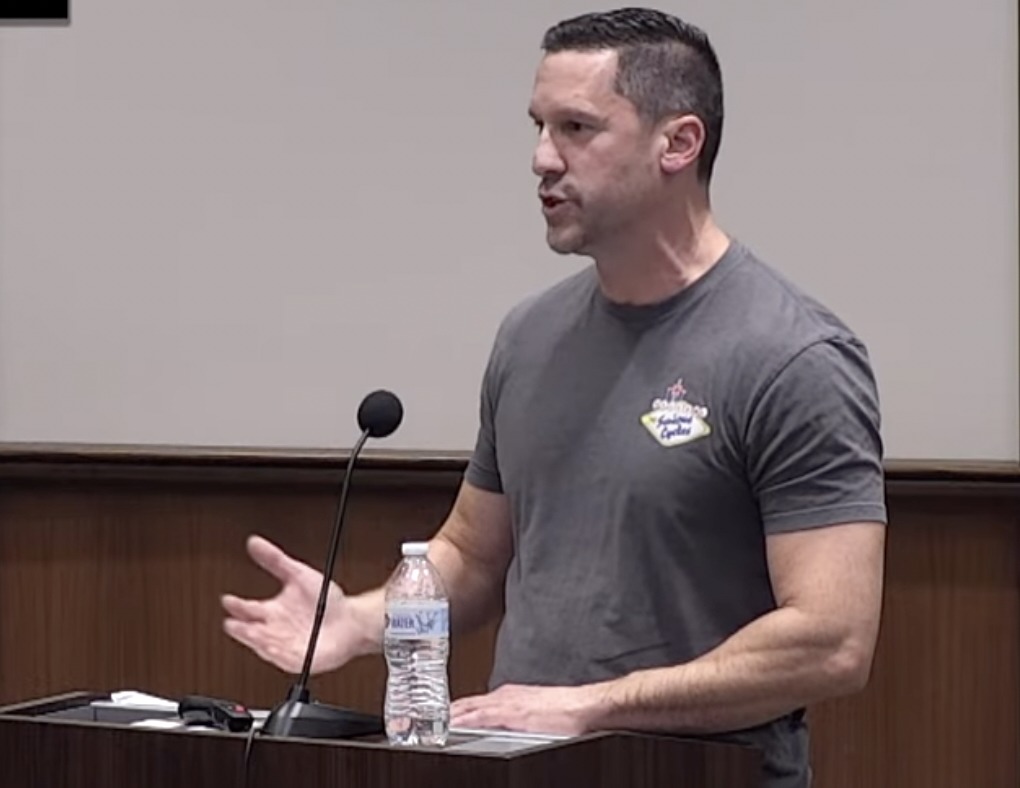
But many people don’t know the rules or understand the difference between e-bikes and e-dirt bikes, Seth Lawrence, owner of Serious Cycles, said at the November hearing.
He said that recent news stories about the tragic death of a 13-year-old cyclist in Stoneham kept referring to his e-bike, when he was actually riding an e-dirt bike.
The same confusion is apparent in Plymouth, where complaints about e-bikes and e-dirt bikes seem to be lumped together, Lawrence said.
“Kids driving downtown weaving in and out of traffic. I’ve seen it myself,” he said. “Every one of those was an e-dirt bike.”
He said the overwhelming majority of his customers — who are buying regular e-bikes – are 50 or older. Many use them for transportation as well as recreation.
They “shouldn’t be held accountable for the very few dirt bike riders who have been weaving around town,” Lawrence said. “I don’t think that’s fair.”
Several people focused on the proposal’s ban of e-bikes from bike paths and beaches. That, they said, would effectively eliminate a popular form of recreation and exercise for many older people, or others with limited mobility.
“The proposed legislation attempts to address serious reckless riding problems, but forcing older cyclists with sensible e-bikes to ride on roads along with cars and trucks should not be an outcome of this legislation,” wrote Leighton Price.
That wasn’t the only concern.
Others objected to the proposed requirement that the bikes be registered with Plymouth police, with a fee to be set yearly by the Select Board.
“The proposed e-bike legislation is a classic case of a few reckless riders spoiling the fun for everyone — like banning picnics because one guy dropped his sandwich,” wrote one resident, whose name was redacted. (The town redacted the names of commenters who only filed written comments and didn’t appear at the hearing).
“Instead of spending time and money building a bureaucracy of fees, stickers, and penalties, imagine putting that energy into more bike lanes, better trails, and actually talking to each other about sharing the road,” the writer said.
There were also complaints about the proposed requirement that riders slow down when passing a pedestrian. One person called the rules “rigid” and impossible to enforce.
Then there was the age restriction — e-bike riders would have to be at least 16-1/2 if they have a driver’s license, 18 if they don’t.
“It just seems odd to me that my 13- and 14-year-old students can take the MCAS, earn a spot in our high school tech programs, apply for jobs in our town, but are not mature enough to ride a bike,” said Plymouth eighth grade teacher Harrison Quinn.
So what happens now?
To take effect anytime soon, the regulations must be finalized and approved by the Select Board before December 17 — the deadline for adding items to the spring Town Meeting agenda.
Town officials say they are working on a new draft that will address at least some of the concerns raised by the public.
It is likely, board members said privately, that a new version will eliminate the ban on e-bikes from the town’s bike path.
Beyond that, it’s unclear what else might change.
Iaquinto said she was undaunted by the comments, which she described as “constructive feedback.”
“The goal is to be proactive in establishing safety guidelines in areas that are shared by different modes of transportation including walking,” she said.
“They were not drafted to prohibit responsible bike use, although that’s how some people are reading them. I’m very confident that we’ll be able to strike a balance.”
If Town Meeting approves the regulations, the measure would then go to the state Legislature for approval. Should state lawmakers approve the legislation, and the governor signs it, the rules would become law and take effect immediately.
Andrea Estes can be reached at andrea@plymouthindependent.org.