
There’s no doubt that my love of history came from three Plymouth public school teachers. Warren Valente and Charles Hussey taught me history, and Robert Bradley awoke in me what it meant to be from Plymouth. It’s nowonder that when I made the painful decision to abandon my dream of earning a degree to teach history to instead study architecture, I was drawn to concentrate on historic preservation.
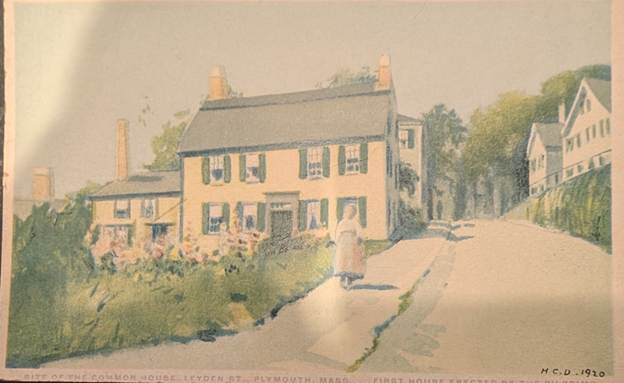
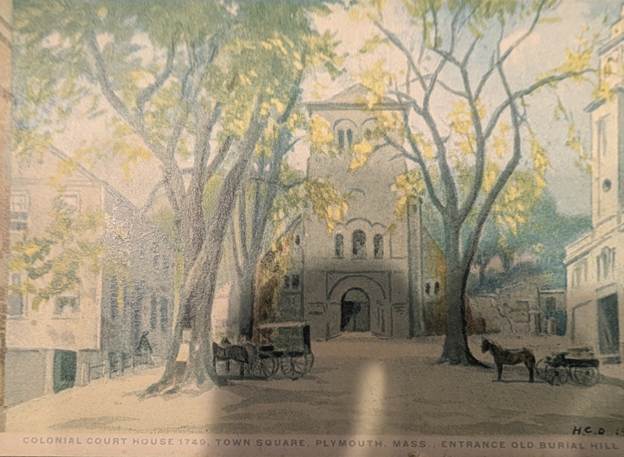
After college, the chance discovery of a postcard depicting a long-gone Plymouth building ignited a lifelong passion for collecting local postcards and deepened my love of the town’s history. Among my favorite cards – and I own thousands of them – are those from the late 1890s and early photo postcards depicting private homes. One set depicts historic scenes and buildings in Plymouth – copies of beautifully rendered watercolors. The cards are signed “HCD” and dated 1920.
After years of searching for the original watercolors, I discovered they were painted by Plymouth summer resident Horace C. Dunham. He was born in Boston in 1856 and also lived in Newton and Plymouth during his lifetime. Though Dunham’s oil and watercolor paintings never brought him fame and fortune, he was a member of the Black and White Club one of the oldest art clubs in the nation, founded in Plymouth in March 1885.
The club initially focused on charcoal drawings on white parchment (hence the name), but would soon explore other avenues such as oils, pastels, and watercolors. Other early members included first president Lucretia Watson, Mary Watson, Arthur Burbank (a Plymouth postcard and souvenir shop owner), and Joseph Everett Chandler (a local architect).
It’s also no surprise that the Watson family was heavily involved. It owned the Hillside Estate off Summer Street, which was frequented by many members of the transcendental movement, including Ralph Waldo Emerson and Henry David Thoreau.
Many Black and White Cub gatherings were held at Hillside, but it had many official homes throughout its history.
The first was on the second floor of the Drew Block (a building that once stood at 2 Main St.) Eventually, it moved to the third floor of the newly constructed 34-36 Main St., where it remained until a major remodel of the Plymouth Savings/Eastern Bank building in 1949.
After that, it found space at back 2 Main St. (now known as the Bradford Building), the old foundry on Water Street, and even in members’ homes. In late 1960s the club would take up residence in the newly relocated and remodeled parish house of First Parish Church in Town Square.
Members vigorously pursued art education, trying their hand at oils, watercolors, pastels, and crayon drawing. Other artistic endeavors included macrame, furniture decorating, wood carving, and decoupage.
Throughout the years, the club raised funds through concerts and plays. It also ran a teahouse in the Tabitha Plasket House (59 Court Street). Additional revenue came from renting part of the club headquarters to philanthropic groups such as the American Fund for French Wounded, the Red Cross, and the Plymouth Philharmonic Orchestra.
I became aware of the club’s existence in 1993 when I joined First Parish Church. The club occupied two rooms on the parish building’s second floor. A small room was dedicated to art, while the larger room included a space for laying out large projects, a kitchen, and an enormous floor-to-ceiling china cabinet.
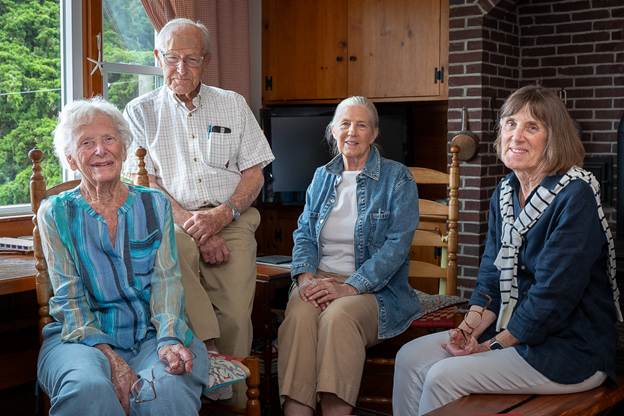
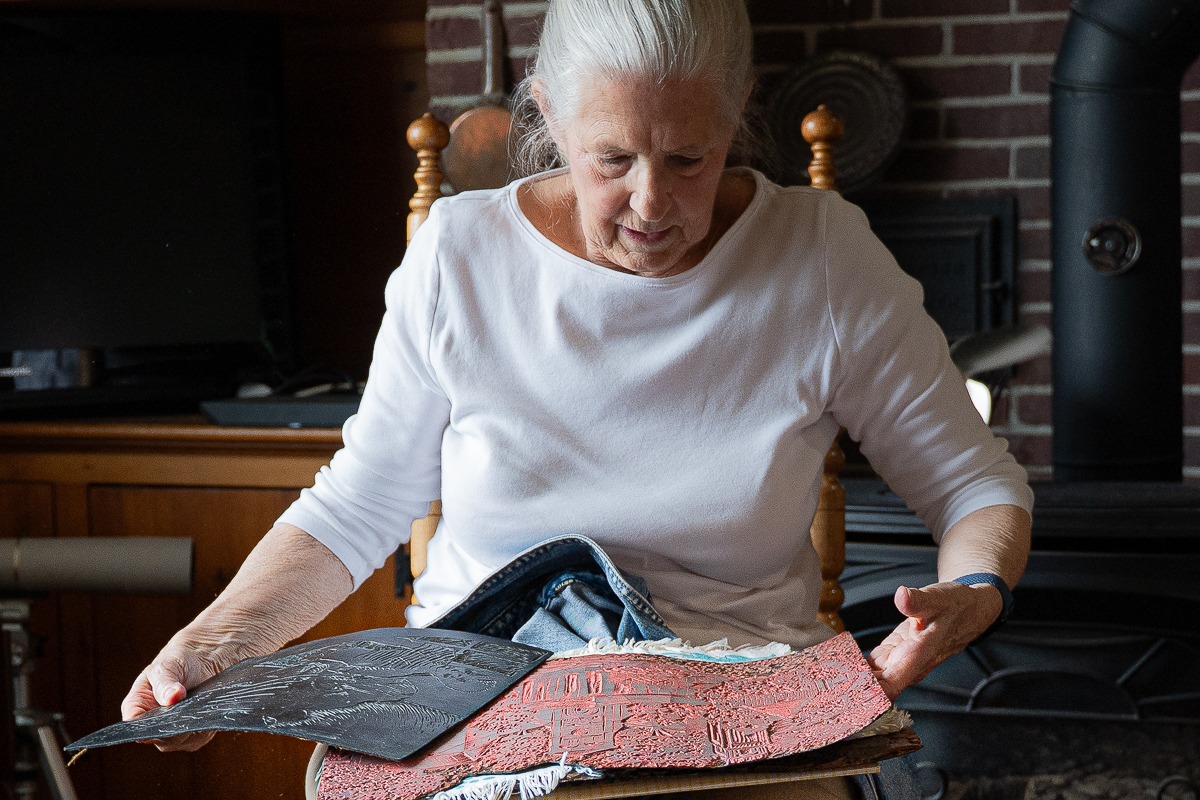
As I was researching another column, I revisited my Dunham cards. Sidetracked, I decided to track down members of the club to find out whether the original watercolors still existed. I was surprised to learn the club had left the First Parish site for accessibility reasons in 2017. Undeterred, I tracked down some members, which led to a conversation hosted by club member Pandy (Anne) Brewster and her husband Ben at their home. Vice President Ruth Fry, and current President Maggi Tavares were also there.
The club, with about 25 members, continues to meet monthly on the second Tuesday of the month, now at the Plymouth Yacht Club. Recent activities have included book binding, decorative lampshade making, and other pursuits. The club also takes occasional field trips, including to the Museum of Fine Arts in Boston.
Despite a wonderful afternoon spent recounting the club’s history and viewing artwork from years past, the whereabouts of the Dunham watercolors remains a mystery.
As a postscript, my meeting with club members took place earlier this summer, but I held this column until now for a selfish reason. On Sept. 9, Ben Brewster celebrated his 100th birthday. Ben has known me since birth. He and Anne are among the last folks I know from my parents’ generation. A descendant of Pilgrim William Brewster, Ben is the ultimate Plymouth townie. Happy birthday, Ben.
Architect Bill Fornaciari is a lifelong resident of Plymouth (except for a three-year adventure going West as a young man) and is the owner of BF Architects in Plymouth. His firm specializes in residential work and historic preservation. Have a question or idea for this column? Email billfornaciari@gmail.com.