
Millions of dollars in community preservation projects around town were completed over the past two decades despite a “systemic” failure to follow required steps designed to protect historic buildings.
As many as 40 publicly funded projects since 2000 were completed despite a failure to file the necessary historic preservation or other deed restrictions, Town Manager Derek Brindisi said in a recent interview with the Independent.
In at least one case, the failure could mean the integrity of one of the town’s most iconic historic sites will be compromised, Town officials said.
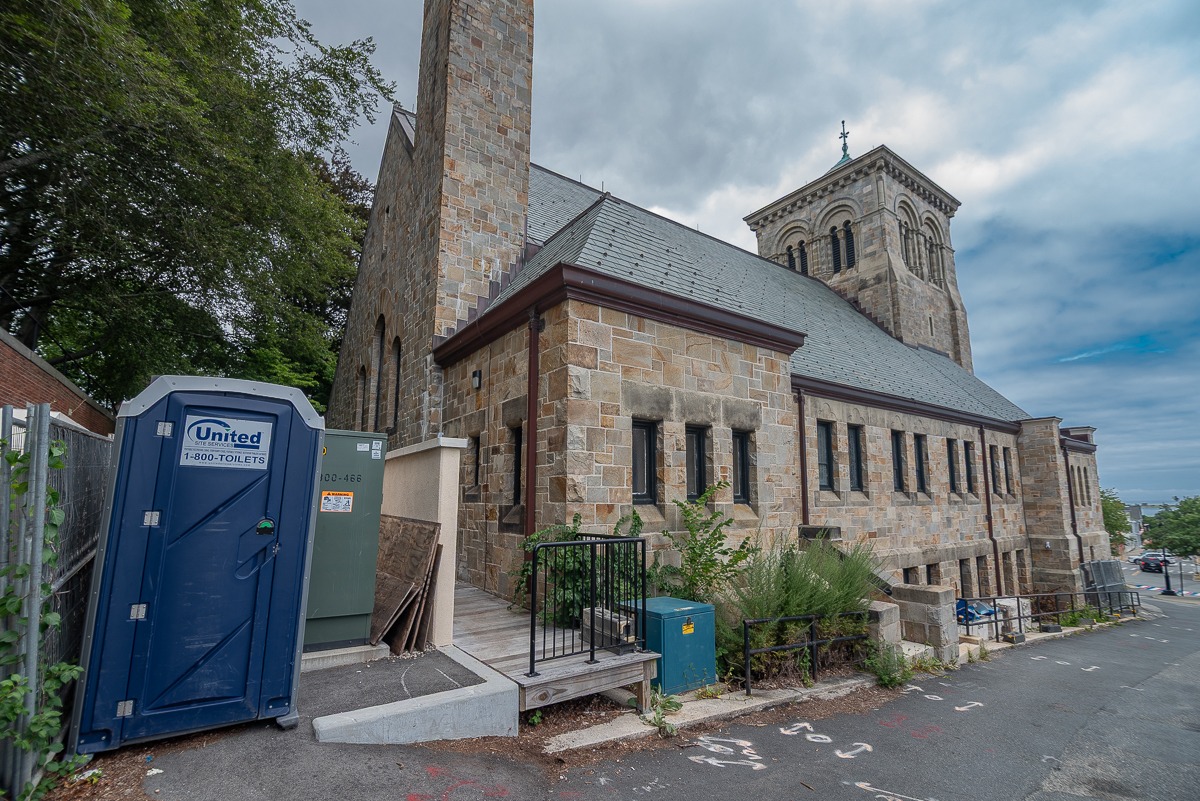
The Mayflower Society is moving forward with plans to make controversial changes to the façade of downtown’s Mayflower Meetinghouse in order to renovate its basement into a wheelchair-accessible museum.
The plan – which has received permits to move forward – includes the removal of a pillar, two windows, and some stonework on the façade in order to add a doorway and a wheelchair ramp, according to plans on file at Town Hall.
The changes, officials say, will make the Meetinghouse – the historic church on Town Square constructed on the same site the Pilgrims built their first church in 1622 — equally accessible to people with disabilities under the Americans with Disabilities Act (ADA).
The heated controversy over the planned renovations exposed what Brindisi says is a more widespread problem with a lack of oversight in the Town’s grant process dating back 25 years.
The Meetinghouse renovations could have been stopped had the owners followed the rules in 2018 when they received a publicly funded $2.6 million historic preservation grant to restore the building’s stone façade, officials said.
All such grants require the applicants to file and record a historic preservation deed restriction, a document designed to ensure all future owners cannot alter the historic integrity of the building.
No such deed restriction was ever filed, town officials say, opening the door for the Mayflower Society to apply for permits to change the outward appearance of the church.
In fact, no deed restrictions were filed in as many as 40 projects dating back to 2000, including a $3.2 million grant for a new roof at Pilgrim Hall approved as recently as 2023, Brindisi said.
It’s unclear how many of the other grant-funded historic sites might have been compromised. Town officials are still researching to build a comprehensive list. So far they have provided no evidence suggesting the historic integrity of other buildings was damaged.
“The Meetinghouse is a symptom of a much larger problem,” Brindisi told the Independent. “We have a systemic problem here.’’
Town officials say they still do not have a total number of properties that have been affected as they are still trying to get a complete list. So far, the town has identified $37.6 million in Community Preservation grants for which deed restrictions were not recorded, according to a spokesperson for Brindisi.
The Independent filed a records request for the list of funded projects where required deed restrictions were not recorded, but town officials refused the request on grounds it is not yet available.
Exactly who’s to blame for the oversight failures depends entirely on which Town official is being asked.
According to Brindisi, it’s the fault of the Town’s past Community Preservation Committees (CPC), which reviewed and made recommendations on roughly $4 million in grants awarded each year.
Bill Keohan, a Select Board member and former longtime chair of the CPC, said it’s the fault of town managers and staff. He said the CPC did everything it could to get town officials to record the restrictions.
“We had town managers, department heads, and we had town counsel at times that wasn’t terribly cooperative,” Keohan said at a July 23 meeting of the CPC. “There wasn’t any shortcoming of any CPC over the last 23 years.”
Contacted by telephone, he declined to comment for this report.
The current chair of the CPC, Ed Bradley, put the blame on another Town appointed group – the Historic District Commission, charged with enforcing the deed restrictions after they are recorded with the Plymouth County Registry of Deeds.
Anne Mason, chair of the Historic District Commission, did not respond to requests for comment.
But Paul Blanchard, vice chair of the commission, also appeared at the July 23 CPC meeting to defend the commission’s work, arguing his board can’t enforce a deed restriction not yet officially recorded. He told the CPC it isn’t his commission’s job to make sure the restrictions are recorded in the first place.
“That made me very upset,” Bradley, the CPC chair, told the Independent. Then, as if responding to Blanchard, he said: “If that’s not part of your consideration, then we need to find somebody else to be the gatekeeper and watch over restrictions.”
Contacted by the Independent, Blanchard declined to comment.
Regardless of who is to blame, Brindisi said Town staff is working hard to clean up the mess and make sure all projects affected by the oversight failure are identified and the necessary deed restrictions are recorded. He said he expects to make a report to the Select Board on Sept 1.
He also said Town officials are withholding the last payment on the Pilgrim Hall project until it receives confirmation the deed restriction has been recorded.
After initially agreeing to an interview, Donna Curtin, executive director of Pilgrim Hall, did not respond to attempts to schedule an interview.
Brindisi said the Mayflower Society moved quickly to file a deed restriction in place once they were reminded by Town officials of the requirement, but the restriction has yet to be officially recorded.
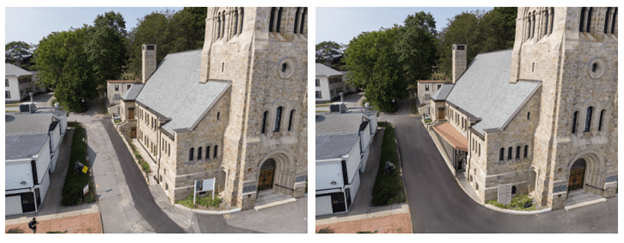
He said he has asked the Historic District Commission to review the plans as if the deed restriction was in place.
But since there is no legal restriction, town officials issued the Mayflower Society a permit to move forward with the controversial changes to the building’s exterior.
CPC Chair Bradley told the Independent the new project would have been prohibited had the Society filed the deed restriction as required on the 2018 restoration project.
“All of which was protected by money that was given to them by the CPC,” he said.
Bradley said Town Meeting members would never have approved the grant had they been aware of the Society’s ultimate plans.
Officials with the Mayflower Society declined to comment for this report.
Michael Tubin, who was chair of the Historic District Commission when it unanimously approved the planned changes to the exterior of the Meetinghouse in 2024, said he opposed the changes even though he ultimately voted to approve them so the Commission could provide a unanimous decision.
“It’s probably one of the most important sites that we have, and to see that they’re just ripping into the side of the building and ruining the symmetry of the building, I think is horrible,” Tubin said.
Said Bradley: “Their architect and Mayflower says this is the only route that they see viable. We don’t believe so.”
The CPC has invited the Mayflower Society and the Historic District Commission to its Sep. 24 meeting to discuss the renovation project’s future.
Both Brindisi and Bradley said the Mayflower Society owes the town some money for dismantling the publicly funded façade restoration work in 2018 – some of which will be destroyed to make way for the new project.
“There is some balance of money that should be going back to the town,” Brindisi said.
Bradley said the CPC will no longer recommend Town Meeting fund grants until applicants have filed the deed restriction and, in the case of historic preservation restrictions, gotten the approval of state historic preservation regulators – a bureaucratic process taking up to a year or more.
Fred Thys can be reached at fred@plymouthindependent.org