
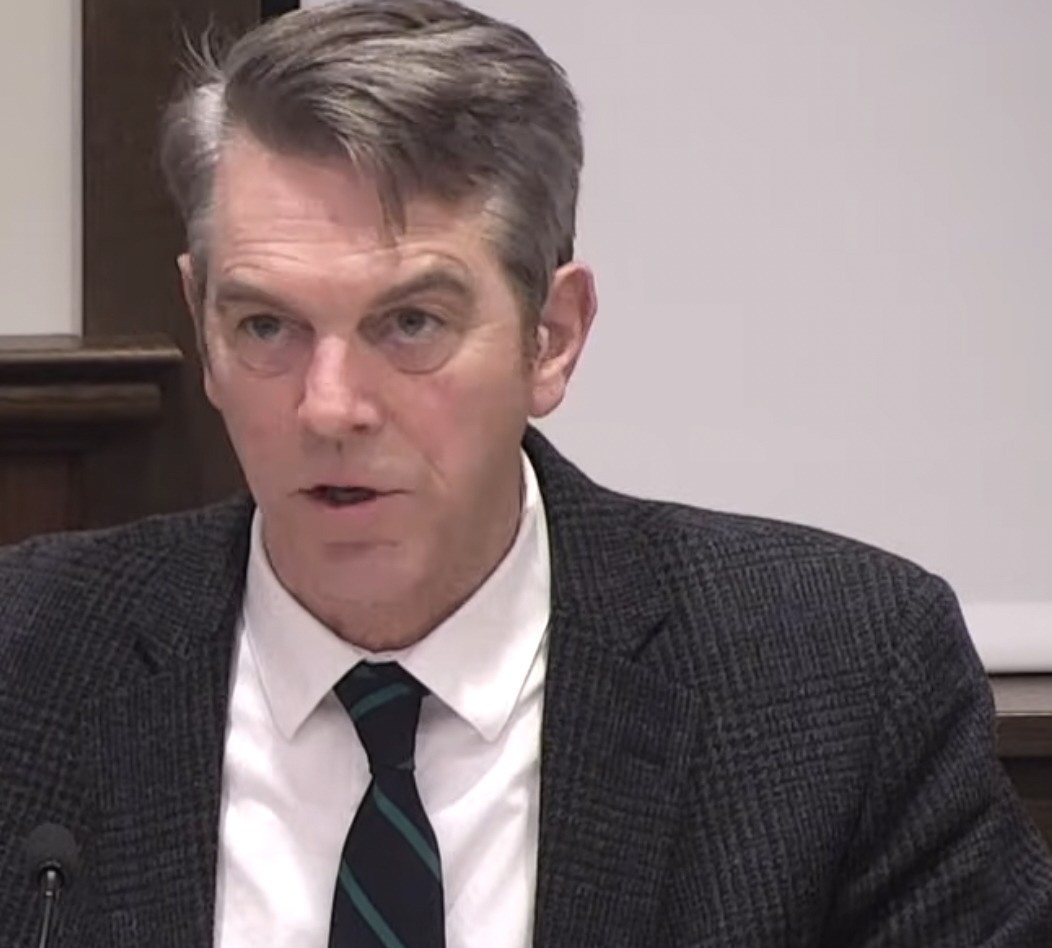
Select Board member Bill Keohan this week called out town staff for not seeking board approval before trying to make changes to a 1998 agreement regarding the annual National Day of Mourning.
Since 1970, the protest has been held on Coles Hill every Thanksgiving to mark the suffering of Native Americans. The Select Board 27 years ago signed the agreement not to impose new restrictions on the event following a violent confrontation between police and protestors on the National Day of Mourning the previous year. The clash, which resulted in the arrest of 25 people – all charges were later dismissed – was widely viewed as a black mark on the town. The agreement was part of a deal that essentially called for local officials to make amends.
“Any alterations to that agreement or issues with that agreement should be brought back to the board so the board is kept informed at all times,” Keohan said during Tuesday’s Select Board meeting. In a later interview, he added that the board “is elected by the people and the Select Board comes up with policy.”
In the future, Keohan said, when the town wants to change policy, it must go to the board first. If it had done so in this case, he said, the town probably could have avoided being taken to court just before Thanksgiving by the United American Indians of New England and its co-leader, Mahtowin Munro, who sued the town. They alleged that new conditions sought by the town violated the agreement. The conditions would have required the group to seek a permit and obtain insurance. The stipulations, organizers argued, were impossible to meet and could prevent the event from taking place. The group pointed out that the 1998 agreement explicitly exempted it from having to obtain a permit or insurance.
“The agreement took a lot of work,” said David Malaguti, who served on the Select Board that negotiated it in 1998. He said Rev. Peter Gomes, the renowned Harvard minister and author, worked out the compromise between the board and the protesters. Gomes, who died in 2011, was a lifelong Plymouth resident.
In a Nov. 25 hearing, Plymouth Superior Court Judge Joseph Leighton, suggesting he was leaning toward prohibiting the town from imposing new requirements, gave both sides 90 minutes to reach an agreement.
Faced with a near-certain legal defeat, the town backed down, agreeing not to impose new requirements. UAINE agreed to release the town from any liability for anything that might happen during the event. Both sides agreed to meet before Feb. 1 to negotiate an agreement governing future events.
Town Manager Derek Brindisi – who was the target of Keohan’s criticism – declined to comment, saying the matter is still before the court.
But other Select Board members came to Brindisi’s defense.
“Board members are informed of things that come up during the course of a given week as they occur based on their willingness to communicate with town staff,” said Kevin Canty, who said he has a regular standing meeting with Brindisi to be briefed about what is happening in town.
Canty, who is an attorney, was in the courthouse when the case came up. He said issues with the 1998 agreement are the responsibility of the town manager.
“The Select Board does not have day-to-day operational oversight of the town,” Canty said. “That’s Derek’s job, and he does a good job at it. I just really want to stress that the board is very well informed by our staff at all levels.”
Deb Iaquinto said she and other Select Board members were briefed on the lawsuit in an executive session on Nov. 25 – hours after the case had been heard in court. She said town counsel Kate McKay did not herself receive notice that the town was being taken to court until the day before the hearing date. Iaquinto said McKay briefed her again this past Monday at a meeting Keohan was unable to attend.
“I know that Bill has some concerns about it, and I respect his opinion, of course, but I had the opposite reaction,” Iaquinto said.
Select Board chair David Golden said Keohan was not wrong to ask to ask that town staff consult the board before making changes to previously negotiated agreements.
“Mr. Keohan has every right to make that request,” Golden said.
But Golden declined to say whether he agreed with Keohan.
After Keohan made his remarks during Tuesday’s Select Board meeting, neither his fellow board members nor Brindisi responded.
Fred Thys can be reached at fred@plymouthindependent.org.