
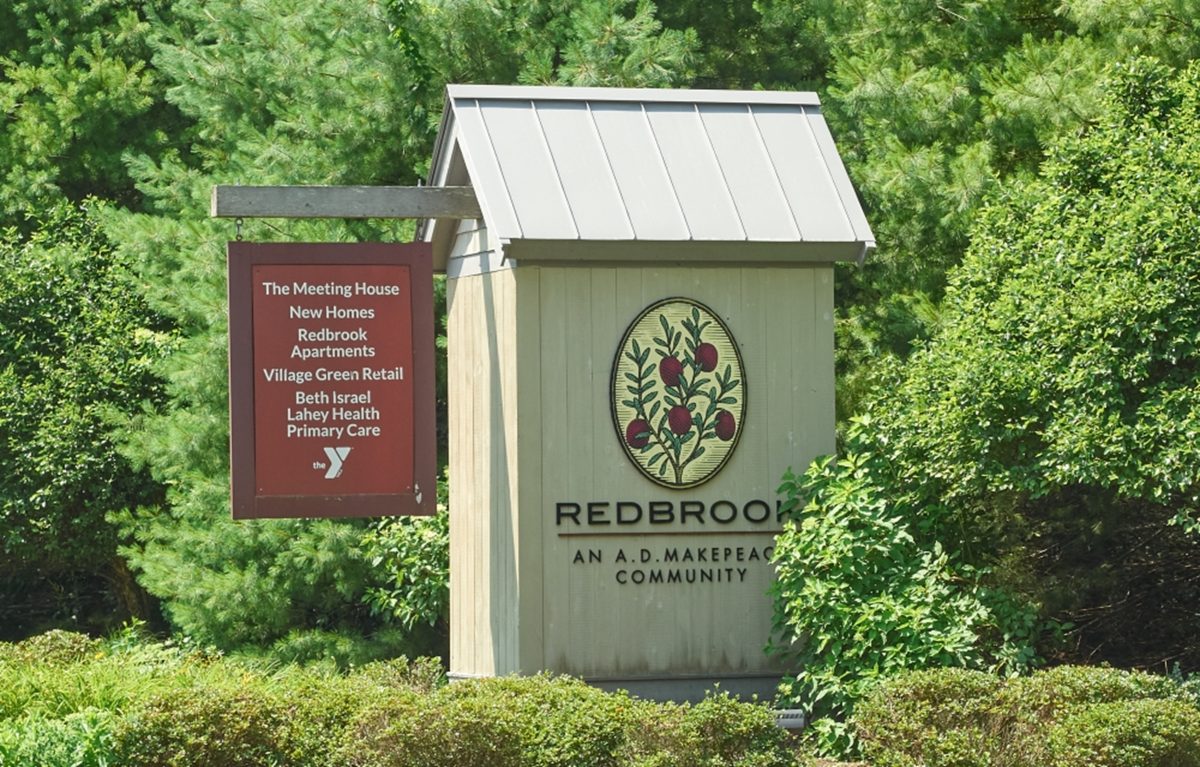
An administrative law judge has ruled that A.D. Makepeace violated the law when it filled in part of a cranberry bog in South Plymouth to build a road for a future residential neighborhood in the Redbrook development.
The judge, Patrick Groulx, of the state Department of Energy and Environmental Affairs Office of Appeals and Dispute Resolution, said the town’s conservation commission should not have issued a permit for the work extending Garden Road around Deer Pond. The town’s decision was affirmed by the Southeast Regional Office of the Massachusetts Department of Environmental Protection.
In his June 26 ruling, Groulx wrote that the proposed road would “alter” wetlands in violation of environmental laws and that the permit should be voided and the project halted.
The case now goes to DEP Commissioner Bonnie Heiple, who will make the final decision.
The challenge to the project was brought in November 2023 by a group of residents, and the organization “Save the Pine Barrens,” led by environmental lawyer Meg Sheehan.
Sheehan called the ruling “precedent setting.”
“This is the first time anyone has challenged the cranberry industry for its violations of the wetlands protection act,” she said, adding that the ruling has “serious ramifications” for everything in the area the law seeks to protect — including water, animals and fish.
Until now, she said, the Plymouth Conservation Commission has considered cranberry bogs agricultural land and thus exempt from the wetlands law.
“Now it’s being revealed: You can’t build a subdivision road on top of wetlands that you illegally filled by claiming it was agricultural,” Sheehan said.
Residents have filed similar complaints on three other projects — two A.D. Makepeace bogs in Plymouth and Carver, and a bog in Carver owned by the developer Eric Pontiff. The same administrative judge is hearing those appeals, Sheehan said.
Makepeace spokeswoman Linda Burke said the ruling is only a recommendation, and the company “will stand by to read (the commissioner’s) findings before determining next steps.
“That said, the A.D. Makepeace Company is disappointed that the (administrative judge) would recommend an override of the decision made locally by the Conservation Commission, a knowledgeable volunteer body with highly capable professional staff, and confirmed by the regional DEP office.” Burke wrote in an emailed statement.
“We believe the Plymouth Conservation Commission and the Southeast Regional Office of the DEP may be among the most experienced regulators in the state when it comes to the cranberry industry, an important part of our region’s economy and culture,” she wrote.
The Redbrook development is made up of several neighborhoods, with more than 1,000 single family homes, condos and apartments. By the time the development is fully built out, a Makepeace official said, Redbrook will comprise 1,288 housing units.
The Garden Road expansion was going to lead to a new neighborhood in the complex. Construction of the road has not begun.
Town officials didn’t comment directly on the ruling, saying in a statement that once DEP got involved by approving the conservation commission’s issuance of the permit, the town had no further involvement.
In his 41-page ruling, Groulx wrote that AD Makepeace filled too much of the bog — 13,000 square feet — more than the company could legitimately argue was for “squaring off” the bogs to make the boundaries more regular for agricultural purposes.
Depending on the final decision of DEP Commissioner Heiple, either Makepeace or the citizen groups can appeal in superior court.
The state can impose fines for violations of the state’s wetlands law — of up to $25,000 a day for each violation.
If the state ultimately finds violations but does not impose penalties, citizen groups could go to court to seek fines, Sheehan said.
The state can also require the land be restored to its original condition.
Andrea Estes can be reached at andrea@plymouthindependent.org.