Beyond the impact on patient care, major expansion projects ongoing at Beth Israel Deaconess Hospital-Plymouth will deliver $3.6 million in community health grants to nonprofit and public agencies serving Plymouth, Kingston, Carver and Duxbury.
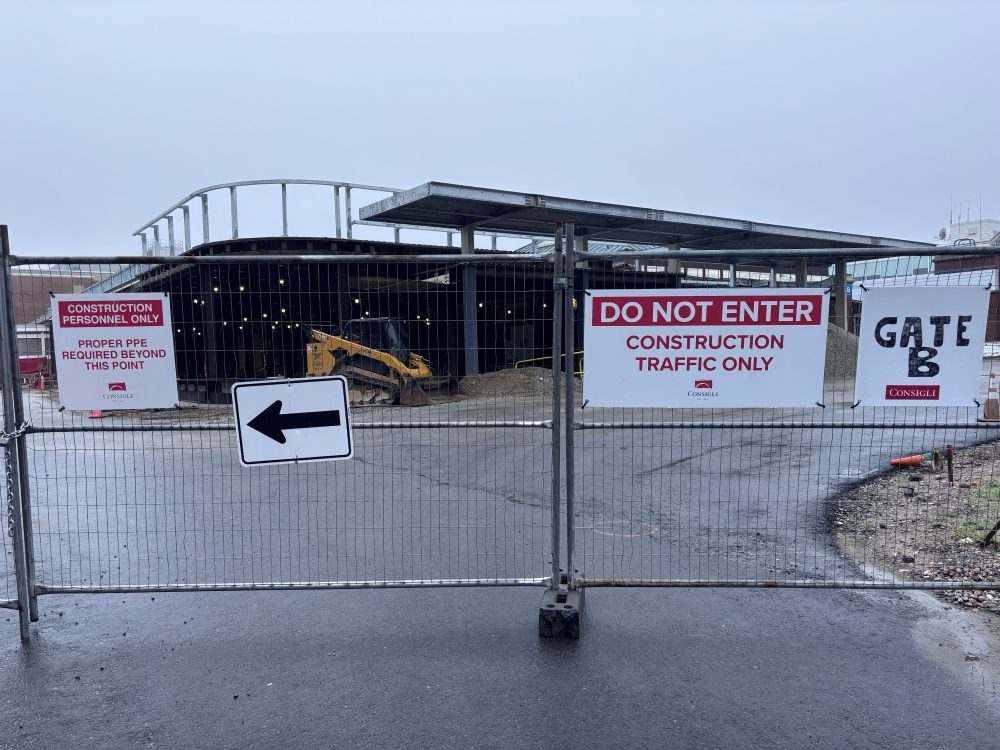
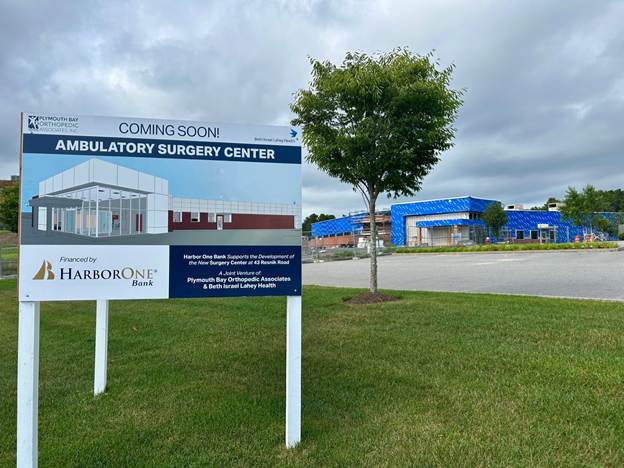
The grant money is a requirement of the state’s approval of the expansion of the emergency department at the main hospital campus, construction of a large cancer treatment center at Cordage Park, and building a stand-alone orthopedic surgery center on Resnick Road.
“This funding is an exciting opportunity for the hospital to invest in Plymouth and the surrounding communities over the next several years,” Kevin Coughlin, president at BID- Plymouth, said in a written statement. “By doing so, we will continue to address priority health issues identified by the community, such as mental health, substance abuse and housing.” (Coughlin declined to be interviewed for this story.)
When hospitals in Massachusetts propose major investments, in either new buildings or medical equipment like an MRI machine, they must apply for a “determination of need” from thestate Department of Public Health.
The DPH evaluates a proposal’s impact on the regional health care delivery system, its cost effectiveness, and how – or whether – it will improve community health. If a project is approved, the state requires money to be set aside for grants to organizations that support specific goals identified in the applicant’s “Community Health Needs Assessment.”
BID-Plymouth empanels a 20-member Community Benefit Advisory Committee to participate in the health assessment and to recommend how community health grant money should be allocated. Karen Keane, Plymouth’s public health director, is a member of the CBAC.
“The hospital has a lot of information from its own experiences providing care, about the issues people are facing and the barriers to care,” Keane said. “What we on the Community Benefit Advisory Committee bring to the table is the ‘street-level’ experience of what we are seeing from the people we interact with on a daily basis.”
The $3.6 million will be awarded in two rounds. On June 10, the hospital issued a Request for Proposals (RFP), seeking applications for the first round of grants totaling $2.18 million. Of that, $1.3 million will be allocated for mental health and substance abuse programs. The balance, about $880,000, is earmarked for a “direct investment” in a local housing initiative, still to be determined.
“There are so many social determinants of health and gaps that impact our communities. Certainly housing, mental health and substance use are huge issues,” Keane said. “The goal here is to reach people early, to help them heal and get help before it’s to the point where they need hospital-level care.”
Nonprofit tax-exempt organizations and public agencies that serve Plymouth, Kingston, Carver or Duxbury are eligible to apply. Grant applications are due by July 25.
An RFP for a second round of grants totaling $1.45 million is expected later this year, though BID-Plymouth officials did not have a specific time frame for when that will happen.
In parallel, the Town of Plymouth is launching its own community health assessment this summer. Using $150,000 in federal funds, the town has hired Health Resources in Action, a nonprofit Boston consulting firm, to conduct the study.
“I wish we could have partnered with the hospital and had one health assessment for the entire community, but I understand their requirements and that our timelines were not aligning,” said Town Manager Derek Brindisi.
Brindisi, who was public health director in Worcester and served on the state’s Public Health Council earlier in his career, said communities the size of Plymouth should do their own public health assessment on a regular basis, to clarify the health issues and develop programs to address them.
Brindisi said the hospital’s assessment is helpful, and the town will use much of the data the hospital generates, but the BID study focuses on the region, not just Plymouth.
“We are going to engage as many community partners as possible, and the community at large, to understand what health means to them and what their specific needs are,” said Michelle Bratti, Plymouth’s commissioner of health and human services, who is overseeing the local study.
As for the RFP for grant proposals already in play, Brindisi said “no one can argue that mental health, substance use and housing issues are priorities.”
When the hospital’s second RFP is issued for the remaining community health money Brindisi hopes the town’s health assessment will play a role.
“We will encourage them to consider using those dollars to support programs from our community plan,” Brindisi said.
Michael Cohen can be reached at michael@plymouthindependent.org.