
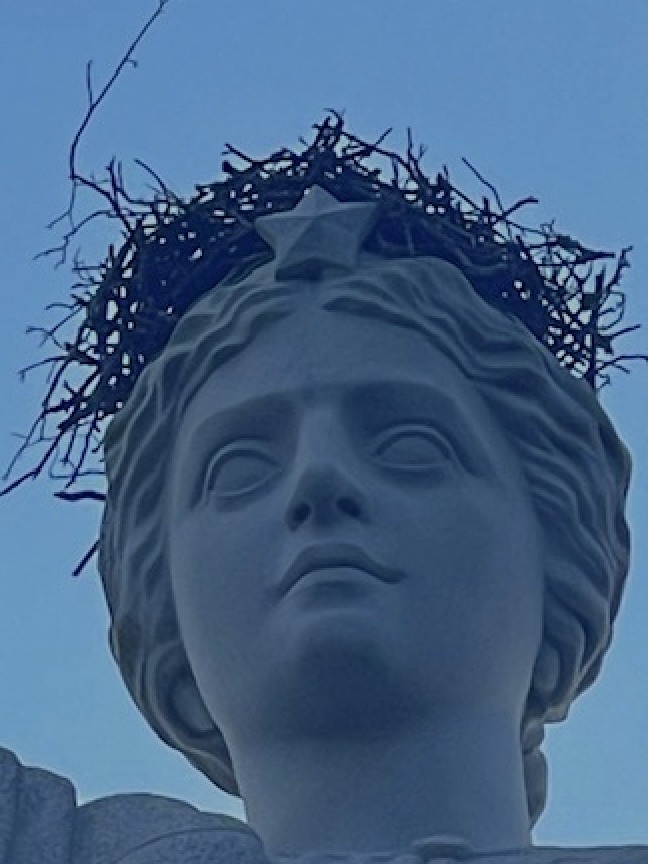
Birds have built a nest on the head of Faith at the National Monument to the Forefathers in Plymouth. The image is striking: a monument meant to honor courage and principle now also holds a simple home, high above, built for protection and survival. The nest is a reminder that strength comes from weaving together something sturdy enough to withstand storms, seasons, and time.
The lesson of the nest, nestled high atop the granite statue and built by a pair of ospreys, feels relevant today. Our forefathers came here without papers, risking everything for a chance to build a new life, to weave a nest that lovingly holds those they cared for, as if in the palm of their hand.
Yet today, people who come here seeking safety and opportunity are too often deported for that same lack of papers. The nest on Faith suggests a broader truth—that a lasting home, like a just nation, must be built to shelter and include, not to exclude.
That nest can be seen as a metaphor for much in our present day – an uninvited guest making a home where it was not expected. What if, by looking through nature’s lens, we allowed it to teach us something about belonging, and what it truly means to be home?
– Lewis M. Randa
Randa is executive director of the Peace Abbey Foundation.