
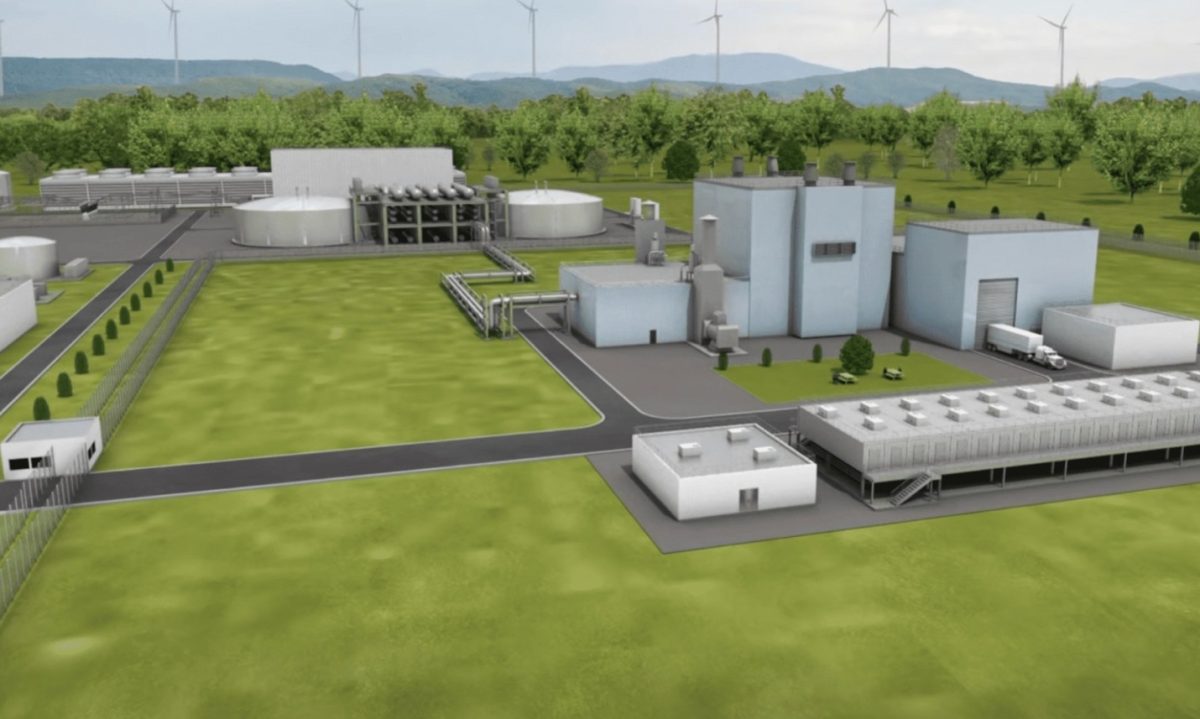
This is the second installment of a two-part opinion column on nuclear power in Plymouth.
How soon we forget. Or maybe we didn’t know much to begin with.
Those two thoughts pop into my head when I hear people – especially politicians – speak in glowing terms about the prospect of building a new nuclear reactor in Plymouth. My recent column on the history and folly of the Pilgrim nuclear power plant was aimed at them. It detailed why I believe the town’s ROI on Pilgrim wasn’t worth the price it paid and continues to pay. Consider this: It will take 10,000 years for radioactive waste stored in Manomet to no longer present a lethal threat. The chances of it being moved elsewhere are slim, which means “America’s Hometown” is also home to a nuclear waste dump – not exactly a tourist attraction.
Holtec International is in the process of decommissioning the plant, which opened in 1972 and generated its last megawatts of electricity on May 31, 2019. But even as questions about that work loom, talk of Plymouth hosting a small modular reactor, or SMR, persists like radiation itself.
As the name implies, SMRs don’t have the scale and output of a conventional reactor. At full capacity, Pilgrim generated about 680 megawatts – enough to power more than 500,000 homes. Too often, however, it didn’t produce anything close to that. By comparison, the largest reactors in the world today can reach 1,500 megawatts. An SMR would likely produce 300 or fewer.
A conventional reactor costs billions of dollars and takes a decade or more to build. SMRs are designed to be assembled in a manufacturing plant and installed on site, at a fraction of the cost and in a shorter timeframe. Because they’re modular, a second or third one could be added if power demands increased – at least in theory.
The Plymouth site is attractive for two key reasons. One, it’s already hosted a nuclear facility, with expensive connections to the power grid still in place. Two, Holtec is one of several companies in the process of developing SMRs, though it has not said publicly whether it’s keen on operating one in Manomet. That’s partly because Massachusetts – until now – has not been receptive to the idea of reviving nuclear power, preferring instead to focus on ramping up solar and wind sources.
Speculation about SMRs in Plymouth began almost as soon as Pilgrim went offline seven years ago. In the last couple of years, it’s been intertwined with discussions about more than 1,500 undeveloped acres Holtec owns around the plant. An outside consultant’s report featured conceptual plans for the parcel that included housing, light industry, and a huge swath of conservation land that could be used for recreation. The report estimated it could generate $1.2 million in annual revenue for the town – hardly a bonanza – and add 860 to 1,620 jobs. What those positions would pay, is not known – probably not enough to rent a two-bedroom apartment.
But besides the “coulds,” there is a pile of “ifs,” starting with this: Holtec has not expressed interest in selling the land, and if it did, the price – an estimated $50 million or more – is not something a town facing a budget crunch could easily swing.
For the purposes of a column that doesn’t require two cups of coffee to plow through, let’s home in on the SMR component. Since the Independent is a general audience publication and my English degree doesn’t qualify me to weigh in on the finer points of nuclear physics, I’ll stick to the practicality of bringing nuclear power back to town.
Spoiler alert: It’s never going to happen, even though Massachusetts Governor Maura Healey in recent years has sounded bullish on nuclear energy as way to control rising energy bills.
“She’s swallowed the Kool-Aid,” longtime Pilgrim plant and Nuclear Regulatory Commission critic Mary Lampert told me recently.
Last month, however, the state Senate rebuffed her attempt to do away with a 44-year-old rule requiring a statewide referendum on whether Massachusetts should host a new nuclear power plant. What are the odds of voters agreeing to that?
Even if they did, there’s this reality: SMRs are in their infancy. Worldwide, just two are up and running – a floating plant in Russia and a gas-cooled plant in China. Neither of those countries are known for listening to their citizens’ concerns, or publicizing incidents that threaten public safety.
In the U.S., construction of a 346-megawatt commercial SMR is finally underway in Wyoming. The plant’s owner, TerraPower, began working on the technology nearly two decades ago and hopes to apply for an operating permit in about five years. It’s worth noting Kemmerer, the town where it’s located, has a population of about 3,000, compared with Plymouth’s 70,000 or so. I’m guessing there aren’t a ton of other economic opportunities for people who call it home, nor a critical mass to muster resistance to the project.
Holtec, meanwhile, is focusing its SMR efforts on several other sites, including Palisades in Michigan. The aging conventional nuclear power plant there was shut down in 2022. The company signed on to begin the decommissioning process but then decided to try to upgrade and restart the reactor. At the same time, it’s planning to build two adjacent SMRs.
There are five or six dozen other SMRs in the early stages of development globally, meaning they’re years away from operating. A plant in Ontario, Canada, could possibly go online by the end of 2030.
I’m not forgetting the environmental and health concerns swirling around nuclear power. Plymouth already has a nuclear waste dump to contend with forever – does it want to serve as a test site for a new technology? It’s one thing to be an early adopter of the latest iPhone – you can always bring it back to an Apple store. Power plants don’t come with return policies.
That’s essentially the position of local environmental nonprofit Sustainable Plymouth.
“Given the long timeline required for the safe development and deployment of nuclear technologies, including small modular reactors, their potential use in Plymouth does not offer a near-term solution to the town’s fiscal pressures or rising energy costs,” it said in an email. “Moreover, while SMRs are often framed as a lower-carbon alternative, the technology is still evolving, and smaller scale does not eliminate exposure to risks such as natural disasters, human error, or mechanical failure.”
Ben Cronin, who publishes the Plymouth County Observer on Substack, has posted a deeply-researched piece on SMRs, including sections on “existing problems left over from Pilgrim,” “problems with SMRs,” “troublesome cancer links,’ and “Holtec’s troubling history.” I recommend you read it.
Cronin was apparently prompted to write the piece after hearing candidates for Select Board in the May town election repeatedly bring up SMRs in response to questions about how they would confront a rapidly blooming fiscal crisis. It’s complicated, but as new tax revenue growth slows and the cost of the public payroll and basic services keep soaring, Plymouth will face tough decisions about spending in the next few years.
The candidates’ vague pronouncements and misrepresentation of the facts also caught my attention.
At one forum, Dick Quintal – who won re-election – offered sweeping claims that rivaled those made by Dr. Evil’s father in “Austin Powers.”
An SMR “deserves a good look, a good conversation, and in the end it’s up to the residents in the community,” he said.
“That being said,” Quintal continued, “they’re building them all over the country. We need to have clean energy and right now it’s the cleanest form of energy.”
And here I was thinking the priority was to prime Plymouth’s economic engine, not to offer it up as a platform to provide “clean energy” to the power grid.
The Select Board member went on to proclaim France “number one” in the SMR race, but – thank goodness – did offer this cautionary addendum: He’s not ready to advance the idea “until all the science information is there.”
Scott Vecchi, who lost his latest bid to be elected to the Select Board, said he’s all-in on SMRs if that’s what residents want, but added, “The problem is that’s about 10 years out.”
“We need to look at what’s in front of us right now and deal with our troubles that are right in our face,” Vecchi said.
Betty Cavacco, unsuccessful in her attempt to regain a seat on the board, sounded like a spokesperson for the nuclear industry. Maybe because she worked at Pilgrim.
“I think it’s a great idea,” she said during a WATD radio event. “I think it’s definitely something that we need to take a look at.”
Since then, Cavacco’s doubled or tripled down on the idea.
“Forget the SMR’s,” she posted on Facebook in response to my earlier column, “bring back Pilgrim 2 & 3.”
In the May election, only Select Board member Kevin Canty chose to remain grounded in reality.
“At the minimum, we should have a townwide referendum” on the issue, he said during a candidates forum.
“We should be litigating against the federal government for the spent nuclear fuel that’s currently in our community, that was supposed to go to a federal repository that we were promised by the Department of Energy and the federal government,” Canty said. “That would give us some financial relief in the near term, and it would also get the waste out of our community. A solution for that waste is necessary before we invite another nuclear reactor, if we ever do, to this community…You don’t host a second party until you’ve cleaned up after the first one.”
And you can bet that if the town were to collect revenue from an SMR – how much, no one knows – the money would be funneled into the general budget, as it was with Pilgrim, creating the illusion of fiscal stability and sowing the seeds of a budget meltdown.
True leadership does not mean acceding to “whatever the people want.” Often, it demands rigorous research and offering an informed opinion based on those uncovered facts. Delivering tough news is part of the gig. Pandering is the easy way out. Touting unproven technology of SMRs as some kind of salvation for Plymouth a decade from now is tantamount to dereliction of duty.
Let’s deal with the here and now by finding ways to solve the housing crunch, preserve open space, and create better paying jobs. Nuclear power already skewed Plymouth’s economy while putting its collective health in jeopardy. The way forward should be led by innovators, not agents of desperation.
Mark Pothier can be reached at mark@plymouthindependent.org.