
David Berkeley’s life is shadowed by a black mass of sadness. At night, it steals his sleep. By day, it burrows into his thoughts.
Like others who have lost loved ones – especially under sudden or shocking circumstances – his grief does not come with an expiration date.
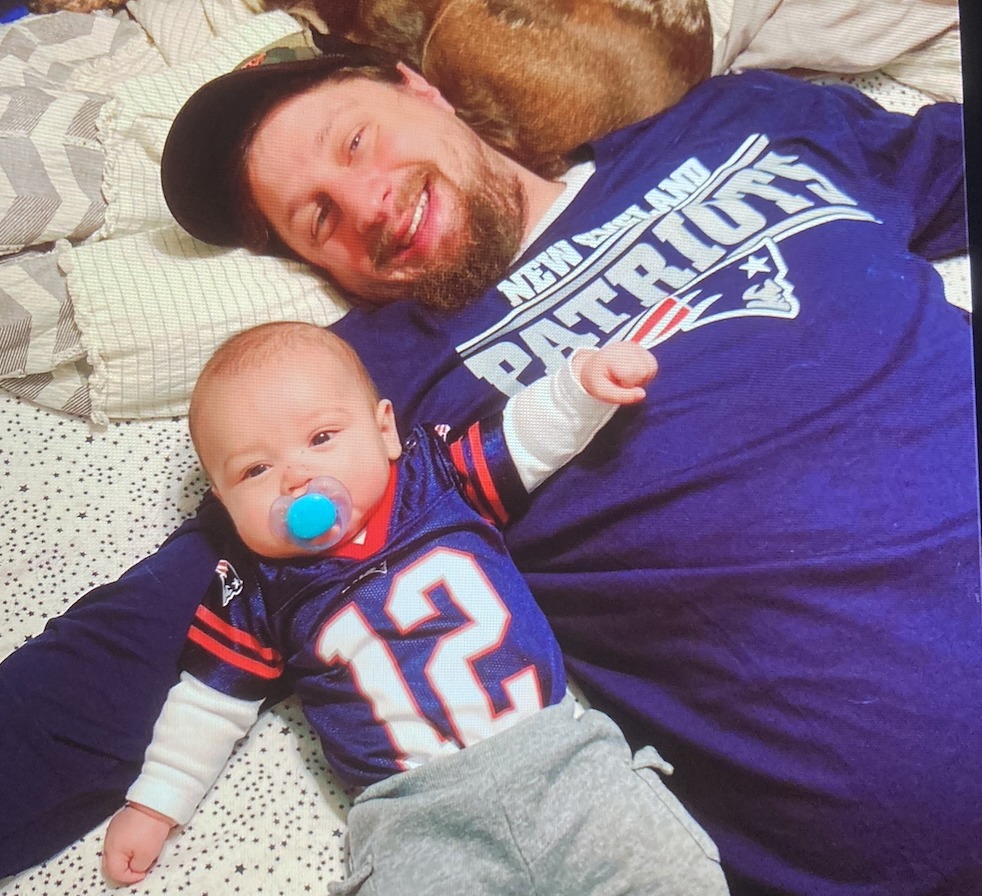
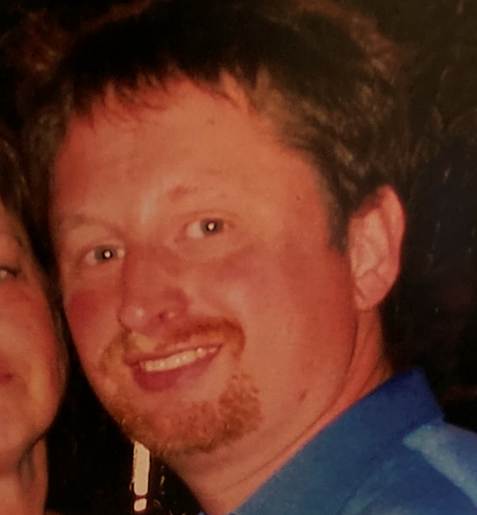
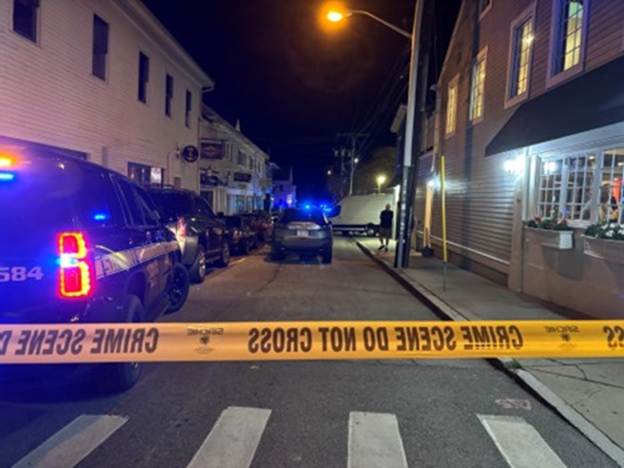
David’s 41-year-old son, Brent Berkeley, was gunned down in the Middle Street parking lot last Oct. 25 after getting into a minor auto accident with David Jerome, the man now charged with his murder. David Berkeley calls it an execution.
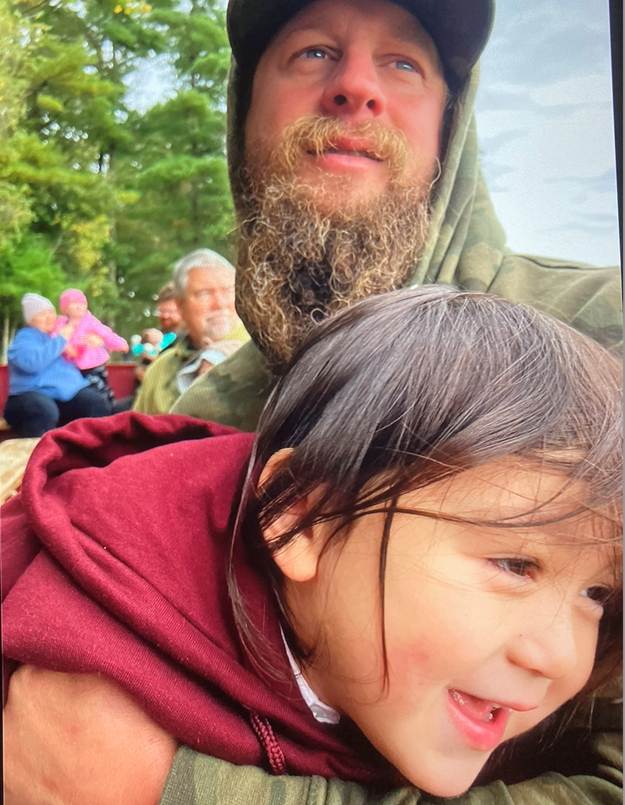
Brent’s fiancé, Jessie Jenks, worked at the nearby Speedwell Tavern. He had stopped by to pick up a car seat to take their two young children, Harper and Liam, to a Halloween event. Prosecutors say Jerome was driving the wrong way on Middle Street when he struck one car, threatened to kill the driver, and then hit Brent’s Jeep. Jerome told police he had just come from a nearby brewery. He had two guns in his Toyota RAV4. His 18-month-old son was in the backseat.
What happened next is up to a jury to decide. When that might happen remains unclear. But Brent’s father, family, and friends have no doubt that he got out of his Jeep to make sure Jerome wasn’t hurt, not to spark a violent confrontation. Jack Atwood, Jerome’s lawyer, says his client acted in self-defense, a story that seems shaky since Brent was reportedly shot eight times – including by three bullets Jerome allegedly fired into his stomach after Brent was sprawled on the cold asphalt.
David’s recounting of that day and its aftermath is harrowing.
“He shot him five times in the car – four shots in his hand, one under his collarbone,” he said. “He drops him to the ground, gets out, stands over him, and puts three more bullets in his belly. My son wasn’t just shot, he was executed.”
Jerome then started performing CPR, said David, who worked for decades as a respiratory therapist. “What the idiot didn’t know is when you get a chest wound like that, you put pressure on that wound. [By pumping his chest] he put a hole in the subclavian artery under his left collar bone. He pushed blood into his left chest cavity, which collapsed his lung.” It was that bleeding that killed him, his father said.
“Brent maybe had a thought on the ground: ‘Dad, help me,’” he said.
At the funeral home, he insisted on seeing his son’s body before embalming.
“I put gloves on. I had cotton balls, and I had holy water from Lourdes in France,” he said. “I put the holy water in every one of those wounds.”
There is more to the story of Brent’s death and its ongoing ripple effects, and it’s not the only tragedy the Berkeley family has faced. Fifteen years earlier, David’s other son, Matthew, took his life at Siever Field in North Plymouth. He was 31 years old.
Late last year – David, who has lived in Plymouth with his wife Donna for 40 years – began a campaign to publicly memorialize Brent and Matthew. The idea seemed straightforward – two park benches installed downtown or on the waterfront. He offered to supply the benches and accompanying plaques.
But the process since then has caused him more suffering.
To avoid further upsetting a father in mourning, some town officials may have led him to think the memorials could easily be brought to fruition. David says he was “lied” to on several occasions.
“All the work I did from November to March and then I get a phone call on March 5 that said, ‘You’re denied,’ he said. “Some kid called me from the Town Hall. He said, ‘You don’t fit the criteria.’ Both of my kids went through the schools here. I’ve got one that’s murdered and one suicide… I’ve got letters of character on my sons. They’re putting me through hoops.”
At the least, David was given incomplete information. For starters, he wanted to place benches at the harbor’s edge, near one dedicated to Jennifer Kane, who died in the World Trade Center attack on Sept. 11, 2001. He says no one from the town mentioned that the land is part of Pilgrim Memorial State Park and thus controlled by the state. He only found out this week, when I told him.
The standards for a memorial are rigorous, though ultimately subjective. The town’s policy states that “honorees must have a record of service to the community. No application for a memorial will be reviewed unless the honoree has been deceased for a minimum of one year.”
David says no one told him that until long after he made his request.
Beyond the one-year requirement, the policy says honorees must have “served” the greater good in a way “marked by valor, dedication to the development of the town, or self-sacrifice for the betterment of Plymouth.”
David has collected about 20 letters to make the case for his memorial application. He credits Select Board Chair David Golden with helping him to gather those testimonials. Golden was a member of the Memorials Advisory Committee before being elected to the Select Board in 2024.
But even if Brent and Matthew Berkeley do meet the guidelines, there’s another problem: The town’s five-member memorials committee – which recommends to the Select Board whether to OK an application – has three vacant seats. That’s left it unable to make recommendations.
“Again, somebody should have told me,” David said.
Nonetheless, he says committee member Tim Lawlor – who has since resigned – assured him approval of the benches “is going to go right through, no process.”
“He said to me, ‘I’m your champion.’ He told me I did not have to wait a year. Then the committee collapsed and now they’re leaving me in limbo.”
Lawlor denies telling him the application process could be skirted, but he does believe an exception to the one-year waiting period should have been made.
“Brent was murdered in the streets of Plymouth and that’s what makes it different,” he said.
Lawlor said Brent mowed his lawn on Oct. 25, shortly before he was killed. He considered him a “personal friend.”
“Brent was a good guy. I was probably the last person to say goodbye to him,” he said. “I was, and am, a champion to have these benches placed. It’s just civility.”
Another issue adding to the confusion: Until recently, Select Board members apparently did not realize the memorials committee was not functioning. Select Board member Dick Quintal brought the issue up at a meeting in late September. The open positions have since been advertised. For David – after months spent trying to follow proper protocol – that offers little comfort.
He also blames Quintal for misleading him about the prospect of getting approval for memorial benches.
“He hugged me,” said David. “He said, ‘We’re gonna do this, no problem.’ I’ve seen him in Town Hall (since). He hasn’t even said he’s sorry. He lied to me. They should have told me from the start it was a process.”
Quintal, who last year raised about $2,000 through a fundraiser for Brent and Jessie’s children, says he understands why David is “distraught,” but insists his intentions were good. Quintal recalls having a conversation with him shortly after Brent’s death.
“He said, ‘I’d like to do a memorial bench.’ I said, ‘Oh, that’s nice. You’ve got to start with the process. Fill out the application with the memorials committee. They’ll review it.’ I said, ‘If you can get any letters of support that only helps your case.’”
That’s when David brought up the idea of benches on the waterfront, Quintal said. “I said, ‘Listen, I don’t have anything to do with where they go. That’s why we have a memorials committee.’”
Quintal acknowledges he did not realize then that the committee could not act on an application.
“He’s frustrated and I get it. It’s taken a long time,” he said. “At least give the guy an answer. Have a special meeting. Some of this stuff, it’s regimented by the book, and it just doesn’t fly…I know he is a little upset or angry. But it should be at the system, not at me. If anything, I’d give him the shirt off my back, and I mean that.”
In June, David spoke with Select Board member Kevin Canty, whom he said was forthright about the requirements for memorials, but lacked empathy.
“He was like a block of ice,” he said. “I walked out of Town Hall so depressed.”
Canty, whose parents died last year, says he was simply trying to give David the facts.
“It was believed by some that the process of gathering and turning in these letters [supporting the memorials], which I think he was doing on at least a weekly basis for a period, was prolonging Mr. Berkeley’s suffering,” he said in an email. “Having experienced recent loss myself I didn’t want to contribute to prolonging his pain or that of his family. When I met with him, I discussed the town’s established memorials policy and its terms. I wanted him to know the requirements so he could decide whether he wanted to continue to pursue these memorials or not.”
“From my reading of the policy,” Canty continued, “it appeared that neither of his sons would qualify. I told him that and told him I was sorry other officials had not told him that previously. I apologized on behalf of the town if the statements and implications made by other officials had given him false hope. I also told him about my losses and told him that neither my father nor my mother would qualify for a memorial under the policy either and that I understood how that can seem unfair, but that just because they didn’t qualify didn’t make them any less special or their losses any less significant.”
Golden, who recently led the ouster of Canty as board chair, said in an email: “With the anniversary of the loss of Brent upon us, I can imagine that this is a difficult time for David. He and I had been in touch about putting forward an application at the anniversary date.”
By now, you can probably discern that David Berkeley is caught in something of bureaucratic blizzard. His frustrations also highlight what many view as an endemic problem in town government: A lack of communication between appointed and elected officials, along with plenty of internal politicking. The recent revelation that dozens of committee members were not sworn into office as required by a town bylaw is another example of governmental dysfunction.
Andy Harmon, whose family employed Brent at its landscaping and property management business Harmon & Sons Inc., has tried to help David navigate the memorial requirements.
“Tim [Lawlor] and Dickie [Quintal], they both were saying to him, ‘This is a shoo-in. This going to happen,’” he said. “Then a couple months into 2025 we’re told they might not fit the criteria. You can’t tell somebody that’s grieving it’s a shoo-in and then change it.”
Meantime, the Berkeley and Jenks families await justice. Jerome, Brent’s alleged murderer, sits in jail. He was indicted on Feb. 11 and arraigned on March 3. Since then, there have been five hearings, with another set for Nov. 17, more than a year after the incident.
I haven’t read the letters in support of the memorials, but during my talk with Harmon, he described Brent as a “great” man and father who “became a huge part of our company.” He cited several examples, including one that feels like the proper way to end an otherwise downbeat column:
“Anybody that met Brent knew his kindness. He wasn’t just somebody mowing lawns or trimming trees. One of our clients has a young daughter. She went up to Brent and told him she had a pet ladybug on a tree. ‘Please be really careful,’ she said. Brent marked off the area and pulled his crew together. He said, ‘Guys, don’t touch this tree.’ In this day and age, people don’t do that anymore. But that was him.”
Mark Pothier can be reached mark@plymouthindependent.org.