
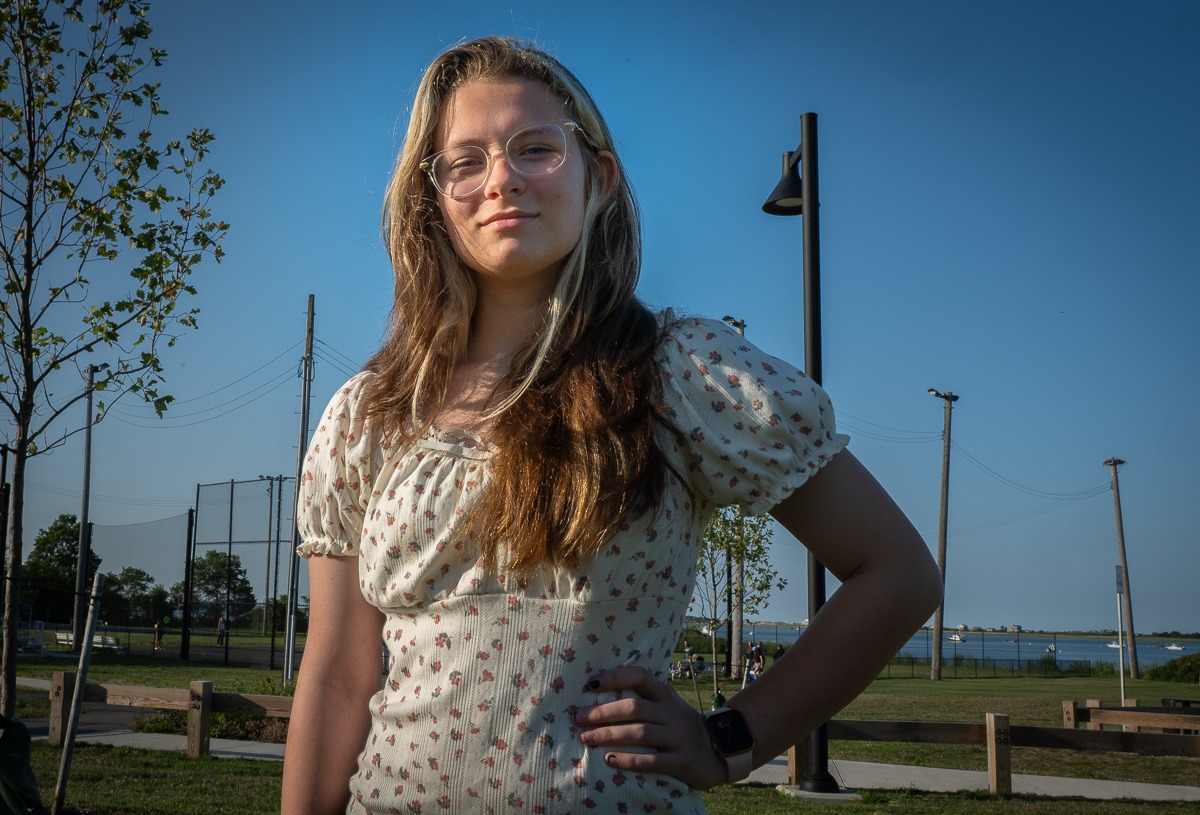
For most 8th graders, a civics project ends with a grade. For 14-year-old Emma Dries it was the beginning of a months-long passion project to persuade Town leaders to install lights and extend hours at Stephens Field.
When the incoming freshman stepped to the podium before the Plymouth Select Board on Tuesday, she wasn’t asking for permission to complete a school assignment. She wanted action.
She asked town leaders to rethink how one of Plymouth’s most popular parks could better serve the community, especially during the winter months when outdoor time is still important and daylight is scarce.
“At a minimum, I’d want the already-installed lights around the walkways turned on from 4 to 8 p.m. in the off seasons … maybe Fridays or weekends first … almost like a trial run,” she calmly told the Select Board.
She laid out her research, step by step. She detailed the results of a survey she conducted of fellow students. She outlined her investigation of the health benefits to the community. She reached out to town administrators for help. She stood confidently and made a persuasive presentation on how Stephen’s Field might be used more during the off-season months, particularly during winter, when darkness by 4:30 p.m. discourages outdoor recreation after school.
Dries (pronounced Drees) has a quiet, almost shy presence at first — but her reserve falls away the moment she gets to the point. Now entering the 9th grade at Plymouth North High School, what began as a civics class assignment has transformed into a political crusade.
From the indelible impression she left on members of the Select Board members, the town will likely see the benefits from her perseverance.
“It was wonderful to see a young person so excited to be involved in effecting change in the community,” said Select Board Chair Deb Iaquinto following the meeting. “Emma was a natural at the podium, completely unrattled by some technical challenges we had that night.
“She delivered her presentation with confidence and passion. In fact, her arguments were so persuasive, the board jumped in with suggestions for continuing to move her proposal through the process, including submitting a citizens petition to Town Meeting.”
After the presentation, Select Board member David Golden suggested Dries serve as an unofficial advisor to the town as it considers future recreation projects. He suggested connecting her with the park, forestry and recreation directors.
“I’m sure these folks would love to hear from someone who actually uses it, rather than those of us who simply pontificate about their uses,” he said. She responded with an enthusiastic yes.
Select Board member Bill Koehan took it one step further.
“I am very supportive of our parks and how we can maximize their use in this part of the country; it gets dark pretty early in the winter,” he said. “And we want to utilize the site more effectively. There are a lot of improvements at Stephens Field so that those lights would be beneficial.”
He agreed with her proposal to augment lighting with solar power as well. Koehan suggested connecting with the chairman of the steering committee for downtown and the Precinct 3 Town Meeting Members, who meet once a month.
He said Stephens Field is a large “pocket park” in downtown Plymouth, surrounded by homes, and reiterated the importance of Dries’ plan to canvass neighbors.
Selectman Kevin Canty was also encouraging.
“Another step that you could take is to put together a citizen’s petition to bring this before a Town Meeting, he said. “You’ve taken it this far, why not see it through the process?”
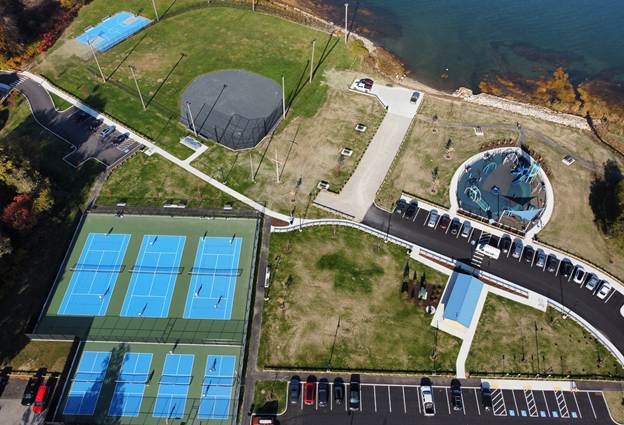
Dries’ project began last fall in Elizabeth Clancy-Coleman’s 8th-grade civics classroom at Plymouth Community Intermediate School (PCIS). As part of Massachusetts’ civics curriculum, 8th grade students identify an issue they care deeply about, investigate it through research and interviews, and develop a proposal addressing a real community need.
The assignment stems from Massachusetts’ 2018 civics education law, signed by then-Gov. Charlie Baker, which requires every 8th grade and high school student to complete a nonpartisan, student-led civics project.
“The students chose what we call passion projects to research and present to their peers about,” Clancy-Coleman said. “We want students to choose an issue they genuinely care about because that’s where meaningful civic engagement begins.”
An athlete who has lived in Plymouth since she was 7, Dries said she has spent countless hours at Stephen’s Field playing sports and using the basketball courts with friends. She knew firsthand how quickly the park emptied once winter arrived and darkness settled in.
“I started thinking about all the people who can’t really use the park once it gets dark,” she said.
She realized the problem extended well beyond her own experience and affected families and residents throughout the community.
“At night when my friend and I would go to Stephens Field to practice basketball, it was pitch black down there,” the teenager told the Independent before her presentation to the Select Board. “So, when we started this project, I thought, why can’t kids and adults enjoy this park after school year-round?”
For her project, Dries surveyed 184 fellow students, which suggested 83% would use local parks during the winter if they were lighted, 65% had used Stephen’s Field in the past, and nearly 90% did not rely on public transportation, suggesting accessibility — not transportation — was the primary obstacle to greater use.
“There was definitely interest,” she said. “People wanted somewhere they could safely walk, play basketball or just be outside after school.”
Dries’ commitment quickly distinguished hers from a typical classroom project, her teacher said.
“The project was designed to teach civic engagement,” Clancy-Coleman said. “Emma carried it far beyond the classroom. She’s one of those students who’s always thinking about the bigger picture.”
Outside class time, Dries reached out to Plymouth’s Parks and Forestry Department, gathered additional data and refined her proposal as she learned more about how local government works.
“I contacted the town of Plymouth, Forestry Department but I also called other towns to learn how they used their parks during the winter months,” Dries said. One of the towns said they held events and even a snowball fight at one of their parks, she said.
She also researched Seasonal Affective Disorder (SAD) and the growing body of evidence showing how outdoor activity during the darker months can improve both physical and mental well-being.
“I was mind-blown how much just a small amount of exercise every day could help people with SAD,” she said. She even examined how communities outside the United States encourage year-round recreation.
This year marked a difference in how the middle schools in Plymouth handled the curriculum.
“Since 2021, the teachers have served as the liaison between students and town officials,” Clancy-Coleman said. “This year we stepped back and encouraged the students to have those conversations themselves.”
Dries’ work earned her a place at the Massachusetts State Civics Project Showcase, as she was one of five Plymouth Community Intermediate School (PCIS) students selected to present research addressing issues in their communities.
There, Dries shared her findings with educators, public officials and fellow students, gaining new ideas while seeing firsthand how students across Massachusetts are tackling local challenges through civic engagement.
Along the way, the teenager discovered one of the most valuable lessons in civic engagement: Sometimes the best ideas evolve.
Dries said she initially envisioned adding lighting to allow organized sports and informal recreation to continue after dark during the winter months. But as she met with Plymouth Parks and Forestry Superintendent Nick Faiella and learned more about the costs, logistics and environmental considerations — the fields can be damaged if used during the off-season — she began to rethink her approach.
“I realized they never really said anything about the basketball courts,” she said. “They never said anything about the playgrounds or the walking paths. So even if we can’t use the fields, we’re still able to improve a lot of people’s day-to-day exercise and the park’s use if we ensure there’s lights there for the other areas of Stephens Field.”
She listened, adjusted, and took a more practical approach.
The conversations reshaped her proposal to focus on expanding opportunities for people to enjoy the park during the darker months by illuminating walkways, basketball courts and other public areas.
She also proposed exploring partnerships with businesses such as Home Depot or Lowe’s, solar power, community fundraising and even basketball tournaments to help offset costs.
Dries said the evening confirmed something she had begun learning months earlier — making a difference doesn’t end with one presentation.
“I really liked the meeting,” she said afterward. “They were all so kind and supportive of my idea. I think my next steps will be what they told me to do — go to a local district meeting to discuss how people in the area feel about lights being added.”
Dries said she plans to speak with neighbors living near Stephen’s Field, gather additional feedback from the community and continue refining her proposal to bring it before Town Meeting through a citizens petition.
For her teacher, Dries’ experience reflects exactly what the 8th-grade civics curriculum is designed to accomplish.
“The goal isn’t necessarily that every student changes public policy,” Clancy-Coleman said. “The goal is for students to understand the steps involved in using their voices to create change. We want students to learn how to navigate government and understand that they have a voice in their community. In a sense, to be the change they want to see in the world.”
As she left Town Hall Tuesday night, Dries was more than simply a 9th grader who completed a school assignment. She was a citizen who discovered democracy happens in classrooms, neighborhood parks, district meetings and Town Hall chambers.
“This project has helped me a lot,” Dries said. “Advocating for what we need in the town is amazing because you’re able to fight for something we care about.”