
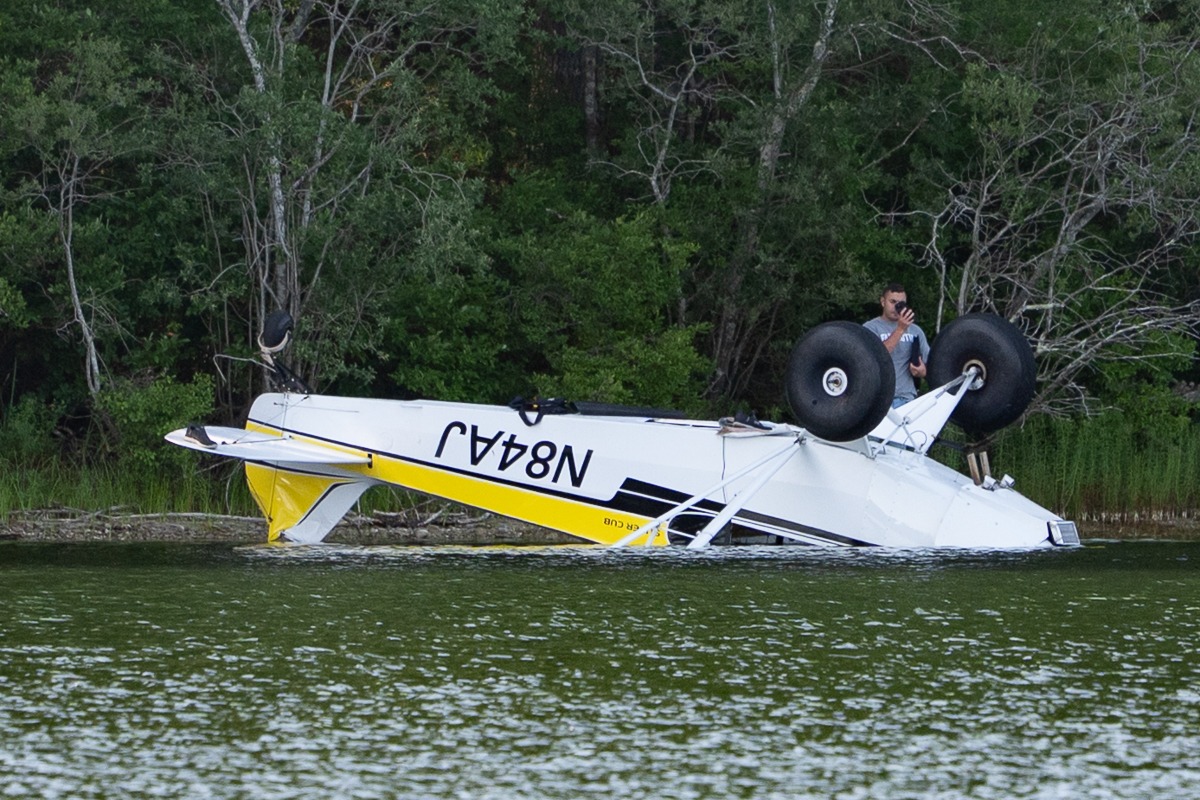
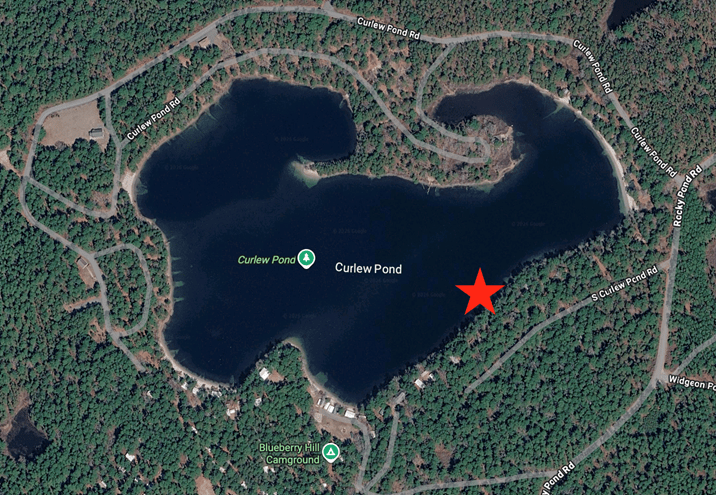
The Kingston man killed when his small plane crashed Thursday morning in Curlew Pond at Myles Standish State Forest was a skilled pilot who had just bought the aircraft three weeks ago, according to a friend at Plymouth Municipal Airport.
Richard Carrara, 81, a frequent presence at the airport, took off at around 6:30 a.m. Thursday, flew to the Katama Airpark in Edgartown, Martha’s Vineyard and was returning to Plymouth when the plane crashed into Curlew Pond.
When emergency responders arrived, the plane had capsized in the water and Carrara was trapped inside the cockpit. Bystanders helped police and firefighters pull him from the overturned plane.
He was taken to Beth Israel Deaconess-Plymouth Hospital, where he later died.
Kenneth Fosdick, who until recently served for many years as the chair of the Plymouth Airport Commission, called Carrara’s death “a tragedy.”
“I’ve known him for 40 years,” Fosdick said. “He’s a very accomplished pilot. He flew in Vietnam in very small aircraft. “
He was also a skilled builder and constructed several hangars at the airport, Fosdick said. He owns a large hangar occupied by the Mass State Police, Fosdick said.
“We have known Dick for many years both as a maintenance customer and an airport friend,” said Peter Conner, an airport commissioner, who has had businesses and a plane at the airport. “He built several large hangars at Plymouth along with remodeling some, Including ours. He will be missed very much.”
Early Thursday Carrara flew from Plymouth to Katama Airpark near Edgartown, Martha’s Vineyard, likely to familiarize himself with the plane, which was so new it was still registered in Maine.
He had made the same trip on Monday, July 13, according to the online aircraft tracker Flight Aware.
Pilots like to fly to the Katama Airpark, Fosdick said, because it’s a beautiful, grassy field with an excellent restaurant, ocean views, and instructors there to help.
It seemed like a typical day, Fosdick said, flying over and grabbing something to eat and flying back.
On his return, Carrara didn’t fly in a straight line, Fosdick said. He appeared to be sightseeing, which this type of plane is designed to do.
The plane, a single engine two-seater made by Dakota Cub Aircraft, is described in Federal Aviation Administration records as ‘experimental,” and built with a kit. Experimental aircraft are those not assembled in a licensed factory.
The company calls the plane, The Dakota Cub Super 18, a “modern, high-performance kit aircraft designed for off-airport backcountry flying.”
Fosdick said Carrara was especially qualified to pilot this type of plane, which typically flies low.
But when you fly low and you have an engine issue, you have very little time to react, Fosdick said.
Though Carrara was an experienced seaplane pilot, comfortable flying low, Fosdick said a power problem can be especially difficult to recover from.
“If all of sudden there’s no power — for whatever reason— the pilot will try to find a place to land — maybe a street,” Fosdick said. “This is speculation, but he may have decided to put it into the pond, but when it flipped over, he didn’t have time to get out.”
He said the plane looks relatively unscathed, which suggests he floated the plane into the water as slowly as he could.
It was the first death involving a Plymouth Airport pilot in decades, Fosdick said.
“It’s been a long, long time,” he said. “Pilot safety records are really very good.”
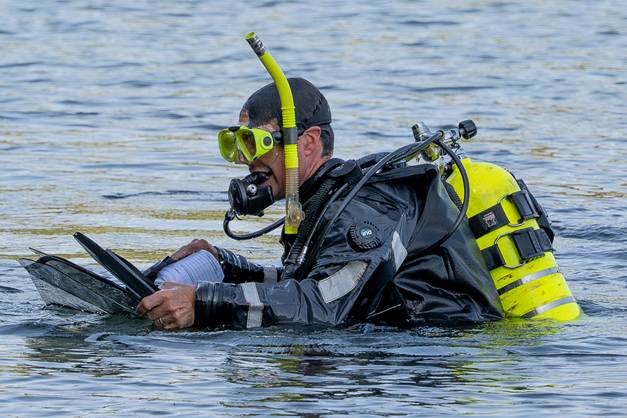
The National Transportation Safety Board will determine what went wrong, but its investigation could take months or longer.
“Who knows what happened? said Fosdick. “It’s like getting in your car. It can be a great thing, but it can also kill you.
“But it’s a tragedy, just a tragedy.”
Andrea Estes can be reached at andrea@plymouthindependent.org.