
(Editor’s note: This narrative account of one college student’s interactions with the Twelve Tribes – first as a potential recruit and then as a reporter – offers an unvarnished yet nonjudgemental perspective from a typical recruit who began with no historical knowledge or pre-conceived notions about the group.)
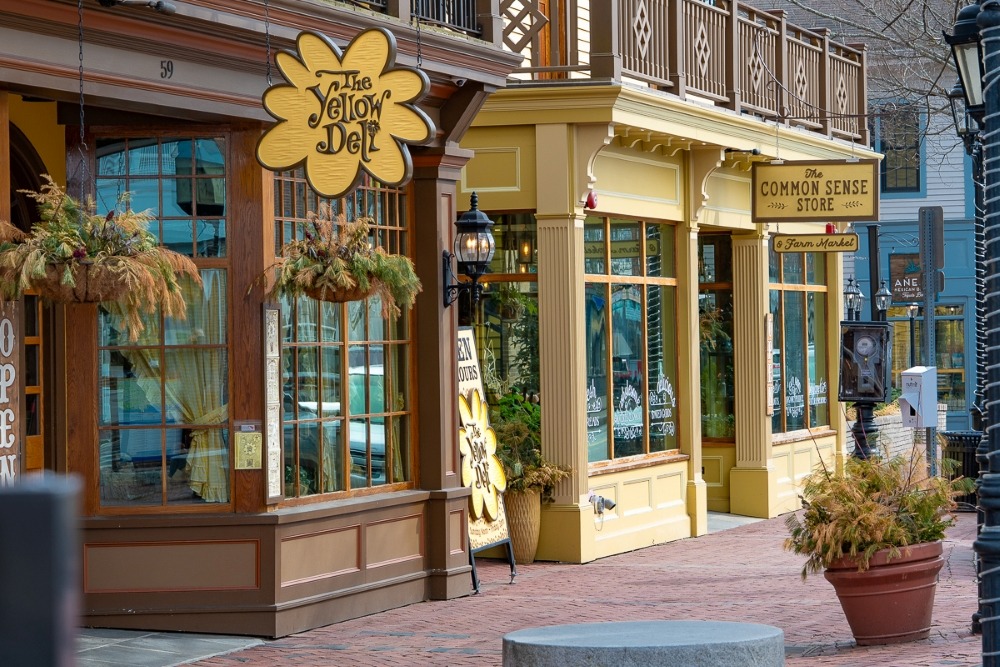
A chilly breeze pushed me down Main Street in Plymouth. I walked into a lamplit restaurant at 59 Main St. A smiling young man with his hair pulled back showed me to a wooden booth beside a window. The soup of the day was ginger carrot, and I could smell it simmering in the kitchen. I ordered a carob steamer and settled in. An older couple sitting behind me, dipping their sourdough sandwich in soup, extolled the cafe’s homey vibe. Before long, the server brought my carob steamer in a thick yellow mug emblazoned with the name: The Yellow Deli.
A pamphlet near the front counter of the restaurant displayed a frog sitting in a pot of water about to boil. The frog will die because it does not notice the water slowly growing hot. An analogy for the current state of society.
Attached to this cozy cafe is the Common Sense store and – around the corner on North Street – the Yellow Deli bakery. In the same complex is BOJ Construction, which stands for Brothers of Judah. In years past, the company has worked throughout the country on projects ranging from home remodels to elementary school sidewalks. It now mainly works in Massachusetts. Less than a mile from the deli, on Warren Avenue, is a 10,000-square-foot home on 5 acres. It features a manicured lawn and paved driveway leading to the refurbished house renovated by Brothers of Judah.
Unless you spent time in the town assessor’s office, you might not know these properties – in addition to several large homes scattered around Plymouth – are all interconnected.
The properties, worth more than $7 million combined, are owned and operated by the Twelve Tribes; a religious organization that since its conception in the 1970s has been the subject of controversies ranging from allegations of sexual assault and child labor to accusations of racism and antisemitism. Through it all, Twelve Tribes has been quietly growing its footprint in Plymouth, making it the headquarters for its New England operation, which is just one tribe in a global network. Town records indicated the group paid nearly $90,000 last year in property taxes in Plymouth.
The fundamental religious sect is little understood by outsiders, though its opaqueness would fade the more time I spent interviewing those who have left as well as its current members and, eventually, leaders.
Walking into the Plymouth Yellow Deli was a moment of familiarity. My curiosity surrounding the Tribes began more than a year ago and more than 10,000 miles away, when my friend and I, both college students, were invited into their home.
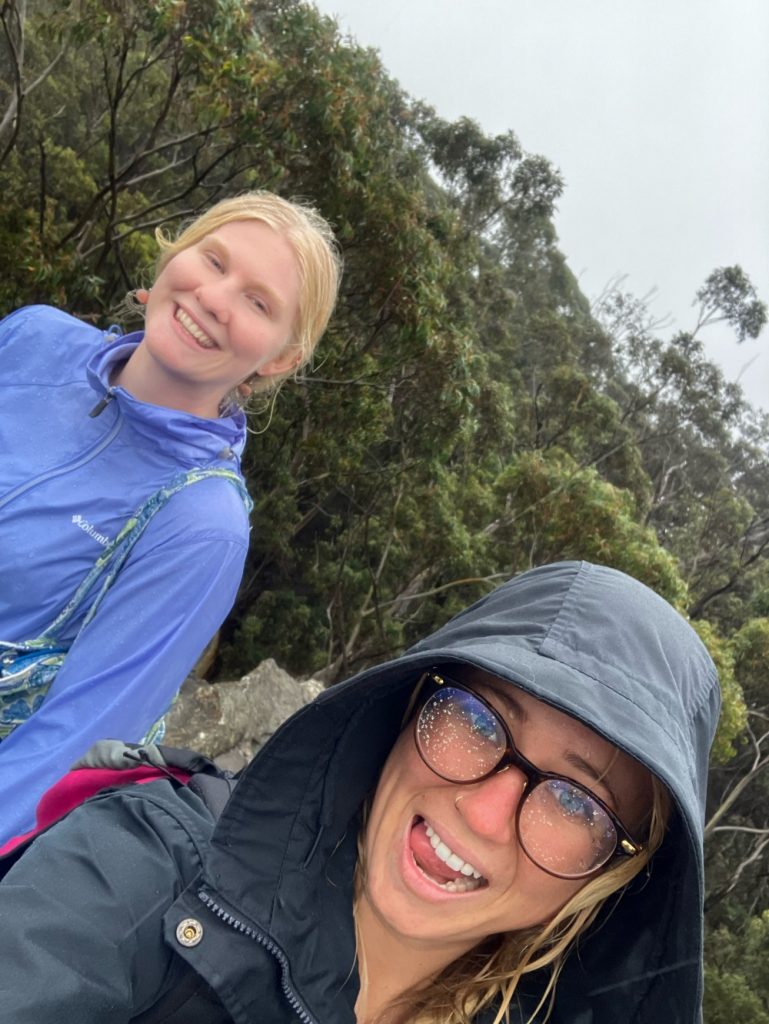
In the Blue Mountains of Australia, my friend and I dashed into a deli seeking refuge from a downpour. We were students studying abroad taking a day trip outside of Sydney in 2024. We dried by the woodstove as a kind man with his hair tied back cleared a table for us. We enjoyed grilled cheese sandwiches and tomato soup. Before we left, an older woman handed us a pamphlet inviting us for dinner in the home she shared with about 30 other community members. My friend and I waited for the train back to Sydney and as the delays due to rain stacked up, we pulled out the pamphlet and found directions to their house.
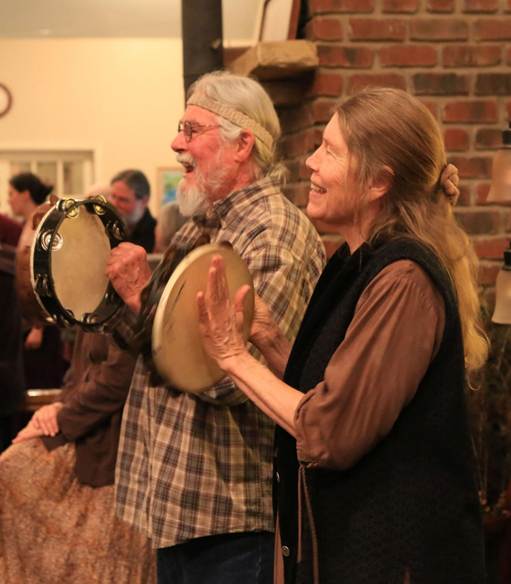
Our coats were taken and laid on a furnace to dry by a young woman with a child on her hip. We were invited to sit in a big hardwood-floored room. Before long, I was embraced by children. Their small hands guided me through a rhythmic dance of intricate footwork. Bearded men strummed and thumped acoustic guitars as animal-hide drums kept beat with our feet on the hardwood floor. As I sat, an older woman wearing a blue headscarf handed me a mug of warm mate, a traditional South American caffeinated tea. Beside me, a younger woman rocked her child and sang the verses of each song. They sang of love for the people. I was grinning. I felt warm in the company of these strangers, in their strangeness.
After the first round of prayer and dancing, we sat at long wooden tables, using chopsticks to eat fish and collard greens. A man and his wife told us about their lives. They live in a room with their four children in this sprawling, orange-and-indigo home. Once the kids are teenagers, they will move into rooms for single men or single women. Three dozen people all share this one large house. My friend and I were charmed and exchanged glances of awe when a child placed plates of homemade ice cream in front of us. We were clueless to the realities of life within the Tribes. We would soon come to know what was not being revealed at the dinner table.
A global network
This group in the Australian mountains is part of a network of communities all over the world as far away as Kyoto, Japan, and as near as Milton, Hyannis, and of course Plymouth. They run popular businesses such as The Yellow Deli. The deli’s hot house-made bread and steaming sandwiches attract enthusiastic customers, many of whom know very little about the ownership structure behind these delicious reubens.
Though far-flung, the Twelve Tribes communities, estimated by the Colorado Springs Gazette in 2022 to total around 3,000 members, all share resources. The olive oil we dipped warm bread in comes from a community in Spain, the mate from Brazil, the salmon from Alaska. Twelve Tribes prints and distributes a monthly newsletter to the network. Each community gets its own page or two to detail their highlights of the past month, including the non-members they’ve welcomed. My friend and I are featured in the 2024 April/May edition.
Group members share the responsibilities of running a business and raising their children. In Australia – more specifically the New South Wales town of Katoomba – the community runs a Yellow Deli much like the Plymouth restaurant. Other communities run businesses ranging from farms and construction crews to soap and lotion companies. Community leaders divide money based on the needs of the household, not individuals.
We spent the night and I slept soundly in a room of bunk beds and women. An hour after dawn, we awoke to the sound of young girls singing in the doorway. At breakfast, sitting alongside a gentle family, I ate freshly baked sourdough bread and figs with yogurt and honey. The group drove us to a waterfall. We hiked barefoot down a slippery path; our feet stained with Australian red mud. The young women in whose room we had slept provided us with full-coverage bathing suits. We changed into them in a black rock cave before diving into a pool beneath the falls.
I felt giddy, like I’d been let in on a secret. Afterward, my friend and I marveled at how taken we both were by the welcoming community: the iPhone-less existence, the well-spoken and exquisitely behaved children, the feeling of belonging they have managed to foster with us in such a short time. We wondered: How did such a beautiful community come to be? On our train ride back to Sydney, we did some research and learned the Twelve Tribes community we spent the night with had its roots in Chattanooga, TN. It was founded in 1972 by Gene and Marsha Spriggs, known within the Tribes as Yoneq and haEmeg. Gene died in 2021, but Marsha lives in their community home in Plymouth. We also learned it was a fundamentalist religious group often described as a dangerous and abusive cult by authorities, journalists, and past members alike. Under the haze of hospitality and happiness, another question brewed: What are we not seeing? This is where I began a new journey, from potential recruit to a journalist.
‘You’re not going anywhere’
It’s 2000. A 23-year-old by the name of Tamara Mathieu sobs on the edge of a bed in Hyannis, MA. She repeats, “I just wanna go home, I just wanna go home, I just wanna go home.” Her head is in her hands.
The bearded man across from her calmly states, “But you are home.”
Her husband, to her left with a hand on her shoulder, says, “You’re not going anywhere.”
Tamara recalls feeling as though the walls of the room began to collapse in on her. All Tamara can think is, “What have I done?”
Tamara would not go home, at least not for another 13 years.
Tamara Mathieu recounted her story of joining and leaving the Twelve Tribes in several interviews with me. For her, it all started with such promise. In 1999, she had an experience with the Tribes similar to my own. She became enamored shortly after meeting members of the community in Rutland, VT. She was 22, a newlywed with a newborn son. She was questioning the kind of life she could offer her infant, with a world changing rapidly – and seemingly being drained of community values. The Columbine High School massacre had just happened and Tamara said she felt scared. She wanted help raising her son. She wanted him to be somewhere safe and grow up in a community full of attention and love. The Tribes seemed to offer this and more: an environment fueled by kindness and connection, making every member feel seen and special. According to Tamara, followers are told, “You have been chosen by The Creator. Out of the billions of people on this earth, he touched you.”
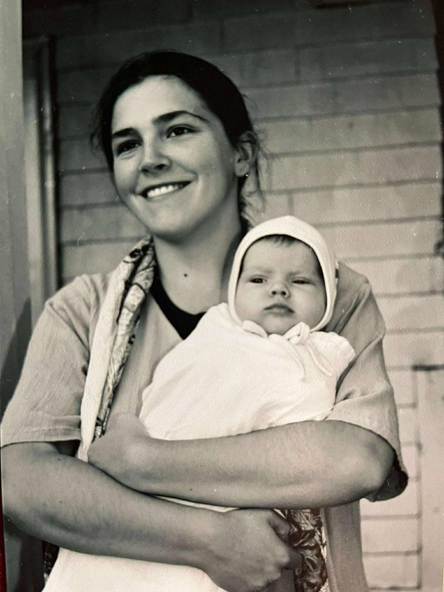
After a year and a half visiting Tribe communities throughout the Northeast, Tamara and her husband sold their home, her car, and virtually everything they owned and headed to Massachusetts, moving in with the community in Hyannis. As she recalls, community members sifted through her son’s toys, disposing of the ones deemed “foolish.” Blocks remained. They confiscated her bikini-style underwear, replacing them with white briefs. Such a “sexy undergarment,” they explained, would encourage a “sensual spirit,” one that could cause men to “stumble.” Her attire from then on consisted of shapeless blouses, tunics, long skirts, and billowing pants.
Tamara’s family was moved by elders frequently in the first few years. They spent about eleven months in Hyannis before heading to Plymouth. A little over a year later they moved to the community in Rutland for about six months before settling in Cambridge, NY where they would stay for 11 years.
The founder of the Twelve Tribes, Gene Spriggs, changed Tamara’s husband’s name from Andre to Yeshurun, meaning “righteous judge” in Hebrew. She would later describe having two husbands. Andre: the man she married before the Tribes, and Yeshurun, the one she vowed to submit to within the Tribes. Tamara had convinced Andre to join the community – she says he had been happy with their life before the Tribes. He had just received a degree in business and computer science and landed a high-paying job. They had bought a home and started a family. But Tamara said she was lonely and “home all day, searching for more.”
After joining the Tribes, Yeshurun excelled in the new environment. When their family moved from Rutland to the Cambridge community, just north of Albany and about an hour’s drive from Rutland, he quickly rose in ranks and eventually became Community Coordinator. This role made him “head honcho,” as Tamara puts it. He led Sunday morning teachings and was “everyone’s go-to guy” for most tasks and issues within the community.
Tamara said she spent years fearing Yeshurun would never want to leave. “I never had the courage to go without him,” she says.
Tamara also submitted to the beliefs of the Twelve Tribes. According to the Twelve Tribes website and Tamara, they consider themselves the chosen people of Yahshua, God’s son. They seek to be the next “Noah’s Ark” and bring “light to the nations.” Their purpose is to produce “godly offspring” and collect a people for The Creator. They refer to their community as the bride of the Messiah. Their teachings preach the Messiah will return only after they have proved themselves ready to unite. Selflessness is their most revered moral. One must give up all of their desires and live solely for Yahshua. His disciples are not meant to love, respect, or think of anything more than their savior. The Twelve Tribes website states, “we regard all hardship as discipline, which will eventually cause us to be conformed to the likeness of our Master.”
Women are believed to have been made to serve men. The Tribes’ teachings stipulate that “woman is not meant to rule over man, however this is hard for many of today’s women to accept. Woman is meant to save her affections for her husband, and to willingly give herself to him and submit to him.”
Women’s lives are dictated by their husbands and other men in the community. Tamara says women are expected to “always be available sexually” to their husbands, they are never to deny them sex.
Yeshurun was allowed by leaders in the community to own and use a cell phone soon after joining; Tamara was never given the privilege. According to Tamara, a woman giving birth at home, as all of them do, can seek medical intervention only upon the request of their husband. Tamara gave birth to two daughters and another son in the community house in her time with the Tribes. Their births went smoothly. She considers herself lucky. Tamara contends that any woman who expresses discontent with her role is regarded as disrespectful to God.
Children are held to high standards of obedience. “Play,” Tamara says, was never a term used to describe children amusing themselves. Kids were told they can “work with their blocks,” says Tamara.
This altered diction was adopted so children did not associate “work with hardship and play with leisure,” says Tamara. Children work alongside their parents in the businesses each community owns. They manufacture soap, harvest potatoes, milk goats, and do any other job the community sees fit. Tamara recalls her children loving the work.
Along with being Community Coordinator, Yeshurun was Industry Head of the Common Sense body soap and lotion company while it was run out of Cambridge, NY. According to Tamara, this corporation was lucrative and supported the Tribes’ poorer communities all over the world, such as ones in Brazil and Argentina. They had partnerships with Acure and Savannah Bee and their products were sold in Walmart, Whole Foods, and on Amazon. Tamara says her children were eager to package soap into the night when a large order needed to be finished. They would make games out of the work and sing songs while toiling away. They were rewarded with pizza and ice cream when work pushed into the early morning hours.
In 2018, years after Tamara and her family left the Tribes, the TV news magazine Inside Edition did an expose on the Common Sense company’s violations of child labor law. Using hidden cameras, they filmed children as young as nine working on the assembly line in the production factory. The work consisted of packing bottles and boxing them for transport. The Twelve Tribes had previously been fined $2,000 in 2001 by New York State for breaking child labor laws. The state Department of Labor subsequently reported finding multiple violations.
Common Sense body lotion and soap products can be ordered online and bought at various Yellow Delis and Common Sense storefronts, including in Plymouth. It is now based in Bellows Falls, VT where they have a storefront and distribute their products to communities all over the world. They no longer have connections to larger corporations, but their products can be found in smaller local markets and gift stores in the areas communities inhabit. Tamara says she still buys their Olive Re-Leaf Salve.
In 2016, OSHA investigated BOJ Construction, the Plymouth company. A video recording captured children under the age of 16 working and “running around” a restaurant construction site. OSHA fined the company nearly $5,000, later reducing the penalty by about half.
In another investigation in 2022, The Denver Post extensively interviewed 10 ex-members of the Tribes and reviewed 400 pages of the community’s internal documents. Ex-members accused the community of rampant child-labor violations, describing 13-year-olds routinely working in factories from 6 a.m. to 10 p.m., with limited breaks.
Yellow Delis are located in eight countries and about a dozen U.S. states. They are often situated in college towns, such as Ithaca, New York, and Boulder, Colorado, or tourist centric places that attract hikers, such as Katoomba, Australia, and Rutland, Vermont, along the Appalachian Trail. The Tribes also operate a hostel in Rutland. Tamara says these locations are chosen because students and travelers are viewed by the Tribes as “wandering” people who could find a home within the community.
In the 1980s and ‘90s, the Tribes would set up outside Grateful Dead, Phish, Bob Dylan, and other concerts to draw members. They followed the Grateful Dead on tour in what they called the “Peacemaker Bus” and later the “Peacemaker II.” Members traveling on this bus would hand out cookies and tea at each show. They also offered free medical aid. On their website, The Tribes report, “pulling glass out of people’s feet when they got hurt.”
Tamara recalls the bus following a Bob Dylan tour while she was in the Tribes. She says they were tactful with the musicians they chose to follow, “they weren’t following Metallica.” The listeners of folk and jam bands often gravitated to the bus and the instrumental music emanating from it, says Tamara. She says the Tribes looks for people who may be unhappy in today’s society and are therefore susceptible to leaving all they know behind. They handed out “Free Papers,” which are pamphlets of art and personal testimonies spreading the Tribes’ message.
In most locations, Yellow Delis are open 24 hours a day, with house-made sandwiches, baked goods, soups, and excellent hospitality. Tamara says many customers didn’t realize the muffins were baked by a 14-year-old girl at 3 a.m. or that the elderly woman serving them tea had been working a twelve-hour shift. She says she loved her time working at The Common Ground Cafe while her family lived in Cambridge, which has since closed. She recalls it as, “a brief time of normalcy.”

Tamara’s brief respites from the community house came in 20-minute walks through the neighborhoods in Cambridge. She’d look into the suburban homes and imagine what a life inside could look like for her and her children.
Within the community home, parents set out to instill a “productive will” within their children, Tamara says. If children failed to meet these expectations, leaders stressed how “the rod” was the only recourse.
Tamara explains how the process worked in her former house. A community member in charge of household necessities would order the large spiral material, originally meant for basket making. Members then cut 18-inch strips and lay them in a bathtub to soften. Then they would put them into PVC pipes filled with linseed oil to help make the rods straight and hard. Each family was given finished rods.
Parents were instructed to spank their children on their bottoms or the palms of their hands. She said community members were permitted to punish children who were not their own. Community members who were born and raised within the communities told Tamara of the discipline they encountered as children growing up in the 80s and 90s. Many of them said they were spanked up and down their entire body, locked in rooms for extended amounts of time, and withheld food for actions deemed “disobedient” by the Tribes. Tamara recalls a leader from Brazil visiting her community. He required “discipline to start at dawn” for his 5-year-old son. If the boy was not up in the morning on the first call, the boy would be hit by his father with the rod in his bed.
In 2013, an investigative journalist from Radio Télévision Luxembourg Group went undercover in a Twelve Tribes community in Bavaria, Germany. Using a hidden camera and microphone, Wolfram Kuhnigk recorded 50 instances of children being hit with rods. The recordings depicted children as young as 3 being instructed to touch a stone floor in a cellar with their hands. A middle-aged woman then pulled down their pants and whipped them across the bottom with the rod. In one instance, six children were brought down to the cellar and lashed a total of 83 times. In response to these recordings, German police raided the two communities in Bavaria and removed 40 children. The children were put into foster care for a time although many of them were returned to their families.
Similar intervention occurred years earlier in Island Pond, Vermont. In 1984, 90 state troopers and 40 social workers descended upon the Twelve Tribes community in that area, pursuing allegations of child abuse. Some 112 children were detained. That evening the children were returned after Judge Frank Mahady ruled the raid unconstitutional. The community in Island Pond, which also runs a Yellow Deli, now celebrates the day of the raid as an example of the Tribes’ resilience.
In June 2000, the community hosted an event where founder Gene Spriggs spoke beside photos of state troopers escorting children out of their homes.
“Discipline is vital to a child’s self-image, his self-esteem, his self-worth,” Spriggs said. “I know our children have been raised up on the rod of correction, we do not deny that. If we get put in jail for it, we will go to jail because we know we are doing right.”
Spriggs spoke about the lost nature of the boys who committed the 1999 Columbine High School shootings, alleging the reasons for their homicidal actions was a lack of discipline from their parents. Spriggs became emotional as he spoke about being spanked at school and about the love he has for those instructors.
“My daddy, when I got home, he’d spank me again,” he said, “and I love my daddy because he cared for me.”
Another celebration commemorating the 1994 raid’s 30th anniversary was in June 2024.
Tamara says she struggled with these instructions, feeling guilty for spanking her young children. She recalls leaders who stressed how, without punishment, children would develop a bad conscience and how parents unwilling to correct their children’s behavior do not actually love them. If a child strays, they are at risk of being damned. Tamara says she would often question the severity of the discipline she was giving her children, but if it was all true and the second coming was on the horizon, she had to be prepared and ensure her family would be saved.
Children are given a highly religious education within the Tribes. The Tribes website states, “the most important job on earth for the church is to train its children to enter the kingdom of heaven.”
Members of the community, usually women or girls, are selected to be teachers and kids are sent with them during the day. Tamara says her children’s first grade teacher was a 14-year-old girl.
“Teachers are in the Church, not in the world,” the website states. There is an emphasis on reading and writing to ensure children can spread the word of Yahshua eloquently. They also receive history lessons through the lens of their beliefs.
Tamara recalls one particularly troubling excerpt of their text: “Abraham Lincoln destroyed the righteous culture of the South.”
According to Tamara, they believe in a compressed education so children are ready to work between the ages of 14 and 16. The Tribes website states they are, “training them to be leaders, parents, providers, craftsmen, and teachers.”
Tamara says the quality of education varied drastically from community to community during her time with the Tribes. She considers her children lucky to have had such intelligent teachers who valued education. She recalls visiting families coming to Cambridge who had 11-year-old kids who could “hardly read.”
If a child grows up and leaves the Tribes, parents and the rest of the community are instructed by leaders to end contact, says Tamara. Parents are told it would have been better if the child was never born. According to Tamara, to know the way of Yahshua and reject it, is considered the greatest betrayal. The Tribes website states: “If one family member desires to be devoted to Yahshua while the other wants to live for himself, then selfishness will break up that family.”
Tamara estimates about half of the children leave and often entire families detach themselves from the community, just as her family would eventually do.
Romantic relationships within the Tribes come to be under similar restraints. According to the typical courting ritual, Tamara says, teenagers are not allowed to express their affection for each other. Once they come of age, which is usually between the ages of 17 and 21, the man may tell a confidant he has affection for a woman. The confidant will then tell the woman and, if she reciprocates the feelings, the couple enters a “waiting period.”
This time consists of the pair publicly getting to know each other. They may be assigned the same cooking group or sit next to each other at dinner. They are not permitted to be alone together. The community will then discuss the match. According to Tamara, if they have a “faithful heart” about the relationship, the pair will be betrothed. The community may reject the match if leaders believe the woman to be too headstrong for the man to control, says Tamara.
Once the couple is betrothed, they are allowed to hold hands and typically get married within seven weeks. During those seven weeks they go through marriage classes. These courses consist of ways a wife should obey her husband and how he should lead her.
Before betrothal, young members are taught nothing about sex, but during these seven weeks they are given extensive teachings on the subject, according to Tamara. She recalls step-by-step lectures being given to the man and woman. The couple is then married and shares their first kiss. Tamara contends that they are expected to start having children soon after.
Tamara recalls an instance of a 16-year-old girl being married to a man 8 years her senior. The pair had been living in the same house and elders had noticed an attraction between them, says Tamara. The pair was betrothed and married. The girl had her first child not long after her 18th birthday. If teenagers are caught kissing or engaging in other sexual activities, they must either marry or leave the community.
Abuse allegations investigated
A man Tamara knew as a “gawky teenage boy” during her time with the Tribes in Hyannis, was convicted of sexually abusing and raping two young girls in 2024. Nehemya Smith was found guilty of 12 counts of aggravated child rape, eight counts of indecent assault and battery of a person older than 14, one count of rape, and four counts of indecent assault and battery on a person younger than 14. Smith lived in the Tribes’ Plymouth home but, as a “Tribe elder” at 37, he often visited communities in the greater New England area. Smith was prosecuted in Massachusetts.
Silvia Rudman, Bristol County Special Victims Unit Chief, prosecuted the case against Nehemya Smith. In an interview, she stated that Smith was convicted after the young girls he had victimized confided in siblings who had left the Tribes. Those ex-members brought those crimes to the attention of authorities, Rudman said.
Rudman stressed that the insular nature of the Tribes, combined with its patriarchal culture, makes it very difficult to bring perpetrators to justice. The Tribes often do not seek police intervention just as they do not rely on modern medicine. Rudman alleges leaders of the Tribes often move victims of sexual abuse to a different community after they speak out. The girls abused by Smith have left the Twelve Tribes. Both of their families, aside from siblings who had left beforehand, remain in the communities, Rudman says.
Tamara contends the Tribes’ leadership rarely reported incidents of abuse and preferred to handle it themselves.
Tamara recalls her husband telling her of instances of sexual abuse while she was in Cambridge. A man had been caught abusing a young girl. His punishment was forced exile. Tamara says her husband was the one who dropped the perpetrator off at a bus station. The community was told he had done something very wrong and would not be returning. They then moved on. The sexual abuse occurred in the room next to where Tamara and her four children slept. She says she had no idea.
The Tribes practice from the Old and New Testaments of the Bible. Their teachings condemn homosexuality, stating on the website, “Homosexual behavior is immoral and can be mortally dangerous.”
The Tribes are preparing for the second coming and believe it to be on the horizon. They regard hardships throughout the world, such as famine, natural disasters, war, political unrest, and others to be the “birth pangs” of the Messiah and are signs of his return. Their website states, “only those with faith will see these events as leading to a better world; everyone else will be profoundly fearful.”
Despite these teachings, the Tribes do not discriminate when it comes to building a following. The Tribes’ website says it wants all races to find their way into the communities. Their website states, “inside the Community, Yahshua’s death for our sins removes all hostility between the races.” According to Tamara, a gay person may join as well, as long as they repent in front of the community and leave their “sinful” behavior in the past.
Tamara, Yeshurun, and their four children left the Twelve Tribes in 2014. One evening, after the kids had been put to bed, Yeshurun told Tamara he was ready to leave the community – more than a dozen years after she had first tried to leave. He had been in contact with his brother outside the Tribes and was looking for a job. According to Tamara, he was frustrated with the strictness surrounding teenagers and feared their eldest son would leave the Tribes without them. Yeshurun had also become disenchanted with the leadership structure of the Tribes. He described “strife between leaders” who were meant to be united and how their meetings were often a “fight for power.”
Tamara said she was shocked at Yeshurun’s suggestion. She was scared but said she “would have left that night if he had wanted to.” News of the family’s proposed departure spread throughout Cambridge and within the week their family was moved to Arcadia, FL, a practice Tamara said was common when problems arose within the group. Tamara’s family lasted six weeks in Arcadia before packing all they had into a minivan and heading to stay with her family in Vermont.
Adjusting to the outside world was difficult. Tamara couldn’t settle into happiness without feeling like “it was all going to burn down,” the fate prescribed for deserters. She felt guilty for years. Her relationship with Andre, who no longer went by Yeshurun outside of the Tribes, came under strain. They had to adjust to a lifestyle where they were equals, where she had friends, a cellphone, and access to the world. He had a lot of anxiety surrounding her newfound freedom, says Tamara, and feared she would leave him. Tamara enrolled them in couple’s therapy. She also put her oldest son and daughter in therapy.
Tamara enrolled her two youngest children in public school and homeschooled her eldest son and daughter for two years. They were all at level with their peers or above average in reading and writing. Still, she says, her eldest son struggled with relating to his peers when he entered public high school as a sophomore. He didn’t understand the social norms of teenage interaction. Her other children found friends and quickly took to the freedom of life outside the Tribes. Her eldest daughter began working at the farm down the street. Tamara says the neighbor called her daughter, “the best worker he’s ever had.”
Tamara has since written a memoir detailing her time in the Tribes titled “All Who Believed: A Memoir of Life in the Twelve Tribes.” The book was published by Rootstock Publishing in May 2024 and just a few weeks later, Tamara held a reading to launch the book across the street from a now closed Yellow Deli and just a few streets down from where she used to live, the Tribes community home in Rutland.
Tamara describes recurring nightmares about her time with the Tribes, searching the house for her husband, grabbing his arm to leave and he refuses. “We aren’t going anywhere,” he tells her. After she wakes in a panic, Tamara says she looks down at Andre sleeping next to her and still feels angry. She is now 48 and it’s been 11 years since she has been a member of the Twelve Tribes. She is now living in one of those suburban homes she used to fantasize about.
Don’t ‘drink the Kool-aid’
On a Friday night in October, I am on the doorstep of the biggest Tribes community in Massachusetts. I knock on the door of a grand house on 35 Warren Ave., a few hours after I had enjoyed the carob steamer. A young man with his hair tied up lets me in. He does not meet my eyes when he introduces me to his wife and young son. The couple is soft-spoken and reserved. The woman has tattoos running from beneath her loose long sleeve onto her hands. Her son and husband are wearing matching green plaid shirts. They joined the Tribes five years ago for a reason I had heard before, to raise their son in a nurturing and loving community.
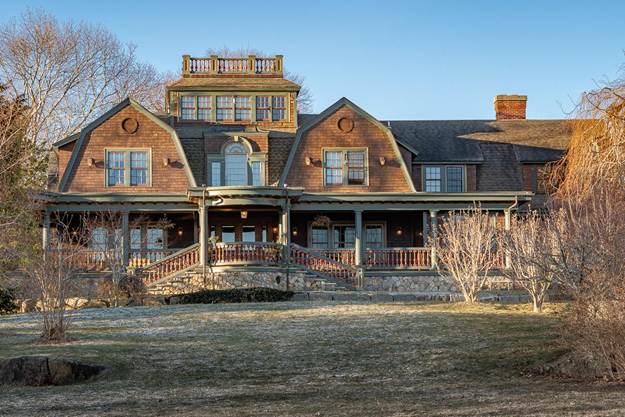
The woman offers me a glass of water and as I sip it, their son of four brings me a pamphlet detailing BOJ Construction’s process of renovating this building which was once a nursing home. The home sits on five acres and has long halls leading to big open rooms. There is a chicken coop and an outdoor kitchen in the backyard along with a few RVs and a bright yellow van which is used to sell baked goods at the local farmer’s market. The rest of the acreage seeps up into the hills.
This is the Plymouth community’s main gathering space. It is one of six properties the Tribes own in the area. Next door to 35 Warren Avenue is another home where members live, also renovated by BOJ Construction. They also own three buildings on Main Street redone by BOJ; the Yellow Deli, Yellow Deli Bakery, and Common Sense Wholesome Food Market. BOJ Construction also operates out of an office on Main Street.
I have come to Plymouth to speak with a Tribes’ elder by the name of John Howley. I had previously spoken with his daughter, Sarah Johnson, at the Tribes community house in Milton, just outside of Boston. In Milton, I helped prepare dinner with a woman and her children. Her daughter and I added agave to tea and dusted crepe roses with powdered sugar. The woman, Nevia, was confident and well spoken. She joked with me as we braided bread dough. When her husband brought me a cup of green mate, she told me not to “drink the Kool-Aid” and then she cracked up.
It was a striking use of sarcasm about a cult mass suicide. The cliché alludes to the Jonestown Massacre of 1978 in which over 900 people died after drinking poisoned Flavor-Aid, or off brand Kool-Aid. The mass murder/suicide was orchestrated by Jim Jones, the infamous leader of the cult known as Peoples Temple.
Nevia has been a part of the Tribes for 17 years and described it as a marriage – hard, but worth it.
In Milton, I refrained from asking controversial questions and welcomed easy conversation. I have come to Plymouth for more than pleasantries. I wait in a grand round room which the Plymouth community of about 50 uses as a space to eat, pray, and celebrate. Howley meets me there. He has long grey hair and round gold rimmed glasses. He is from the Boston area but joined the Tribes in his early twenties after taking a road trip to Chattanooga, TN, the birthplace of the Twelve Tribes.
Like many of the community members I have spoken with, he was raised in and practiced Christianity but felt distant from God in the way worship was a piece of life rather than his entire lifestyle. The Tribes allowed for a constant devotion within a community sharing the same vision for “God’s Kingdom.”
Sarah joins us for a cup of warm fruit spiced mate. The gathering then commences. A young woman starts singing and soon everyone is following along with the verse she started. In the corner of the room men pick up guitars, drums, and a large bass. The dancing, which is inspired by Israeli circle dance, begins. Howley leaps up from beside me and links arms with those already at the center of the room. He is nimble and quick footed. Sarah leans over and says, “hard to believe he’s seventy, I think this is what keeps him young.”
The music comes to an end and prayer begins. Member after member details the gratitude they have for their work, for their children, for the guests, and for the life Yahshua has gifted them. They also express excitement for the Kingdom they are working toward, the one to be provided by God when this world comes to an end.
Everyone’s hands raise toward the sky for the final prayer. The group dissipates and drags tables and chairs to the center of the room. We sit and eat salmon, corn, salad, and buttery rice with chopsticks. In Milton, I had asked about the use of chopsticks. A mother cradling her toddler told me they want to feel closer to their “Oriental brothers and sisters.”
In Plymouth, I sip sparkling kefir and chat with the woman sitting next to me. She majored in English at a university in the Northeast and briefly worked as a journalist before joining the Tribes. She now educates the children and oversees the Plymouth community’s section of the Tribes newsletter.
Our plates are whisked away by children and older community members and replaced with cream covered slices of carob pie. My notebook of questions sits under my seat. I am watching children giggle and prance about the dining room. Time is running out and I am scared this night will end just as Milton’s had, with friendly conversations, delicious food, and no questions of substance answered.
The second procession of dancing commences after pie. I link arms with a woman who guides me through the footwork. The dancing ranges from a Conga style zigzagging throughout the home to synchronized footwork and twirling.
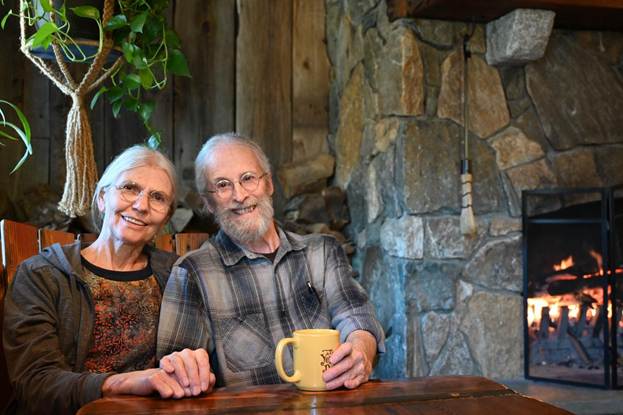
During a break in the songs, I pull Howley aside and ask him if we can have a longer conversation. He agrees and we walk to a living room near the entrance of the home. Following us is his wife Rebecca Howley, his daughter Sarah Johnson and her husband Brian Johnson. The room is lamplit and John invites me to strum a large hardwood harp when we enter. It was made by the Tribes’ instrument manufacturer, David’s Harp, in Hiddenite, North Carolina. Sitting beside this beautiful harp, I invite them to speak on a myriad of topics.
In Milton a grey-haired woman had told me about the power of submission as she flipped through her wedding album. “There he is running to me,” she cooed. She had just been married to a tall, white-haired man. She smiled. Her demeanor, although she is in her seventies, was young and in love. She then put her hand on my shoulder and told me how grateful she is to have a man to guide her.
Howley laughs and jokes about the “triggering” reaction to the word “submission.” He gestures to his daughter, who explains how she asks her husband for advice and guidance because she respects him and values his opinion. “The word submission is not a negative,” she says. “We submit to one another,” Howley adds, “the leader is the servant to all.” In the Tribes’ eyes there are differing roles for men and women, he says. Each gender has its strengths and leads in different spaces, such as women leading in the kitchen. It is easy to be led by a, “good leader and a loving leader,” said Johnson.
During my time in Milton and Plymouth, I observed children stacking napkin holders and playing with one another. I ask about “play,” a word Tamara told me is rarely used. Howley reaches behind him and opens a cabinet full of colorful toys. He explains their philosophy is not to push children to go and play. They believe it is important to fill children with, “purpose.”
This does not mean they are not allowed to play, he explains. He says the Tribes do not buy baby dolls because, “we have real babies that they [the children] can help us take care of.” Sarah adds the children love working alongside them in their various businesses, “they want to feel a part of our work.”
“Tell me about the rod,” I ask.
The group pauses and glances at one another. Then Brian Johnson, Howley’s son-in-law, speaks. “We firmly believe that everything needs to be done out of love.” He explains the rod is used not to “punish” children but to “discipline” them, it is a corrective and training tool. Brian explains the rod is a thin flexible piece of material that should leave a “sting.” It shows children “you care enough to train them” and “love and peace is appreciated by the one [the child] being loved.”
Both Brian and Sarah Johnson were raised in the Tribes and said they were “thankful” for the rod and chose to raise their children the same way because of their own upbringing.
Brian says children are “wonderful human beings” and this type of corporal discipline prevents yelling and verbal assaults, which they believe to be more damaging than a hit with the rod. They also claim the rod dismisses guilt from the child.
The group acknowledges discipline has gone “too far” within the Tribes in the past. Their community has had to work very hard with various members to ensure their children are treated correctly, and they say they have expelled members for mistreating children.
The group strongly asserted the Tribes have zero tolerance for sexual abuse and someone who, “chooses that evil,” will be forced to leave the community. They have at times reported past abuses to law enforcement, but they said the community, “immediately told these people they are out,” and often simply exile them from the communities.
They pushed back against any suggestion their way of life produces an environment conducive of sexual abuse. They pointed to their “very private living quarters” and modest dress. “Nothing about the way we live or act lends itself to that,” said Howley.
On the topic of homosexuality, Howley spoke about the companionship he needs from fellow men but resolved there should be no romantic or sexual relationship between those of the same sex. Brian Johnson said “we love those people still,” but do not accept the “lifestyle” within the community. The group told me they are not prejudiced and cited the bathroom sign in the Yellow Deli which reads, “whatever you are.”
They invite a gay couple living next door over for Friday night dinners. The Plymouth community had members who were gay before they joined and those members are not treated any differently. Howley explained there is “a lot of hurt in the world” and he believes past traumas and mistreatments can lead people to homosexuality.
“We would be happy if they stopped living that way and lived with us,” said Brian.
Howley scoffs when I bring up allegations of racism within the Tribes. He says he is very glad I met the older Black man who is a member of the Plymouth community, the first person of color I had seen at the four communities I have visited.
“I’d kiss him on the neck in front of you right now,” Howley said. He said there is no prejudice within the communities and they want all races to find their way to the Tribes.
“We love the Jews, they are like thoroughbreds,” Howley added. He explained “the Prince of darkness has divided everyone.” They said joining the body of the Messiah is, “a great binder and a great equalizer.”
Howley has a daughter who left the community. He says she is not doing very well and their relationship has suffered, but he visits her and they are in no way cut off from one another. The group expressed their desire to have conversations with members who have left in order to discuss the ways the community failed them and how they can work to help them. They would be happy for Tamara to come back and speak with them. “We pray for that,” says Brian.
“Our hope is that love is more powerful than all of the things that can take away from love,” and that “our life will spread all over the world,” he said.
“As the world falls apart, our hope is that people will remember us,” Howley said as the interview ended.
As I find my way to the door, Sarah invites me to their Thanksgiving dinner hosted on the top floor of The Yellow Deli. She tells me it is free and open to all. The community hopes they can provide a place for those who find themselves alone on the holiday.
Howley asks about the publication of this article. “I hope our spirit will be clear enough,” he says as I exit the home.
Investigating the group as a journalist often left me conflicted
I had spoken to Tamara before this encounter. I knew the pain she and others had suffered during their time with the Tribes, and still I struggled to conceive the duality of the situation.
Love is heavy and seems genuine within The Twelve Tribes, laid on as thick as the butter on their homemade bread. I wonder if it is this love that keeps people. It reminds me of a conversation I’d had with Tamara.
Her eldest daughter is 23, the same age Tamara was when she became a member of the Tribes. Her daughter is now enrolled in her last year of dental hygienist school with dreams that would have been out of the question if her family was still a part of the community.
Love for her children, Tamara tells me, is what first prompted her to join the Tribes. And love for her children is what made it clear to her she needed to leave.
When I first encountered the Tribes while traveling through Australia in 2024, I had no context to judge them other than the warm hospitality they offered in that initial encounter. However, the process of investigating the group as a journalist has often left me conflicted. The initial awe I felt in Australia resurfaces in a small way each time I walk into a community home. I respect and enjoy spending time with many of the members I have met. I think they are good people. Tamara has recounted a similar sentiment to me.
When I was in Plymouth, moving chairs to make room for dancing, a little boy came up to me. He tugged at my sleeve and said, “excuse me, you dropped this.” He handed me the notebook paper that had the list of questions I planned to ask Howley. His hair was tied up with a tan knitted cloth like the rest of the men. I was embarrassed and scared he had read the bullet points; submission, sexual abuse, the rod. As he walked back into the crowd, I wondered what he knew and had seen. I wondered if I came back in 15 years, if he would tell me he was grateful for growing up in the Tribes, or if he would be here at all.
Lucia Thomas is a freelance journalist who studies journalism at Brandeis University. Her reporting was supervised by Neil Swidey, director of the journalism program at Brandeis.