
The idea that a mayor would guarantee a more efficient – and effective – local government, is a ‘big lie.’
It’s an attractive notion, of course. When things don’t go our way – whether it’s the Red Sox or Town Meeting – our first reaction is to ‘throw the bums out.’
But starting from scratch does not always translate to starting afresh. And many calling for this change are the same ‘bums’ that created the dissatisfaction that they now claim to have the cure for.
So, it would be logical to expect that our same old bums, would be likely to repeat the same mistakes – only under a mayoral system it would happen faster and you’d have no say in it.
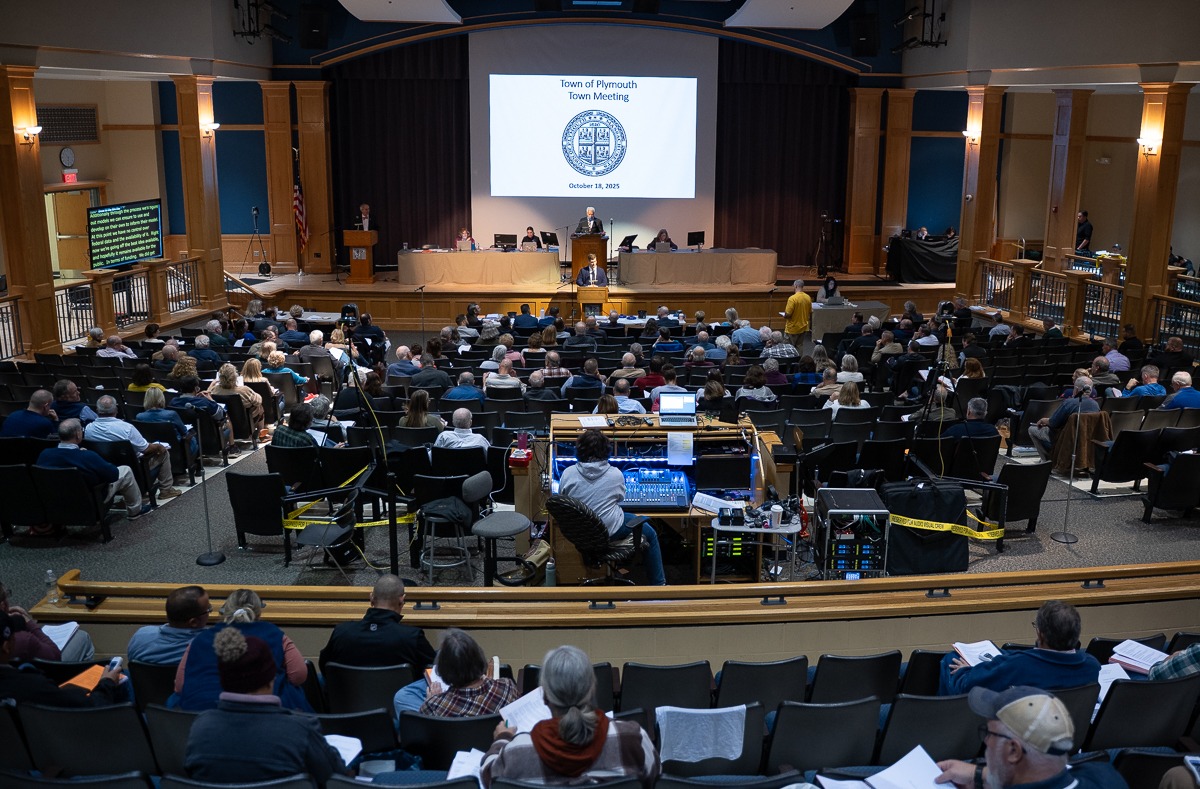
It’s difficult to understand without the benefit of long experience, but I have found that one of the real benefits of a Town Meeting form of government, is its slow pace.
It’s rare for a new and/or controversial measure to gain approval the first time it comes before Town Meeting. If an issue has merit though, and its proponents are persistent, it will eventually be given its due.
And when an issue is considered of special importance, Town Meeting often does act swiftly – relatively speaking.
The call for an across-the-board 1% cut to the budgets of all town departments failed this year, but if our economic prospects continue to trend downward, such an effort would likely be approved in the near future.
I am of the belief that there is a special – if slow to act – genius, in the deliberations of large, democratically elected bodies: a wisdom that comes from blending the perspectives of disparate economic, cultural and political backgrounds.
Such a genius was on display when the town approved a new ground-mounted solar array bylaw in town, now over 10 years ago.
At that moment large solar companies, incentivized by state and federal authorities, were snatching up thousands of acres of undeveloped, usually forested land, clear-cutting the trees and installing solar fields.
Those same corporations had their eye on Plymouth because of its, then relatively cheap, forested uplands and when a zoning change was proposed that would have limited their profitability, Town Meeting was peppered with glitzy pro-solar presentations that touted their benefits.
Standing in their way was a citizen-led warrant article that sought to limit those arrays to five acres or less, and by just two votes, Town Meeting approved the necessary 2/3rds vote.
The result?
Those solar companies looked elsewhere, not satisfied with the profits available from smaller arrays, and as a result we still have thousands of acres of woods and wildlands.
What would a mayor have done in the same circumstance?
First of all, you probably wouldn’t have heard about the issue at all, as it would not have been reviewed by Town Meeting or any other board.
Second, given the revenue that these arrays could generate for the town, the mayor would likely not even consider factors like preservation of open space, or quality of life.
Whom do you trust more: your neighbors, the people you elect to serve as Town Meeting representatives, or a single individual and his or her highly paid friends?
The sand and gravel story would also likely have had a different ending, if a mayoral form of government had been adopted.
In that case a group of citizens offered a petitioned article to stop all sand mining in town, and to rewrite that particular regulation during a year-long moratorium.
Faced with the possibility that this citizen-led effort would succeed, town officials offered a compromise, and Town Meeting moved ‘swiftly’ to approve funds to facilitate revisions to earth removal regulations.
If a mayoral system were in place when the sand mining issue heated up, concerned citizens would have had no leverage with ‘town hall’ and would likely have been ignored.
Of course, proponents of a mayoral system like to say that residents could always ‘throw the bum out,’ on Election Day.
But how fair of a process would that be, considering the amount of money that it would take to run for Mayor.
Candidates for the Selectboard already spend $20, $30,000 or more.
A candidate for mayor would likely spend far more, limiting the candidate pool to those with money, or with wealthy friends.
What do you think the average candidate for Town Meeting representative spends?
$100? Less?
Yes, our Town Meeting form of government could be improved. On the Charter Commission I served on three years ago, we proposed a 7-member Selectboard, with both regional and at-large members to more accurately reflect the town’s size and population distribution.
The Charter Commission also sought to underline the authority of Town Meeting, to emphasize that – like our federal government – that body was an equal branch of the government.
And there’s the heart of the matter, for me: the inequality inherent in a Mayoral system.
Under a mayor everyone has a vote, but no one – save for the mayor – one has a say.
Right now, by comparison, close to 500 residents are either elected or appointed to various positions in town government.
That’s nearly 1 out of every 100 residents.
That’s democracy.
– Frank Mand
Mand is a member of the Planning Board and a Town Meeting member from Precinct 3