
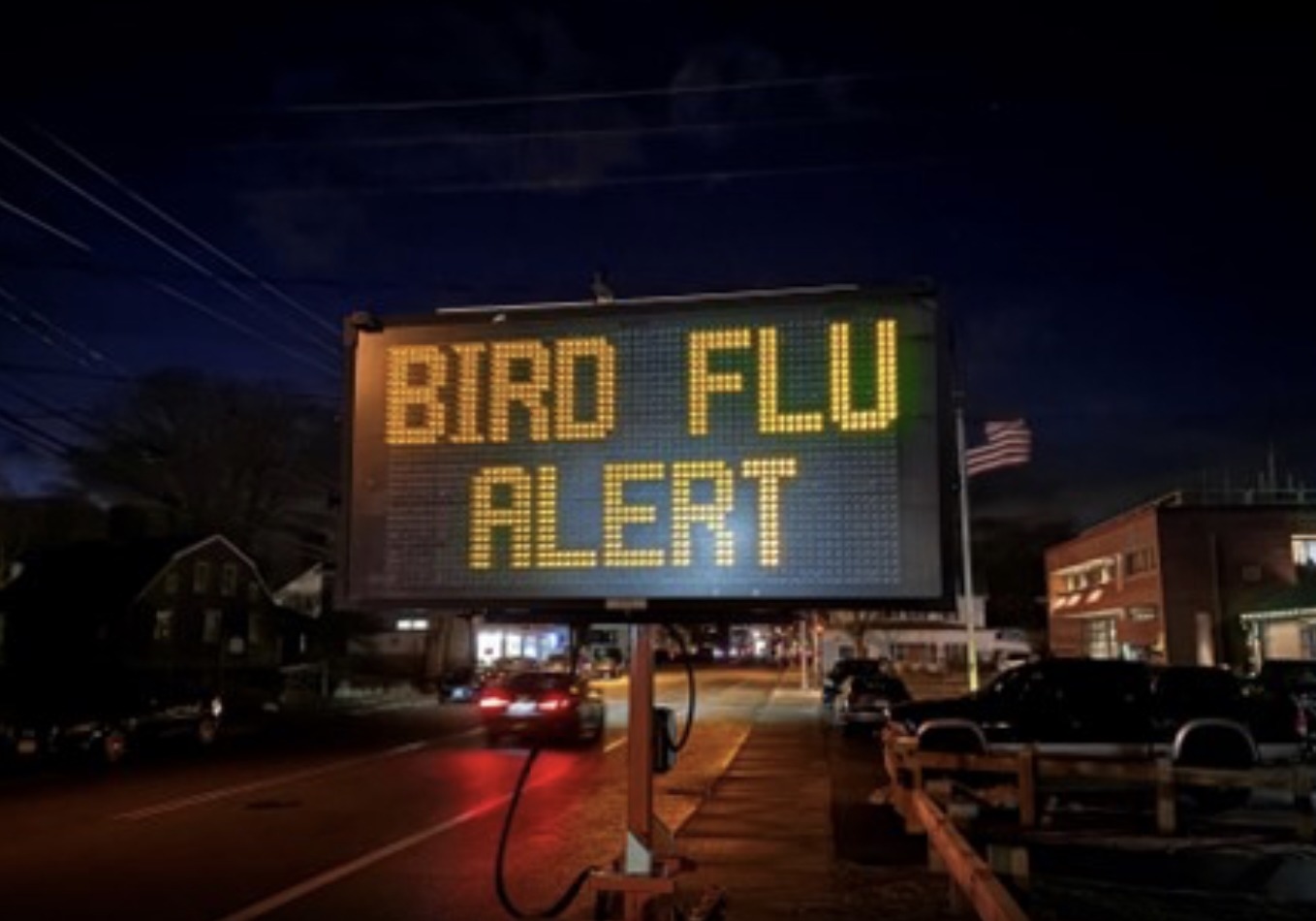
The avian flu is apparently back, nearly a year after its presence resulted in the deaths of hundreds – if not thousands – of birds in lakes and ponds across town.
Officials have received “several reports of deceased waterfowl” in recent days, according to a press release from communications coordinator Casey Kennedy. The town is working with several agencies – including the state Department of Agricultural Resources, the Massachusetts Division of Fisheries and Wildlife, and the federal Department of Agriculture – to monitor the number of reported deaths, and to confirm through laboratory testing that the disease, technically known as H5N1, is to blame for them.
Avian flu is unlikely to affect humans, but it can be deadly for pets and backyard poultry that are exposed to the virus. In addition to pets and poultry, “shorebirds, oceanic species, [and] raptors…are at the highest risk of contracting” the virus, town officials said.
“Given that it is still early in the bird flu season, we are working closely with our state and federal partners to monitor the situation. We will take appropriate, strategic next steps as conditions are evaluated on a day-to-day basis,” Kennedy said in an email.
The state has been dealing with outbreaks of the virus since 2022, according to the Department of Agricultural Resources. The federal Centers for Disease Control and Prevention said last month that it is monitoring the spread of the disease nationwide.
Meantime, the town’s Department of Health and Human Services has issued these guidelines to help avoid or limit spread of the disease:
- Don’t try to rescue birds or animals on ice, which is likely to be especially thin after Wednesday’s milder temperatures, and don’t handle them under any circumstances.
- Keep backyard poultry contained until further notice.
- Handle live poultry with protective gear and wash your hands thoroughly with soap and warm water afterward.
If you see five or more ill or dead birds, contact the Massachusetts Division of Fisheries and Wildlife at 617-626-1795.
If you see only a few birds, call the Health and Human Services Public Health Division at 508-322-3339, or the animal control officer at 508-888-1186
For more information on the avian flu, go here.
Mark Pothier can be reached at mark@plymouthindependent.org.