
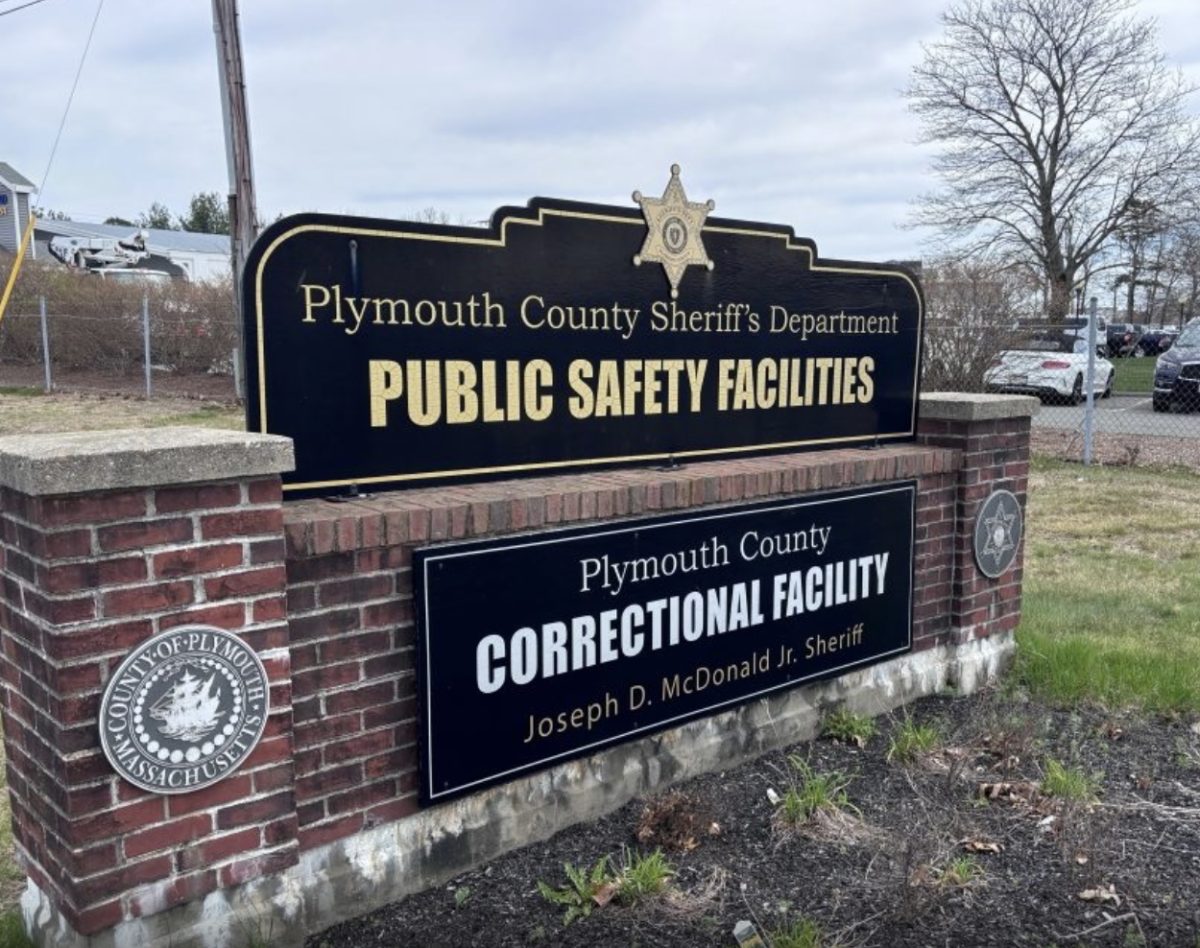
Responding to calls to stop housing ICE detainees at the jail off Long Pond Road, Plymouth County Sheriff Joseph McDonald Tuesday said the men are better off here than out of state — away from their families – as they confront possible deportation.
In a letter to the Plymouth Select Board, McDonald said he has no role in setting immigration policy or in deciding who is sent to the Plymouth County Correctional Facility, the only ICE detention facility in Massachusetts.
Those who are held in Plymouth — 512 men as of Dec. 15 — are afforded a range of services including health care, legal aid (including access to ICE officers), and religious accommodations, he wrote.
They receive free and unlimited phone calls, the use of a tablet computer, and access to a gym and recreation deck. Family and friends can visit, too, McDonald said.
The letter came just days after protesters gathered near the jail and called for an end to the sheriff’s contract with ICE.
At the Saturday demonstration, the protesters alleged that detainees were being mistreated, citing complaints of civil rights violations and poor conditions.
They have heard reports of limited video calls, bad food, and dirty clothes, they said.
Earlier, at the Dec. 9 Select Board meeting held at Cold Spring Elementary School in North Plymouth, residents railed against ICE, whose officers have been plucking people off Plymouth streets over the past several months. (A smaller number of speakers expressed support for ICE.)
Lori Fitzpatrick, a North Plymouth resident who works with immigrant families as an occupational therapist at Cold Spring, told the board that families hide in closets and under beds when ICE is active in Plymouth.
Select Board members said they will decide at a January meeting what, if anything, to do about ICE operations in town, though they acknowledged that town officials have no say in federal law. Member Kevin Canty is drafting a policy.
The policy will not address the question of whether the jail here should hold ICE detainees since the town has no authority to cancel or alter the contract.
But the Select Board may come up with rules spelling out whether Plymouth police should cooperate with ICE agents.
In his letter, McDonald said the contract — which has been in effect since the 1990s — will extend until 2029.
While the first contract generated revenue that helped pay for the construction of the jail and an administration building, since 2009 all the ICE revenue has gone to the state, the letter said. Since 2010, McDonald wrote, the sheriff’s office has returned $209 million to the state.
“Our cooperation with our federal partners continues to exist because it is my job to work with everyone in law enforcement,” he said.
McDonald said he has worked with every administration. In fact, before 2025, the last spike in the number of ICE detainees held at the jail was during the Obama administration.
Though the Select Board cannot influence whether ICE detainees are held in Plymouth, Canty, who is a criminal defense lawyer, said the space would be better used to house female defendants, who are currently all held in Boston.
He called “largely inaccurate” McDonald’s assertion that housing detainees here allows them to be closer to their families.
“ICE detainees are routinely being shipped all around the country on short notice,” he said.
And Canty said he questions the quality of health care at the facility.
“I have had clients there with medical issues that have gone unaddressed or under addressed for a long period of time,” he said.
Andrea Estes can be reached at andrea@plymouthindependent.org.