
The article published recently in the Plymouth Independent conflates the land bank and Pulte Homes proposed 40B development in North Plymouth. I believe these two issues while related deserve their own stories and spaces in The Independent.
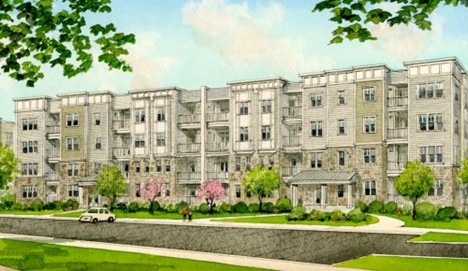
On November 10, the Plymouth Zoning Board of Appeals met to continue the public hearings for Case 4183 and 4184 – Pulte Group – regarding proposed developments at 39 Hedges Road (Lots 56-1 & 6-58F) and 24 Sandri Drive (Lots 62, 62C-3, 62C-2, and Lot 1B). These hearings concern a comprehensive permit filed under Chapter 40B, Sections 20–23 of MGL, for a dense residential project of 163 owner-occupied units across three buildings, including 1-, 2-, and 3-bedroom condominiums, with 25 percent designated as affordable.
The stated purpose of the meeting was to review a traffic impact study conducted by the developer – Pulte’s own consultant – addressing Court Street, Cherry Street, Prince Street, and Hedge Road. In reality, the session revealed significant deficiencies, omissions, and questionable conclusions within that study. “Interesting” is the polite term; “unreliable” is the accurate one.
Pulte’s representatives insisted that the project would have minimal traffic impact, claiming peer-reviewed validation and projecting only 40 additional vehicles per hour – or roughly 400 per day – at peak times. For the Sandri Drive portion, they asserted an increase of only 23 vehicles per hour and 200–300 vehicles per day. According to them, delays at lights and intersections would remain “acceptable,” and the area would experience essentially the same traffic congestion whether or not the project is built.
These conclusions are misleading. The study was conducted in February – one of the lowest-traffic months of the year – and relied heavily on “desk calculations,” not real-time observational data. No meaningful analysis of high-volume tourist months, beach traffic, church services, or emergency-vehicle access was included. The study’s foundation is weak, and its findings are unsound.
Parking analysis was equally flawed. Pulte proposes only 1.84 parking spaces per unit, with no clear plan for guest parking. Building I would include 92 total spaces – 52 in a garage, 10 outside, and 28 tandem spaces with no explanation of assignment or practicality. Building II would follow a similar model. Parking spaces are projected at 18′ x 9′, dimensions that fail to meet the requirements for van-accessible or wheelchair-accessible spaces under ADA best practices. These are not reasonable accommodations; they are inadequate by design.
Traffic issues on Prince Street were trivialized. The current right-angle entrance already forces headlights directly into existing homes. Pulte’s proposed curved driveway addresses glare but ignores the fundamental issue: two-sided parking, elderly housing directly off the street, and two active churches – St. Mary’s Catholic church and an evangelical church – within 100 yards. Emergency vehicles already struggle to navigate this corridor. A single 911 call brings police, fire, and EMT, often four vehicles responding at once. Add Saturday evening or Sunday service traffic and the risk becomes obvious. Pulte offered no meaningful mitigation.
Although environmental concerns – water table impacts, wetlands, and abutter issues – were not the focus of this particular hearing, they were mentioned briefly and then dismissed without substantive consideration.
I am not a traffic engineer, but even a layperson can see that the study raises more questions than it resolves. The proposed “mitigations” are not real plans and would not address the existing congestion, let alone the increased burden created by 163 condominiums.
The Great Hall [at Town Hall] was standing-room-only. Residents from across North Plymouth and the broader community voiced strong opposition. Select Board members Kevin Canty and Deb Iaquinto spoke clearly about the negative impacts. Residents brought data, video evidence, and lived experience that contradicted Pulte’s narrative. ZBA members Thomas Wallace, Michael Leary, David Peck, and Edward Conroy pressed Pulte with substantive questions and challenges to their methodology.
But the Board’s chair, Michael Main, repeatedly signaled deference to Pulte. His comments and tone presented him as predisposed toward approval, not rigorous oversight.
Mr. Main’s history raises further concern. He spent months obstructing the Claremont proposal over the width of parking spaces. That prolonged debate allowed Pulte to accelerate their filings for Hedges Road, Sandri Drive, and Prince Street. Had Mr. Main approved the standard 9-foot width immediately – as zoning customarily allows – Pulte would have been forced to wait two years before submitting this proposal. His resistance to Claremont created the opening for Pulte, facilitating the very overdevelopment he now presides over.
During public comment, Mr. Main repeatedly interrupted speakers, sometimes refusing to allow residents their full three minutes. At one point, member Thomas Wallace had to motion for a speaker to be heard. Mr. Main reluctantly allowed it – and continued interrupting. At times, the chair made meaningful public comment nearly impossible. Other residents waited until the meeting ended to speak to Pulte representatives directly. These individuals were less than professional in their approach toward Pulte representatives, which was unfortunate.
Pulte currently has state law and the MA Executive Office of Housing and Livable Communities on its side. If the company refuses to reconsider its approach, negotiation – not capitulation – should be the town’s strategy. No one in Plymouth wants this project approved, but ignoring its likely approval would be irresponsible. Still, a clear question remains for Pulte Homes, LLC: if every signal from the community shows you are unwelcome – like an unwanted dinner guest or an intrusive neighbor – why insist on forcing your way in?
Pulte Homes, LLC: Withdraw the proposal and leave Plymouth to plan its future responsibly. To the Plymouth Zoning Board of Appeals, deny these comprehensive permits. This would not be good for Plymouth, its residents, and certainly, not good for North Plymouth.
– Robert A. Zupperoli