
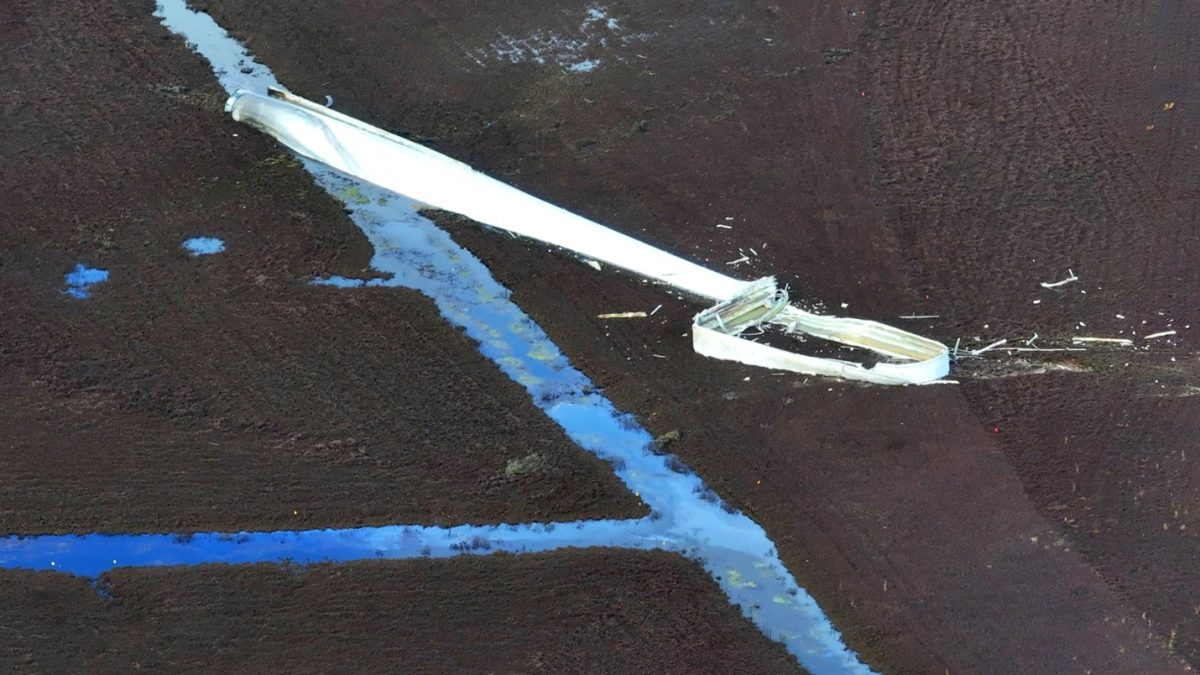
A fallen wind turbine blade is a genuine problem, suggesting issues in manufacturing, installation, and/or inspection processes that need to be addressed urgently. It is not, however, an argument against the continued expansion of renewable energy options in New England and around the world.
The enormous blade landed in a bog, sparing human life and property. If we think of analogous system failures in the delivery and processing of fossil fuels, the human and environmental costs are immediately and gut-wrenchingly apparent. When a turbine fails, phalanxes of volunteers aren’t needed to save shorebirds or collect globs of crude oil, and teams of oncologists aren’t needed to address surging cancer rates a decade or more later.
Fossil fuel companies have been resisting stringent oversight for the better part of a century, and the catastrophic results are remembered everywhere around the world. Unlike corporate entities with a long track record of environmental destruction, mendacity, and profiteering, the wind energy sector has no need to fear tougher inspection protocols.
– Warren Senders