
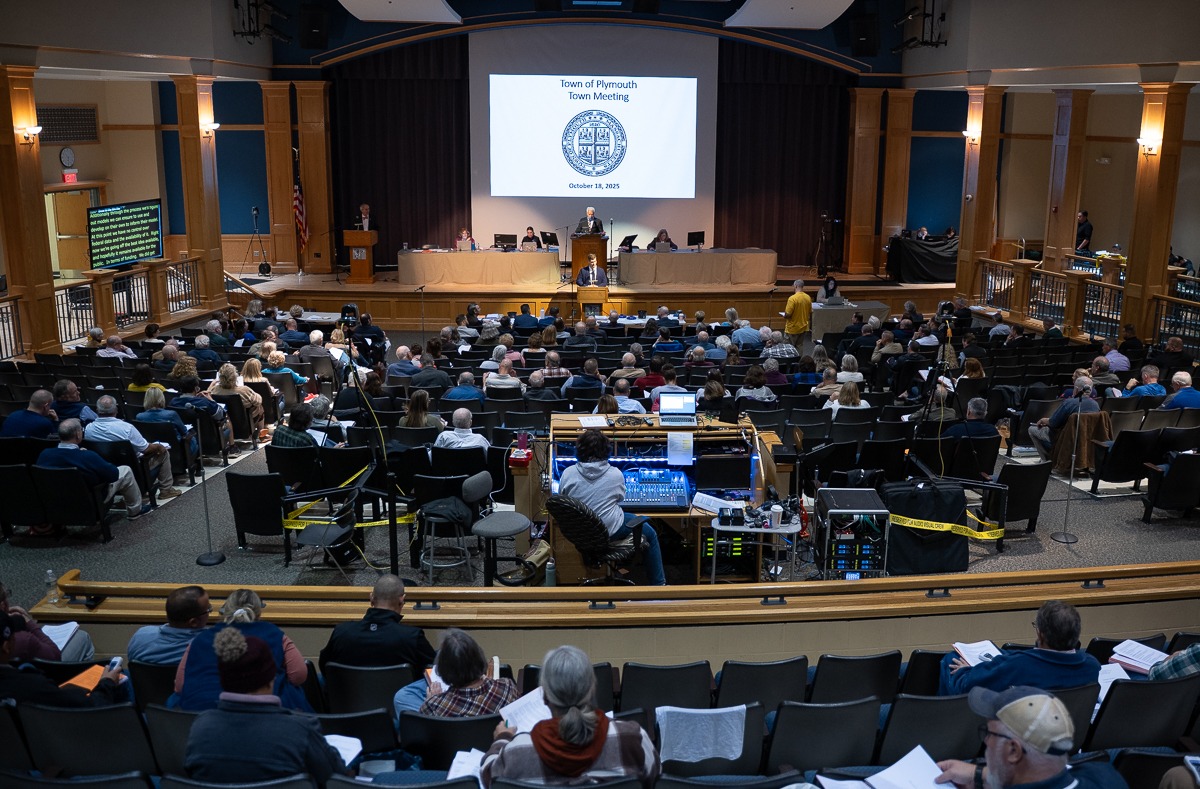
During a relatively low-key Town Meeting Saturday, members cut funding for irrigation and lighting from a proposal to restore the 314-year-old Training Green, rejecting an argument from Town Manager Derek Brindisi in support of the improvements.
The fall gathering of Plymouth’s legislative body also supported repaving an airport runway and taxiway, an accessible trail near Jenney Pond, and a historic structure report on the condition of Memorial Hall.
Here’s a summary of the most significant action:
Training Green
The most intense debate centered on a recommendation from the Community Preservation Committee to appropriate $644,000 for the restoration of the Training Green, which is between Sandwich and Pleasant streets. It was established circa 1711 and later landscaped by Frederick Law Olmsted, the pre-eminent landscape architect of the nineteenth century. It is one of the oldest continuously used parks in the country. The Visitors Service Board has already allocated $100,000 for the project.
The park’s rehabilitation would make its paths and access compliant with the Americans with Disabilities Act. But the proposal to irrigate and light the park ran into strong opposition.
Town Meeting member Kenneth Stone proposed an amendment to eliminate $220,000 for the watering system and lighting.
“We do not need sprinklers,” Stone said.
Town Meeting member Geraldine Williams agreed.
“No one expects, when everybody else’s grass is turning brown, to see beautiful green grass on the Training Green,” Williams said.
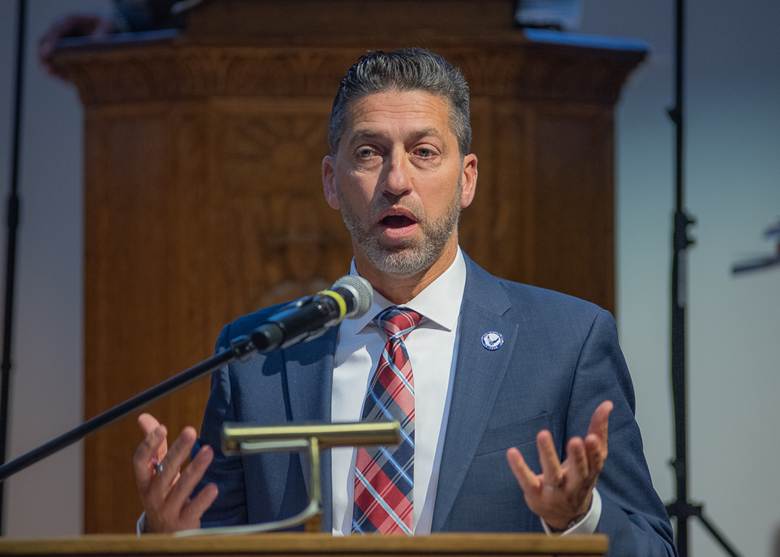
Brindisi said the town sought to add lighting because residents often clamor for lighting in town parks.
“Lighting provides a level of public safety,” he said. “It’s not going to take away from the original design is not going to take away from the original design by Mr. Olmsted, and more importantly, there’s not a lot of places that we pay tribute to our service members. Our service members deserve this.”
The park features a monument to Plymouth soldiers and sailors who lost their lives in the War of 1812 and the Civil War.
“You think about that as it relates to our veterans,” Brindisi said, defending the lighting and irrigation.
But the amendment to cut funding for the lights and sprinklers system prevailed by a vote of 74 to 66. Town Meeting then supported allocating $424,000 for the restoration of the park by an overwhelming vote of 104 to 3, with one abstention.
Airport runway and taxiway
Proposals to fund the reconstruction of runway 6/24, one of two runways at Plymouth Municipal Airport, and the Gate 3 taxiway, passed despite strong opposition to the $9.2 million runway project from airport neighbors.
The Federal Aviation Administration is paying for 90 percent of the work, with the Massachusetts Department of Transportation picking up another 5 percent. The remaining 5 percent, or $460,000, is the town’s share. It will be paid for out of the airport’s enterprise fund.
The runway was last rebuilt in 1998. Parts of it have cracks ranging from two to four inches wide.
The project will not lengthen the runway. The last time Town Meeting considered a runway extension, in April 2024, the proposal was soundly defeated by a 117-26 vote, after neighbors complained about noise and the Airport Commission’s alleged failure to consult them about the expansion plans.
Even so, some neighbors opposed funding the runway project and found sympathy among other Town Meeting members.
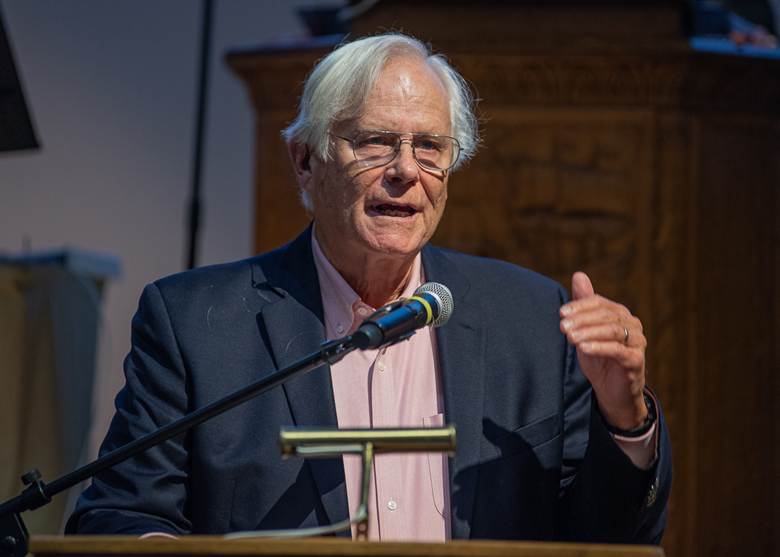
“Our hearts bleed for these residents that are not being heard,” Town Meeting member Kathryn Holmes said of neighbors who complained that airport officials are not communicating with them about their plans.
Some airport neighbors, however, supported the runway reconstruction.
“We have absolutely no concerns,” said Town Meeting member Ron Clarke, who lives a mile from the airport. “In my neighborhood, there isn’t the level of concern.”
The proposal passed by a vote of 93 to 50, with two abstentions.
The gate 3 taxi lane pavement replacement would cost $870,000. The FAA would cover 86 percent, MassDOT 7 percent, and the airport enterprise fund 7 percent, or $59,000. It breezed through Town Meeting by a vote of 130 to 9, with one abstention.
Dark Orchard Trail
The Community Preservation Committee recommended spending $900,000 from the Community Preservation Fund to build what will be called the Dark Orchard all-persons trail. It will begin behind the cul-de-sac at the end of the Jenney Pond parking lot and lead into the woods away from the pond, and feature ropes and guides for people with visual issues.
The proposal passed by an overwhelming vote of 137 to 3.
Memorial Hall historic structure report

The Community Preservation Committee recommended allocating $90,000 in Community Preservation Fund funds to pay for a study of Memorial Hall, which is deteriorating and in need of major work if it is to remain open.
The report will serve as a guide to whether the downtown building is worth saving and, if so, what its restoration would cost.
“We need to know what’s in that building that needs to be saved,” said Ed Bradley, chair of the CPC.
The CPC was divided on the value of the study, voting 5-2 to recommend that Town Meeting appropriate the funds. The vote reflected differing opinions in town about what should be done with the 100-year-old building, which was built as a memorial to World War I veterans and has served the community as a venue for everything from concerts to high school graduations to mixed martial arts fighting to pickleball.
Under the Community Preservation Act, Plymouth collects about $4 million a year from a 1.5 percent surcharge on property taxes. The CPC recommends to Town Meeting whether to approve applications for spending those funds, which can only be used for affordable housing, open space and recreation, and historical preservation.
Town Meeting overwhelmingly supported funding the report by a vote of 125 to 10, with three abstentions.
Fred Thys can be reached at fred@plymouthindependent.org.