
Betty was eager to share the story of how her happy life in Massachusetts was upended when ICE agents grabbed her husband last month.
But she didn’t attend last Monday’s Town Hall forum on immigration detention sponsored by the Plymouth Area League of Women Voters. Betty said she feared Immigration and Customs Enforcement officials would be lying in wait.
The 43-year-old Haitian immigrant, whose last name is being withheld by the Independent at her request, is now afraid to leave the East Bridgewater apartment she, her husband, and three daughters just moved into.
Through interviews with people who are helping the family — representatives of the Plymouth Area Coalition for the Homeless and a new Plymouth-based organization called Together WE C.A.N. — the Independent has been able to piece together the tale that Betty was scared to tell.
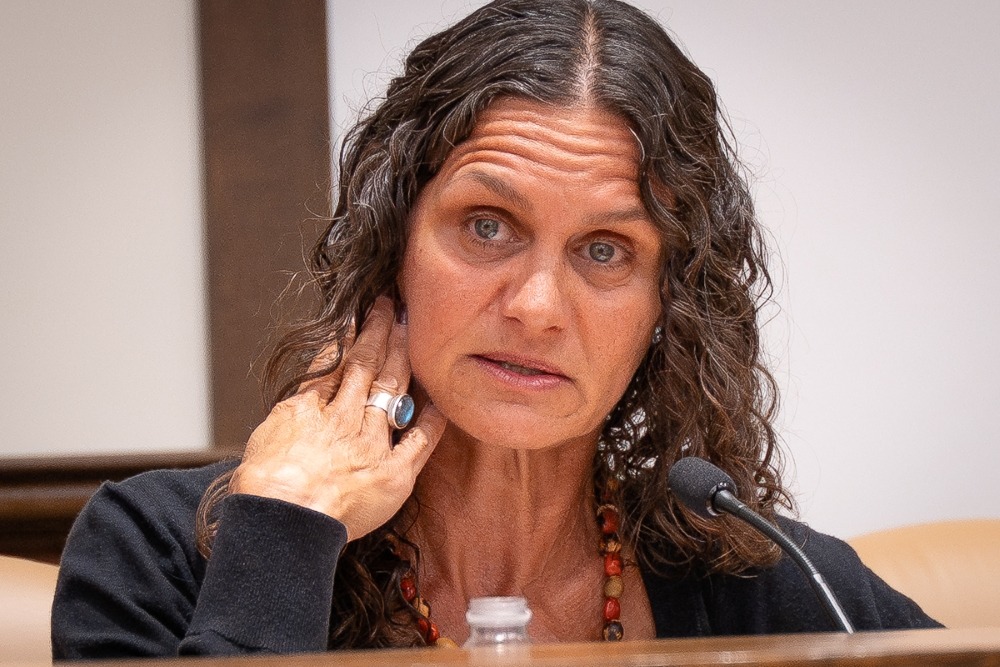
At the forum, Lori Fitzpatrick, founder of the group (which stands for Community Action with Neighbors), recounted some of the story. It is likely not that different from those of thousands of other migrants to Massachusetts who are facing deportation despite having committed no serious crimes.
But Betty’s husband, Jean Frantz Morilus, also 43, made mistakes along the way that may have undermined his plan to become a US citizen and put him on a path toward expulsion from the country.
Morilus and his family arrived in the United States in 2022 after a grueling and dangerous journey that began in Haiti in 2016, according to advocates who have spoken with Betty.
They wanted to escape the lawlessness and gang violence that have wracked the Caribbean nation for years.
They first flew to French Guiana in South America, where they remained for six years, according to Mack Lubin, a case manager for the Plymouth Area Coalition for the Homeless, who also acted as an interpreter for Betty, who doesn’t speak English.
The family sold everything it owned before beginning the hellish journey to Mexico — through wilderness, mountains, and jungles filled with deadly wildlife and insects, according to Fitzpatrick.
Lubin described the perils facing those attempting the long slog to the US border.
“Kids have to sleep in the forest where there are wild animals,” he said. “They see a lot of people who died or are almost dead…”
“A lot of them make it. A lot of them die,” he said.
The final leg of the trip took several months.
When the family finally arrived in Mexico, it remained there for weeks awaiting permission to enter the United States, Lubin said. Morilus completed Form I-589, an application for asylum issued by the US Citizenship and Immigration Services, Lubin said.
When the family received the OK to enter the country, Morilus received another document — Form I-94, Fitzpatrick said, which proves legal entry into the United States and allows migrants to apply for jobs.
The family traveled to Massachusetts, where Morilus’s sister lived, and moved into The Baymont hotel in Kingston, which offered state-funded emergency housing.
Morilus found two jobs in Plymouth – at Walmart and McDonald’s – while Betty stayed at home to care for their daughters, now one, five, and 17 years old, Lubin said.
In June, when the hotel stopped accepting migrant families, the Plymouth Area Coalition for the Homeless found the family the apartment in East Bridgewater.
Over the summer — it’s unclear exactly when — ICE notified Morilus that he had to appear for a detention hearing.
But the family was in the process of moving from the hotel to the apartment and didn’t receive the letter in time, Fitzpatrick said. Morilus missed the hearing.
Failing to show up for the hearing may have been Morilus’s undoing, according to advocates and a lawyer who spoke at the League of Woman Voters forum.
But Morilus and his family might still have avoided ICE scrutiny were it not for a minor traffic violation he allegedly committed earlier this year.
In January, Morilus was stopped by Plymouth police who alleged he was driving his Nissan Rogue erratically.
The registration, tied to a Honda Accord he had previously driven, had been revoked for lack of insurance, a police report said.
Even though he produced documents showing that he was in the process of getting insurance for the Rogue, police towed the car and charged him with driving without insurance or a registration, and with illegally attaching the Honda license plate to the Rogue, court records show.
He pled not guilty at his arraignment in June.
But he failed to attend his next scheduled court date in early August, and a judge issued a default warrant for his arrest.
It was the existence of that warrant that likely caught the attention of ICE agents.
On Aug. 17, Morilus was returning home from picking up his teenage daughter from her job at the Plymouth McDonald’s when he was stopped by Plympton police, who had discovered the warrant.
Morilus was held overnight and brought to Plymouth District Court on Aug. 18. His daughter had to take an Uber home.
In court that day, there was a brief discussion of the case and the fact that Morilus would need a Haitian Creole interpreter for the next hearing, scheduled for Sept. 18. Morilus left the courtroom.
Sometime after that he was whisked away by ICE agents, according to Sue Giovanetti, chief executive officer of the Plymouth Area Coalition for the Homeless, who was at the courthouse that day. (Giovanetti also serves on the board of the Independent.)
Morilus was held at the Plymouth County Correctional Facility off Long Pond Road for 17 days before being sent to an ICE detention facility in Berlin, NH., records show.
He hasn’t seen his family since, according to Fitzpatrick. He’s told his wife that he doesn’t feel well — that he’s afraid a stomach ailment that he had just recovered from was returning, said Lubin. The food at the New Hampshire facility has been terrible, Morilus told her, and there is little to occupy his time.
At least at the Plymouth jail, he said, there were activities, including soccer, he told his wife.
The family believes he has little chance of remaining in the country. Last week, Betty met with a lawyer who told her the deportation case had been closed, and the family had no recourse.
ICE media relations did not respond to a request for comment.
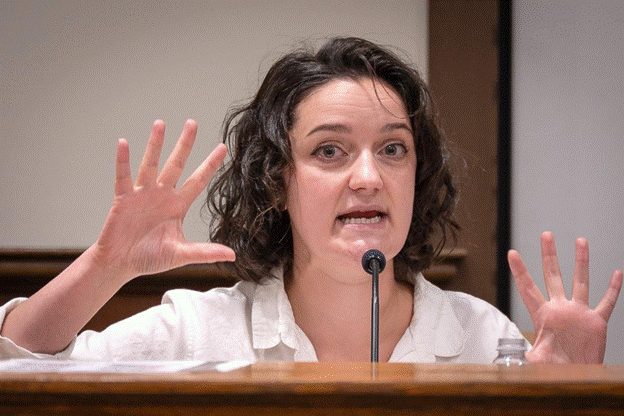
Leah Hastings, a lawyer for Prisoners’ Legal Services of Massachusetts who specializes in immigration detention and spoke at the LWV forum, said people who fail to appear for detention hearings can be ordered deported anyway.
Betty says that she and her children may also be forced out of the country — and away from the people who have been so welcoming here.
Local immigrant advocates are trying to ease the family’s burden by providing furniture, food, diapers and others household necessities.
But they can’t really assuage Betty’s fears. Morilus told her to stay indoors.
“I’m scared for myself and my girls,” she told Fitzpatrick. “My daughters are afraid to attend school. I don’t want to be taken, too.”
Giovanetti called the turn of events “really unfortunate.”
The family had just been in its new apartment for about two weeks when their lives were torn apart, she said.
“He’s a very nice man with a nice family who were trying build a better life here,” Giovanetti said. “That’s at the heart of it.”
Andrea Estes can be reached at andrea@plymouthindependent.org.