
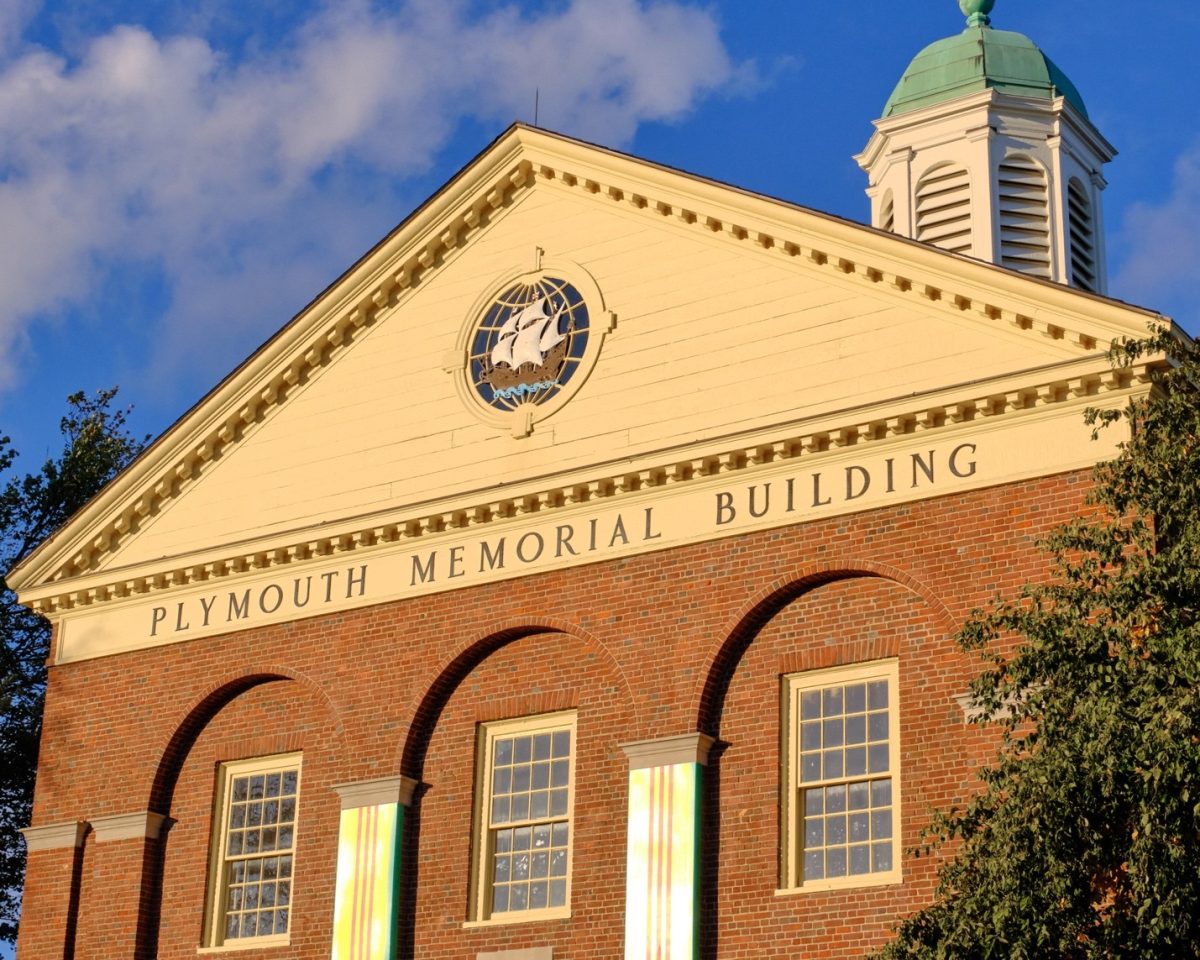
A split Community Preservation Committee voted Thursday to recommend Town Meeting appropriate $90,000 for a historic structure report on Memorial Hall as requested by the Select Board and Town Manager Derek Brindisi.
The study was proposed at a previous meeting of the committee after Brindisi requested it recommend spending $15 million in Community Preservation Act money to help fund restoration of the badly deteriorating building. Faced with pushback from some committee members about whether the downtown venue qualifies for CPA funding, the Select Board asked instead for a study.
The report “will be a written and illustrated reference document that provides a thorough historic and architectural evaluation of Memorial Hall,” the town said in its application seeking the study. It was submitted by Historic Resources Coordinator Connor Anderson on behalf of Brindisi and the Select Board. “It will identify significant original and subsequently added features and spaces, existing appearance and condition, and historic events associated with the building.”
Thursday’s 5-2 vote by the CPC reflected the differing opinions in town about what should be done with the 100-year-old building, which was built as memorial to World War I Veterans and has served the community as a venue for everything from concerts to high school graduations to mixed martial arts fighting to pickleball.
Committee member Karen Buechs expressed the majority opinion, saying the hall should be preserved.
“Everybody I talk to wants it fixed,” Buechs said.
Paul Churchill, who cast one of the two votes against funding the historical preservation study, urged the town to first fix chronic water leaks that threaten Memorial Hall’s structural integrity and should have been addressed years ago. Brindisi has said the building will have to close within two years if major renovations and repairs are not made.
“You’re asking to do a study on something that has water leaking into it,” Churchill said. “Fix the water. Then come back to the study.”
Committee member Len Levin also opposed funding the study and questioned whether the building is worth saving. The total cost of a restoration is estimated at about $34 million. A pared-down plan could cost about $22.6 million.
“We keep talking about fixing that building. That building is not fixable,” Levin said. ‘The people that I’ve talked to and the sentiment of the people in this town say that building is not [fixable].”
Bill Keohan, the Select Board’s representative on the committee – and its former longtime chair – said the study would provide a roadmap for restoring the building while determining what aspects of it are historic.
“We’re bringing in the professionals to look at the building and tell us whether it’s historic or not, what the materials are, how they’re performing, and how best to fix them,” Keohan said. “If [the work] isn’t done correctly, it can come back to haunt you in five or 10 years. If you’re going to touch that building, you really need to have this report.”
Under the Community Preservation Act, Plymouth collects about $4 million a year from a 1.5 percent surcharge on property taxes. The CPC recommends to Town Meeting whether to approve applications for using those funds, which can only be used for affordable housing, open space and recreation, and historical preservation.
The town received an estimate of $80,000 to conduct the study from the preservation architecture firm Spencer Preservation Group, which also recommended adding another $10,000 to cover any changes in price that might occur between now and when the study would begin. October Town Meeting would still have to approve funding it.
Fred Thys can be reached at fred@plymouthindependent.org.